Visas & Permits
Nepal TIMS Card 2026: Who Needs One, Cost & How to Get It
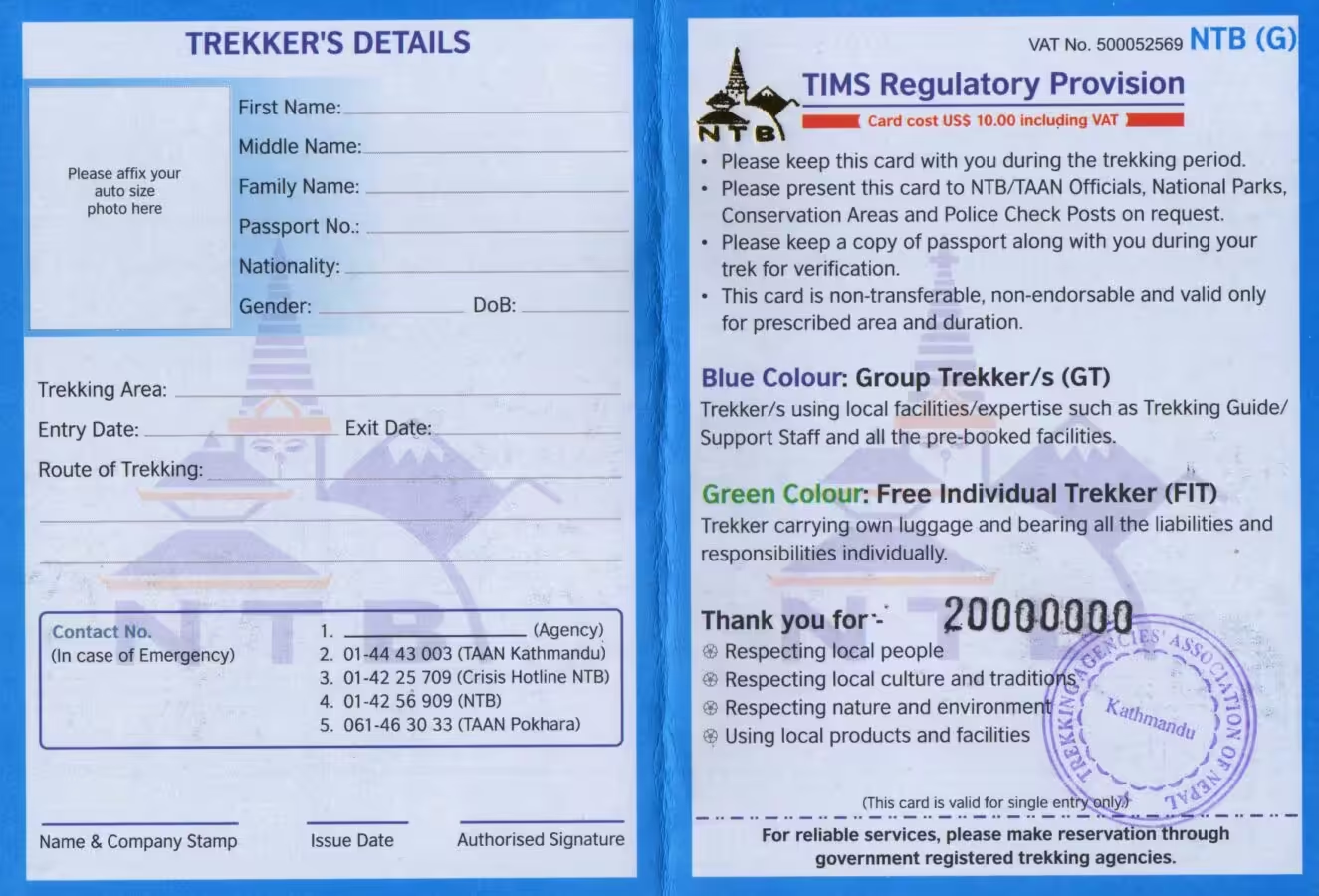
The TIMS card has changed a lot in 2026 — e-TIMS replaced paper, the green independent card is gone, and Everest no longer checks it. Here's the clear current picture.

If you've been researching Nepal trekking and stumbled across confusing, contradictory information about the TIMS card, you're not alone — the system has changed significantly and most travel sites are still printing outdated guidance.
Quick summary
e-TIMS replaced paper: Nepal's old paper TIMS card is now a digital record with QR-code verification at checkpoints.
The green independent card is gone: Since April 1, 2023, individuals can no longer buy a TIMS card directly — all cards are now issued through a licensed trekking agency.
Everest and Annapurna: TIMS is not checked in the Khumbu/Everest region (which uses its own Khumbu Pasang Lhamu local permit instead). In the Annapurna region, checkpoints increasingly focus on the ACAP conservation permit.
Still actively checked: Langtang, Manaslu, far-western routes like Rara, and other mid-range trails where there is no competing conservation permit.
Cost in 2026: NPR 2,000 for foreign nationals (solo/individual route); NPR 1,000 per person in a group. SAARC nationals pay NPR 1,000/600 respectively.
How to get one: Through a registered trekking agency — your operator handles it digitally; your signature may only be needed if a document requires in-person verification.
What is the TIMS card — and what is it for?
TIMS stands for Trekkers' Information Management System, a joint initiative by the Nepal Tourism Board (NTB) and the Trekking Agencies' Association of Nepal (TAAN). Its primary purpose is trekker safety — at each checkpoint along the trail, your TIMS number is logged so that rescue teams know where trekkers have passed if someone goes missing or needs evacuation.
That's the honest reason it exists: it's a tracking system, not just a revenue tool. On the Annapurna Circuit, for example, checkpoints scan the QR code on your e-TIMS and record your movement through the valley. If a storm hits or a trekker doesn't check in, there's a paper trail to work from.
What changed in 2023 (and still applies in 2026)
Before April 2023, there were two TIMS cards: a green card for independent trekkers (no agency required) and a blue card for those going through an agency. The green card was abolished entirely on April 1, 2023. This is the single biggest change that most content on the internet still gets wrong.
Today there is only one type of TIMS card, and it can only be issued through a government-registered trekking agency. You cannot walk into the NTB office and buy one as an individual. You cannot get one online without an agency. If you're planning to trek without an agency, there are routes where TIMS is not required — and an honest agency will tell you which ones.
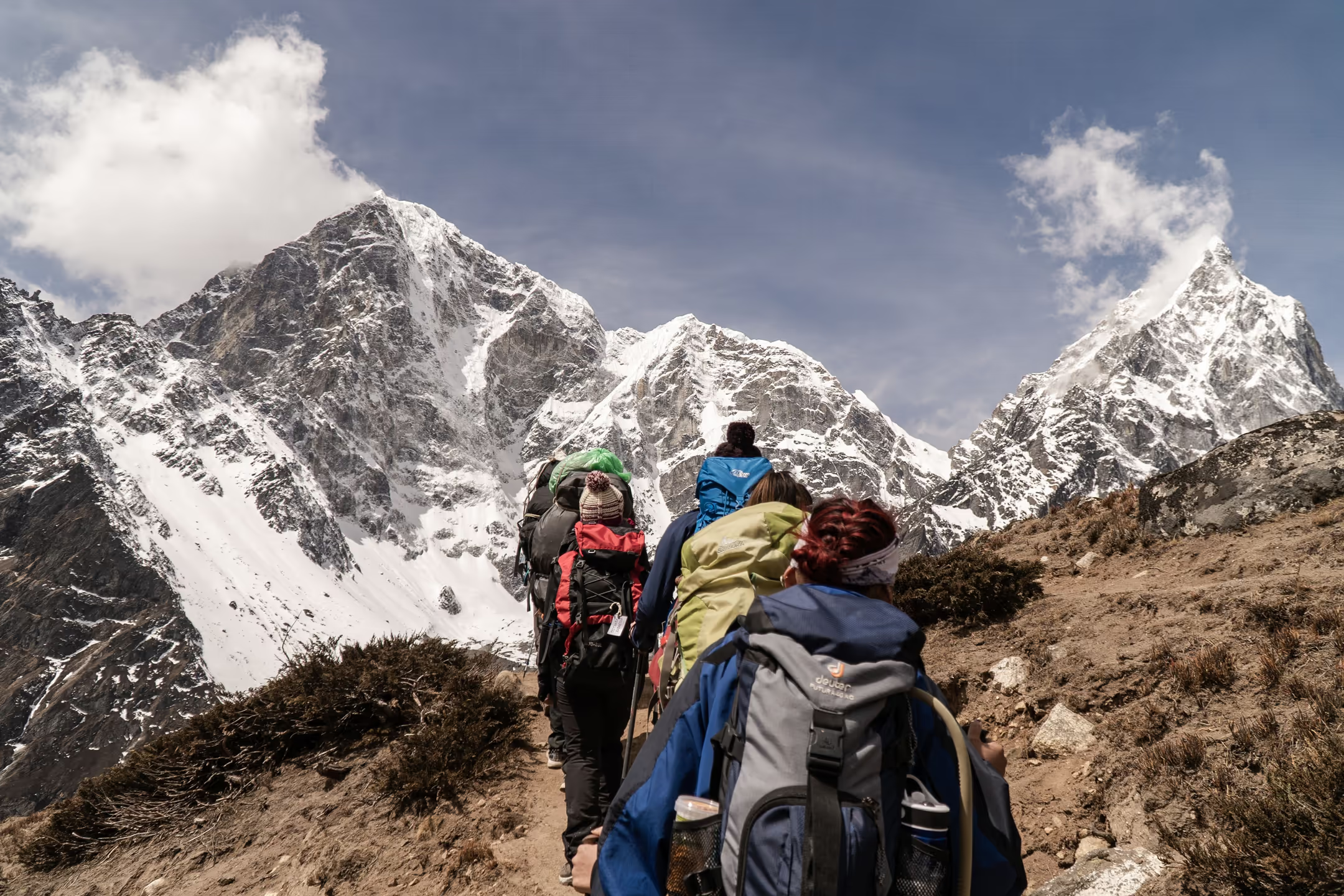
Where TIMS is — and isn't — checked in 2026
Routes where TIMS is actively checked
Langtang Valley: Checkpoints at Dhunche and Syabrubesi scan or record your TIMS. Expect this to be verified.
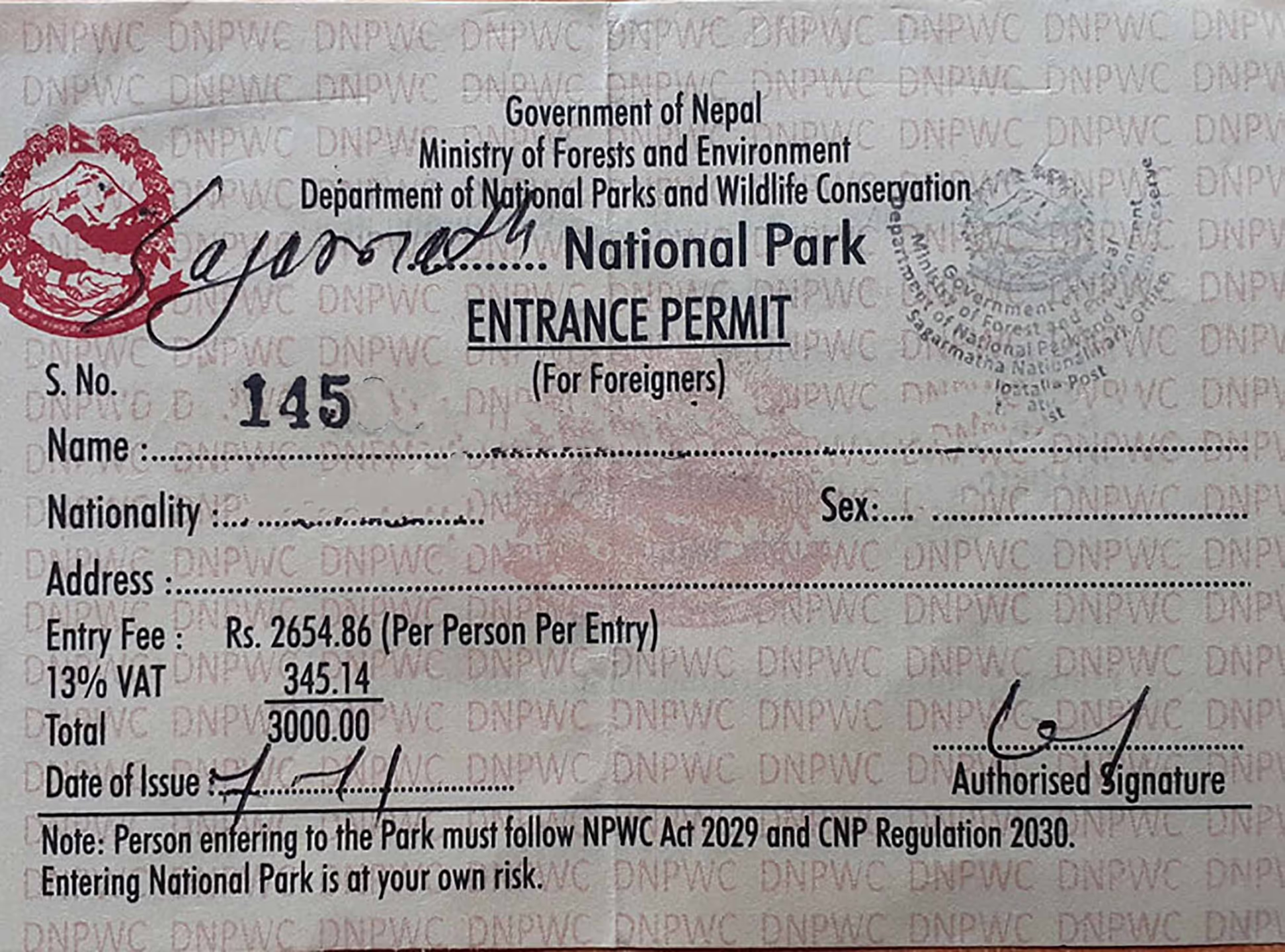
Manaslu Circuit: TIMS is required alongside the Restricted Area Permit (RAP) and the MCAP/ACAP conservation permits.
Far-western Nepal (Rara Lake and beyond): TIMS is the primary tracking document on these quieter routes where there's no separate national park permit system.
Routes where TIMS is largely replaced
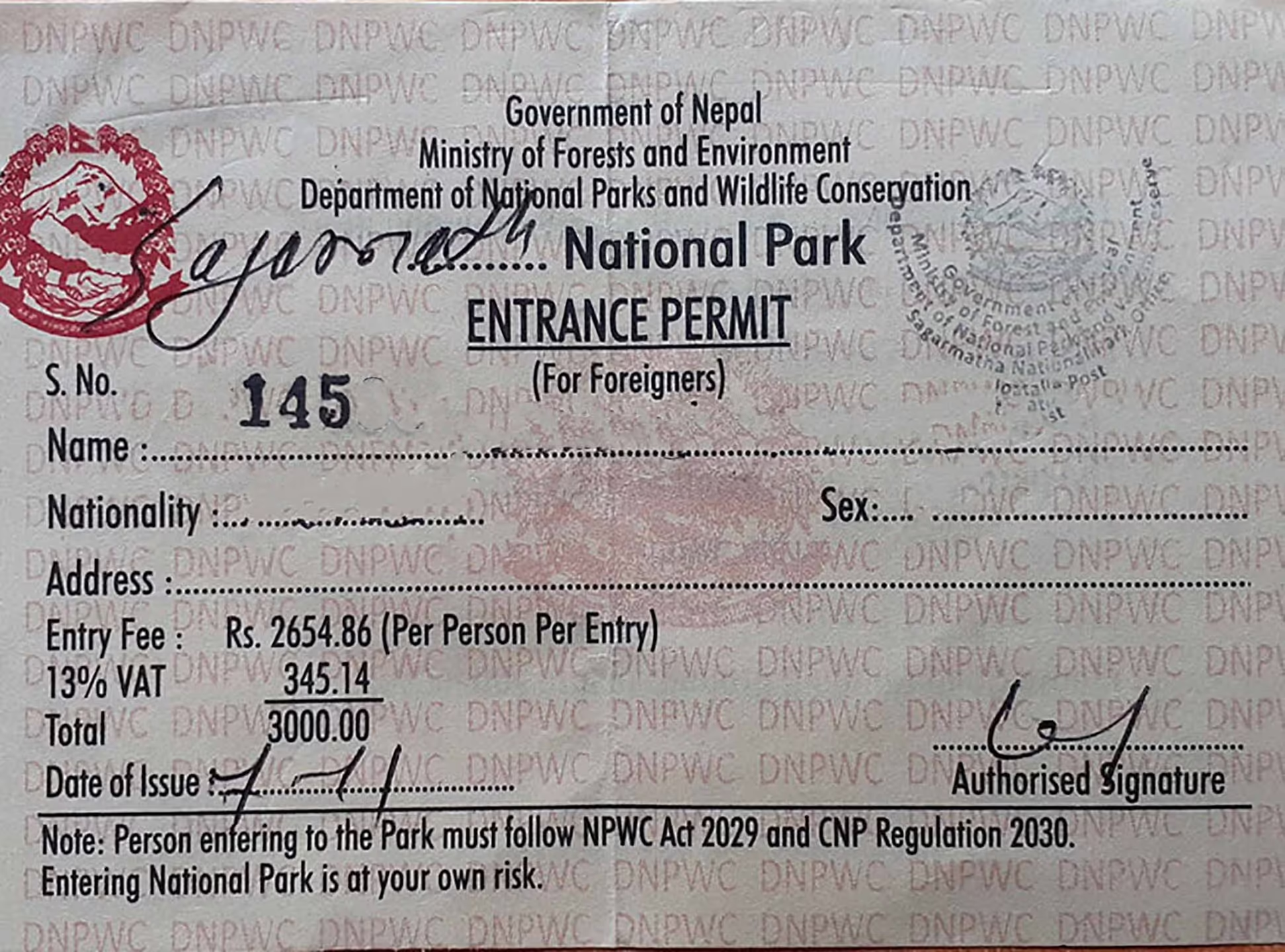
Everest/Khumbu region: The Khumbu Pasang Lhamu Rural Municipality issues a local permit that replaced TIMS in this area. You do not need a TIMS card for Everest Base Camp or surrounding routes.
Annapurna region: The ACAP (Annapurna Conservation Area Permit) has become the primary document checkpoints look for. TIMS may still be carried as a backup but is not the focus of enforcement here.
Tip: Always carry your TIMS even on routes where it's reportedly not checked — checkpoints can be inconsistent, and having documentation ready prevents delays.
How the e-TIMS system works in 2026
The old paper card has been replaced with a digital record. When your agency processes your TIMS, a QR code is generated and associated with your permit number. Checkpoint staff scan this QR code (or manually log the number when connectivity is poor — mobile signal on remote trails is patchy). This record is tied to your passport and trekking route, which is what the safety tracking system uses.
Current TIMS fees (2026)
Foreign nationals — Individual/solo route: NPR 2,000; Group rate: NPR 1,000
SAARC nationals — Individual/solo route: NPR 1,000; Group rate: NPR 600
Fees are paid through the agency's portal at the time of issuing. Confirm the current SAARC rate at the point of booking — NTB sometimes lists a flat NPR 1,000 for all SAARC, and the published rate can differ slightly from what agencies quote.
How EcoTourNepal handles TIMS for clients
When you book a trek through EcoTourNepal, our dedicated admin team processes your TIMS through the agency portal — you don't need to visit any office in person. On the rare occasion that a document requires a physical signature or in-person verification (which does happen for some permit types), we'll let you know in advance and walk you through it. It's not something you need to chase.
For independent travelers who contact us wanting to trek without a guide, we do the honest thing: we point out routes where TIMS isn't required and guide-free trekking is still practical, and we explain your real options rather than overselling you something you don't need. Where both parties want it, we can also arrange for solo travelers to join a small group — which brings the per-person cost down and opens up routes that technically require agency registration.
Plan your Nepal trek and we'll handle the permit paperwork alongside the itinerary.
For a full breakdown of the other permits you'll need alongside TIMS (ACAP, Sagarmatha NP, Restricted Area Permits), see our trekking permits guide.
Frequently asked questions
Do I need a TIMS card for Everest Base Camp in 2026?
No. The Khumbu/Everest region uses a Khumbu Pasang Lhamu Rural Municipality local permit, which replaced TIMS in that area. You need the Sagarmatha National Park permit and the local municipality permit — not a TIMS card.
Can I buy a TIMS card without a trekking agency?
No. Since April 1, 2023, the independent 'green' TIMS card was abolished. All TIMS cards must now be issued through a government-registered trekking agency. You cannot purchase one directly from NTB or TAAN as an individual.
How much does TIMS cost in 2026?
NPR 2,000 per person for foreign nationals trekking as individuals on a given route, or NPR 1,000 per person in a group. SAARC nationals pay NPR 1,000/NPR 600 respectively. Verify current rates with your agency at booking.
Is the e-TIMS QR system working at checkpoints?
Yes, the digital e-TIMS system is the current standard. Checkpoint staff scan the QR code linked to your permit. In areas with poor mobile connectivity, staff may log the permit number manually — this is normal and expected on remote trails.
Do I need TIMS for the Annapurna Circuit or Base Camp?
Technically yes — TIMS is still a listed requirement for Annapurna routes. In practice, Annapurna checkpoints increasingly focus on the ACAP conservation permit, but carry both to avoid any issues at the gate.
How long does it take to get a TIMS card through an agency?
A registered agency can typically process a TIMS card in 1–2 business days through the digital system. There is no need to visit the NTB office — your agency handles it on your behalf.
Keep reading
 Visas & Permits
Nepal Trekking Permits Explained (2026): ACAP, Sagarmatha, RAP & More
One clear breakdown of every Nepal trekking permit by region — ACAP, Sagarmatha NP, Manaslu & Upper Mustang RAP — with 2026 costs and where to buy each one.
 Visas & Permits
Do You Need a Guide to Trek in Nepal? The Mandatory-Guide Rule, Honestly Explained (2026)
Solo trekking on Nepal's major routes is officially banned. Here's where the mandatory-guide rule applies, how it's enforced, and the honest take on whether it actually makes you safer.
 Visas & Permits
Nepal's Digital Nomad Visa 2026: What's Real, What's Proposed & What Nomads Do Today
Nepal's 5-year digital nomad visa has been announced but is not yet live. Here's the honest status, the proposed terms, and how remote workers actually stay long-term today.