Planning
Money in Nepal 2026: ATMs, Cash, Cards, eSewa & Tipping Guide
Nepal ATM limits, fees, and which banks to use. How much cash to carry on a trek. Where to get the best exchange rate. Honest tipping norms for guides, porters, and drivers.

Nepal runs on cash in a way that catches most travelers off-guard. Cards are accepted at upmarket hotels and some restaurants in Kathmandu, but the moment you leave the city — or climb above the trailhead on any trek — you are in cash-only territory for days. Getting this wrong means stress, detours, and the kind of worry you do not want at altitude. Here is the full picture for 2026.
Quick summary
ATM withdrawal limit: most machines cap foreign cards at NPR 20,000–35,000 per transaction (~$150–260); a flat fee of ~NPR 500 per withdrawal is standard. Withdraw the maximum each time.
Best exchange rates: licensed money changers in Thamel (Kathmandu) and Lakeside (Pokhara) — significantly better than banks and far better than the airport. Named changers include Annapurna, Goodwill, and Thamel Universal.
On a 10–14 day teahouse trek, carry NPR 2,000–3,000 per day in spending money beyond your package (for extras: charging, hot showers, snacks, bottled drinks). There are essentially no ATMs above the trailhead.
Tipping norms: guide ~US$10–25/day, porter ~US$8–15/day, given as a lump sum at the end; restaurant ~10% (check if a service charge is already added).
eSewa/Khalti are effectively locals-only — they require a Nepali mobile number and bank link to fund. Most tourists cannot set them up; stick to cash and cards.
Never change money at the airport beyond a small amount. The rate is notably worse than in the city.
ATMs: the rules that matter
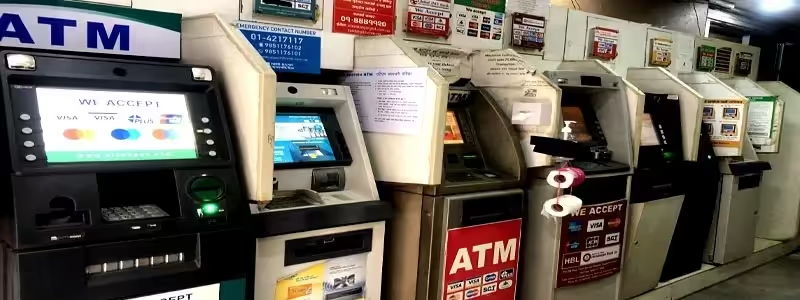
Foreign debit and credit cards (Visa/Mastercard) work at ATMs across Kathmandu, Pokhara, and tourist centers. The mechanics are predictable:
Per-transaction limit: typically NPR 20,000–35,000 (commonly 25,000), or roughly $150–260 per withdrawal. Banks like Nabil, NIC Asia, and Himalayan Bank are commonly reported to allow the higher end of this range.
Fee: a flat ~NPR 500 (~$4) per transaction is standard for foreign cards, regardless of the amount withdrawn. This makes frequency the enemy. If you withdraw NPR 10,000 four times, you pay NPR 2,000 in fees. If you withdraw NPR 35,000 once, you pay NPR 500. Always take the maximum.
Your home bank: also charges international ATM fees on top of the Nepali bank fee. Before leaving, check what your bank charges and whether a travel card (Wise, Revolut, etc.) would cut that.
ATM availability above the trailhead: essentially zero. Namche Bazaar (3,440 m) has a few ATMs but they are unreliable and often empty. Do not count on them. For any trek — EBC, ABC, Langtang, Manaslu — withdraw all the cash you need in Kathmandu before you start.
How much cash to carry on a trek
This is the question EcoTourNepal answers in the pre-trek briefing so clients carry the right amount and do not have to guess.
When you book through EcoTourNepal, accommodation, meals, permits, and guide/porter fees are covered. What you pay for on the trail out of pocket:
Device charging: paid per charge at most teahouses (higher with altitude)
Hot shower: often a paid extra above 3,000 m
Wifi: Everest Link cards, paid per hour or per GB
Snacks and drinks: protein bars, chocolate, beer, soft drinks — readily available, but expensive by the time they have been carried up to altitude
Personal shopping: yak wool souvenirs, prayer flags, thangkas
Tips (see below)
A reasonable working figure for extras: NPR 2,000–3,000 per day on a standard teahouse trek. For a 12-day EBC trek, that is roughly NPR 24,000–36,000 (~$180–270) in pocket money beyond the package price. This is a ballpark — spending habits vary significantly.
Where to get the best exchange rate
The hierarchy, from worst to best:
Airport exchange counter (worst): convenient, but rates are poor. Change only what you need for your taxi.
Banks: legal and reliable, but slower process and not the best rate.
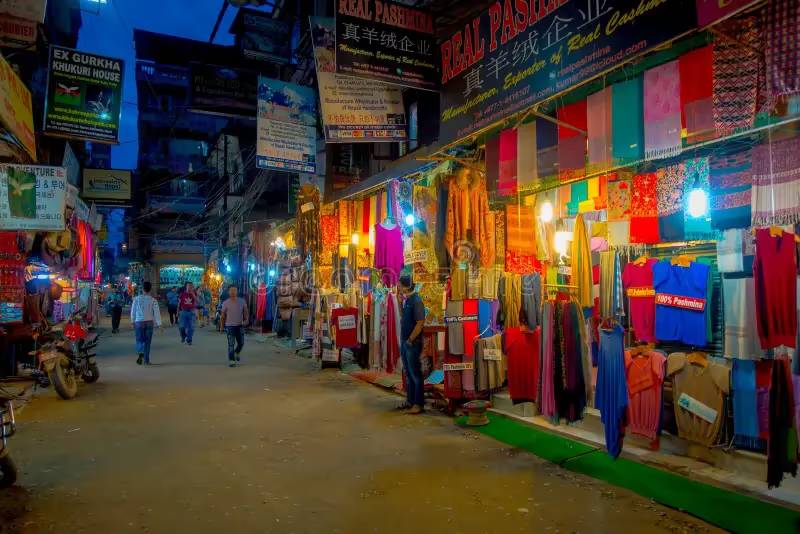
Licensed money changers in Thamel/Lakeside (best): significantly better rates, fast, and safe if you use a licensed shop. Named changers that have been recommended consistently: Annapurna Money Changer, Goodwill Money Changer, and Thamel Universal Money Changer.
Practical approach: compare two shops (they are within meters of each other in Thamel), agree on the rate before handing over anything, then count the rupees before leaving the counter.
Major currencies are accepted — USD, EUR, GBP, AUD, and most other tourist-origin currencies. USD is the universal fallback if your currency is less common.
Tip on timing: change money early in your Kathmandu stay. Do not leave it to the last morning before your trek starts, when you will also be sorting gear, getting a pre-trek briefing, and checking equipment.
Cards in Nepal
In Kathmandu, cards (Visa/Mastercard) are accepted at upmarket hotels, most tourist restaurants, and some trekking gear shops. In smaller restaurants, street food stalls, most shops outside the tourist center, and anywhere outside the main cities — cash only.
Expect a 1–3% surcharge for card payments at many merchants. This is common and normal.
eSewa and Khalti: are they usable by tourists?
eSewa and Khalti are Nepal's dominant mobile payment wallets — widely used by locals for everything from groceries to utility bills. The short answer for tourists: effectively locals-only.
To fund either wallet, you need:
A Nepali mobile number
A Nepali bank account linked via KYC verification
Most international visitors cannot set these up. The apps themselves may download and open, but funding them from a foreign card or account is not straightforward through standard means.
There is a workaround that some repeat visitors use: a local friend or contact can accept cash from you and load the equivalent into a wallet. Some local kirana (convenience) shops also offer cash-to-wallet loading as a service. But for a first-time visitor on a two-week trip, it is not worth the effort — cash and international cards handle everything you need.
Tipping: the real norms
Tipping is the question clients ask most frequently, and the honest answer is that the amounts matter to the people receiving them.
A note from the EcoTourNepal team: Nepali culture does not traditionally include tipping between locals — it is not expected when a Nepali customer pays a Nepali business. But over decades of international trekking tourism, tips from foreign visitors have become a meaningful and expected part of a guide or porter's income. When a client from Europe or North America asks "is tipping expected?" — yes, it is, and here are real numbers.
Trekking guide: US$10–25 per day (longer trek, more remote route, higher difficulty → higher end). Given as a lump sum on the last day, not daily.
Porter: US$8–15 per day. Porters carry significantly more physical burden per day than guides and are often the most underappreciated members of the team. Lump sum at the end.
City driver or day guide: smaller token — typically US$5–10 for a full day, based on your judgment.
Restaurants: approximately 10%, but check your bill first — many tourist-facing restaurants in Kathmandu add a 10% service charge plus 13% VAT. If the service charge is already there, a small additional tip is appreciated but not required.
If you book through EcoTourNepal, the pre-departure briefing covers exact tipping guidance for your specific team. Tips are separate from the package price and go directly to your guide and porter — the EcoTourNepal guides are integral to the experience, and the porters, as the team puts it, are the hardest-working people on the mountain.
How EcoTourNepal handles the money conversation
The pre-trek briefing covers exactly how much cash to carry for your specific itinerary, which denomination to have, and what each expense category will cost at altitude. Clients who arrive for the briefing leave with a clear number in their wallet and no guesswork. Everything except tips and personal spending is included in the package — there are no hidden extras to discover halfway up the mountain.
Plan a custom Nepal trip with full transparency on costs
Frequently asked questions
Frequently asked questions
What is the ATM withdrawal limit in Nepal for foreign cards?
Most ATMs cap foreign card withdrawals at NPR 20,000–35,000 per transaction (roughly $150–260). Banks such as Nabil, NIC Asia, and Himalayan Bank tend to allow the higher end. A flat fee of approximately NPR 500 is charged per withdrawal regardless of amount, so always withdraw the maximum.
How much cash should I carry on a Nepal trek?
If your package covers accommodation, meals, permits, and guide/porter fees, budget roughly NPR 2,000–3,000 per day for extras: device charging, hot showers, wifi, snacks, drinks, and personal purchases. For a 12-day trek that is approximately NPR 24,000–36,000 (~$180–270). Withdraw everything before leaving Kathmandu — there are no reliable ATMs above the trailhead.
Where can I get the best exchange rate in Nepal?
Licensed money changers in Thamel (Kathmandu) and Lakeside (Pokhara) offer the best rates — significantly better than banks and well above the airport. Recommended names include Annapurna, Goodwill, and Thamel Universal. Compare two shops, agree on the rate upfront, and count the cash before you leave.
How much should I tip a trekking guide and porter in Nepal?
Standard ranges: guide US$10–25 per day, porter US$8–15 per day. Tips are given as a lump sum on the last day of the trek, not daily. Tips go directly to your guide and porter and form a meaningful part of their income from international trekking work.
Can I use eSewa or Khalti as a tourist in Nepal?
In practice, no. eSewa and Khalti require a Nepali mobile number and a Nepali bank account for KYC verification. Most international visitors cannot fund these wallets through standard means. Stick to cash and international debit/credit cards, which cover everything you will need.
Do restaurants in Kathmandu accept credit cards?
Many tourist-facing restaurants, upmarket hotels, and trekking gear shops in Kathmandu accept Visa and Mastercard. A 1–3% surcharge for card payment is common. Outside tourist centers, at street food stalls, and at most places on the trekking routes — cash only.
Keep reading
 Treks & Peaks
Travel Insurance & Helicopter Rescue for Nepal Trekking — What You Actually Need
What altitude coverage to buy, how helicopter rescue really works in Nepal, the old fraud era that's now cleaned up, and why your operator matters in an emergency.
 Planning
Nepal Without Trekking: Best Trips for People Who Don't Want to Hike
Nepal is worth every day even if you never put on hiking boots. Culture, wildlife, Pokhara, Lumbini, scenic mountain flights, and food — a complete Nepal without a single trek.
 Food & Culture
Food & Water Safety in Nepal: How to Avoid Stomach Trouble on Your Trip
Tap water is unsafe anywhere in Nepal. Here's the practical guide to staying healthy: water treatment options on trek and in cities, what to eat and avoid, and what happens when you do get sick.