Treks & Peaks
Travel Insurance & Helicopter Rescue for Nepal Trekking — What You Actually Need
What altitude coverage to buy, how helicopter rescue really works in Nepal, the old fraud era that's now cleaned up, and why your operator matters in an emergency.
 ByDr. Barsha DahalMedical Lead
Published
Travel insurance for a Nepal trek is not optional — and "travel insurance" is not the same as the right travel insurance. Get this wrong and you are looking at a US$5,000–10,000 helicopter bill with no one to call.
Quick summary
The altitude rule: your policy must cover helicopter evacuation to at least 1,000 m above your planned maximum altitude — most basic policies exclude above 3,000–4,000 m, which disqualifies them for EBC (5,364 m), Manaslu, or any peak climb.
The rescue process: contact your insurer's 24/7 assistance line first — before any helicopter is called. Bypassing this step can void your reimbursement.
Cost without insurance: a helicopter evacuation from altitude in Nepal typically runs US$3,500–10,000 or more depending on distance and conditions.
The fraud era is over: Nepal audited its trekking agencies after widespread helicopter-rescue fraud. Bad actors went to prison. The industry is clean now, but still choose your operator carefully.
Your operator is part of the safety net: when something goes wrong at altitude, you do not want to be the person placing international calls on a bad signal. Your guide and operator handle coordination.
Book early: some insurers require you to buy the policy before you depart your home country.
Why standard travel insurance is not enough
Most off-the-shelf travel insurance covers trip cancellation, lost luggage, and medical evacuation — but often only up to a certain altitude (commonly 3,000–4,000 m) or only when medically necessary with a licensed practitioner's sign-off at the scene. On a remote Himalayan trail at 5,000 m, there is no licensed practitioner at the scene. There is your guide.
For Nepal's major trekking routes, the coverage floor you actually need:
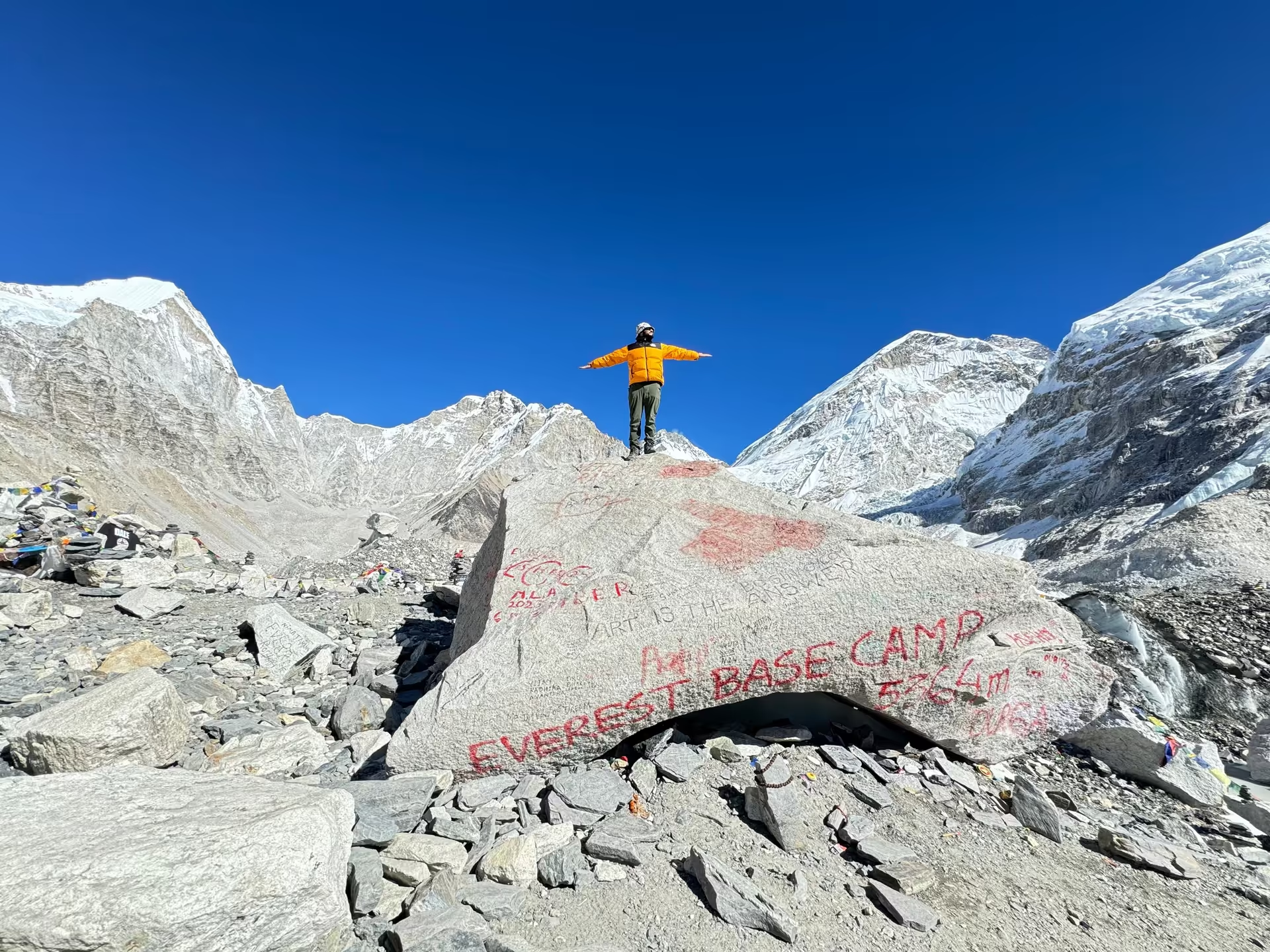
Everest Base Camp: 5,364 m base camp, 5,545 m Kala Patthar. You need heli-evac coverage to at least 6,500 m.
Annapurna Base Camp: 4,130 m. Coverage to 5,000+ m.
Manaslu Circuit: Larkya La at 5,160 m. Coverage to 6,000+ m.
Mera Peak: Summit at 6,476 m. You need a mountaineering-specific policy to 7,000+ m.
The rule of thumb is simple: cover at least 1,000 m above where you plan to go. Read the policy exclusions before buying, not after an incident.
Insurers trekkers commonly use
Note that the right insurer depends on your nationality and home country of purchase — verify before buying:
World Nomads — widely used, clear adventure-sports add-ons
Global Rescue — specialists in remote medical evacuation and security; popular with serious mountaineers
Heymondo — strong European coverage with high-altitude options
True Traveller — UK-based, explicit mountain sports tiers
SafetyWing — subscription model, useful for long stays
Always confirm the maximum altitude for medical evacuation and helicopter rescue in the policy document, not in the marketing copy. These are different sections and often contradict each other.
How helicopter rescue actually works in Nepal
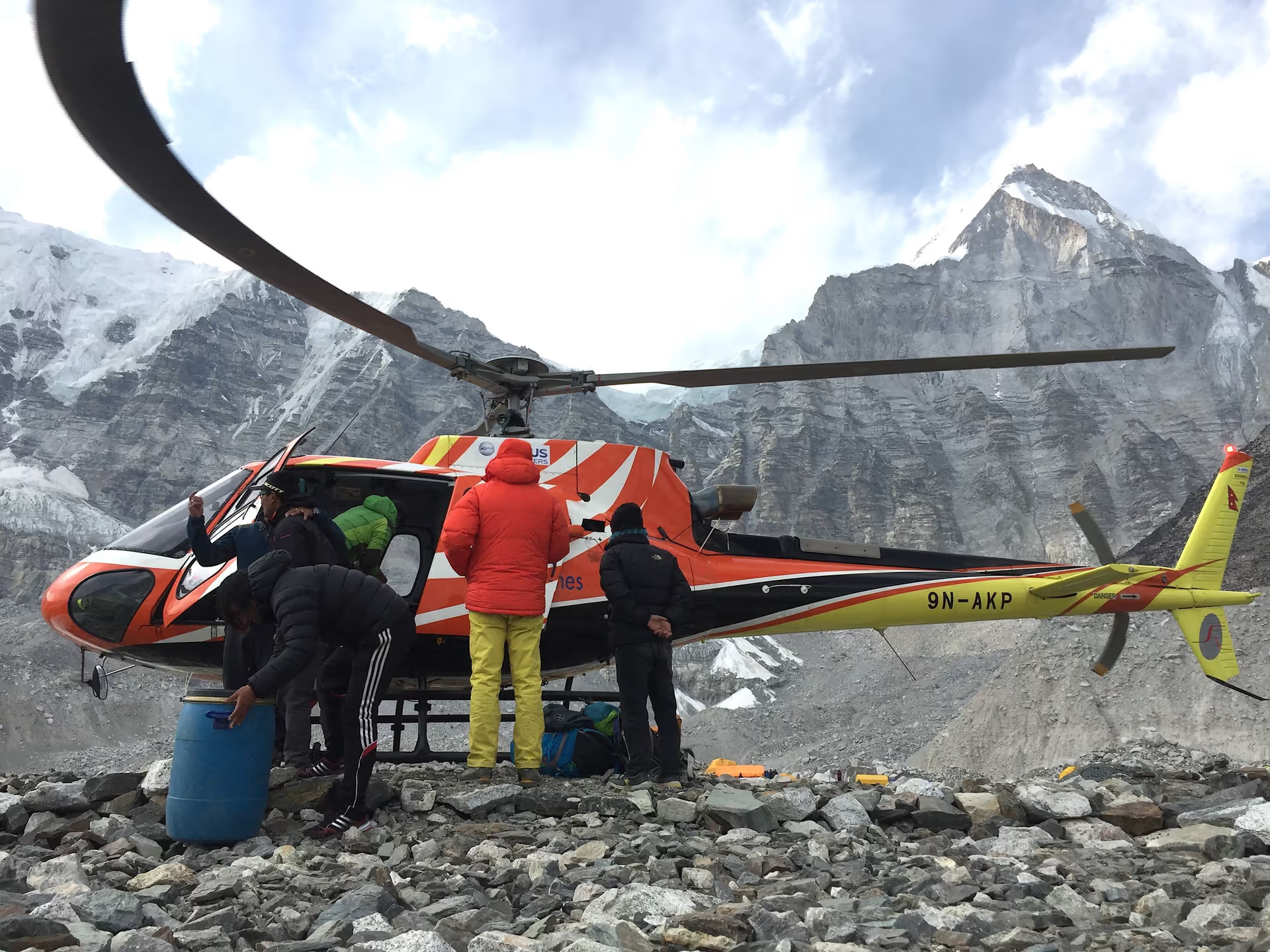
Here is the real sequence when something goes wrong on a trek:
Your guide assesses the situation and makes the call — serious AMS, injury, or a medical emergency that warrants evacuation.
Call the insurer's 24/7 emergency assistance line — before any helicopter is dispatched. This is the step most people do not know is mandatory. The insurer coordinates the rescue on their side; calling a helicopter operator directly without this step can reduce or void your claim.
The guide and operator coordinate on the ground — your trekking company contacts the helicopter company, confirms a landing zone, and communicates with the rescue team. This is why being with an organised operator matters: they have these numbers, they have done this before, and they speak Nepali.
Payment or guarantee up front — in Nepal, helicopter companies typically require a payment guarantee before the bird lifts. Your insurer usually provides a letter of guarantee directly to the operator. If that process is slow, the trekker or operator may front the cost and claim reimbursement with receipts and a doctor's report afterward.
Evacuation and medical care — the helicopter takes the patient to the nearest capable hospital, typically in Kathmandu.
The documentation you need for a successful claim: the insurer's incident reference number, the helicopter operator's invoice, any medical report from a clinic or hospital on route, and a guide's signed statement describing the situation.
The most common claim mistake: arranging a helicopter without contacting the assistance line first. Insurers interpret this as you making an unauthorised medical decision and will fight the reimbursement. Always call the line first, even if the guide is already on the radio.
The old rescue-fraud era — and why things are different now
Anyone who has researched Nepal trekking insurance for more than ten minutes will find horror stories from the 2010s: fraudulent "emergency evacuations" arranged by corrupt operators for healthy trekkers, with the operator pocketing the insurance payout split with the helicopter company. It happened, it was widespread, and it made international headlines.
That era is largely over. Nepal's government and its trekking association conducted serious audits across the industry. The bad actors — the ones running fake rescues — ended up in prison. The majority of operators were honest and passed the scrutiny. Today the industry is regulated far more tightly and the rescue-fraud pattern has effectively disappeared.
This matters because it means the helicopter rescue system in Nepal is now a legitimate emergency resource you can trust. When your guide calls for a helicopter, it is because you need one.
How EcoTourNepal handles emergencies
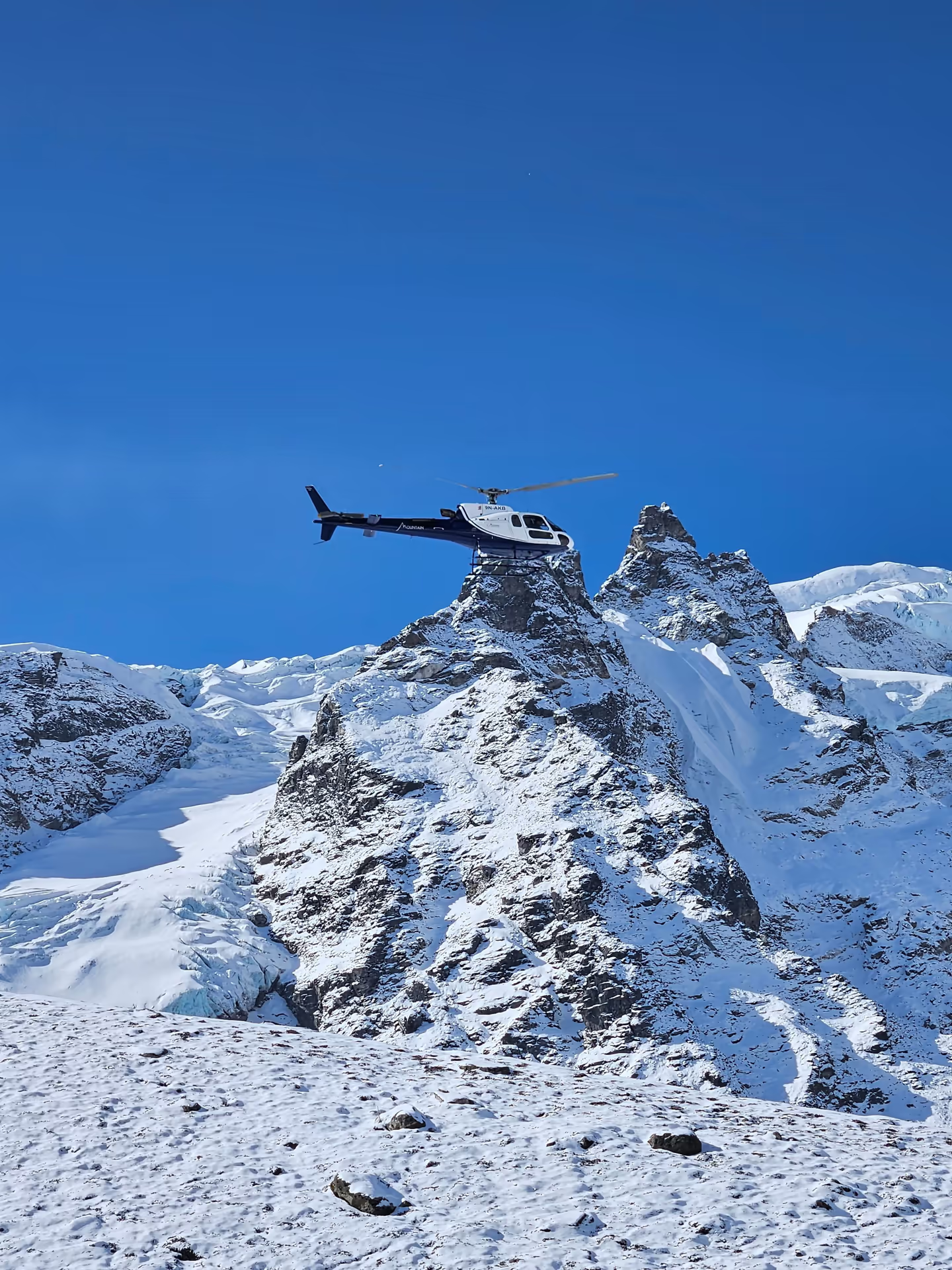
Every EcoTourNepal trek includes a pre-departure briefing where we confirm clients have appropriate insurance. We ask to see the policy altitude coverage — not as a formality, but because we have seen the consequences of gaps.
Our guides carry the insurer assistance line numbers for the major policies our international clients use. They know the local helicopter operators and have working relationships with them. And our on-call doctor is available by teleconsultation throughout the trek — providing the medical assessment that can make the difference between a clear claim and a disputed one.
If you are planning a Manaslu Circuit, EBC Trek, or Mera Peak Climbing and want to walk through the right insurance coverage before booking, contact us. This is a conversation worth having before you leave, not during the emergency.
Plan a custom Nepal trek · All mountain treks · Why travel with us
Frequently asked questions
What altitude does my travel insurance need to cover for the Everest Base Camp trek?
At minimum, your policy must cover helicopter evacuation to 6,500 m (EBC is at 5,364 m; the standard rule is at least 1,000 m above your maximum altitude). Verify this in the policy exclusions document, not just the summary.
How much does a helicopter rescue cost in Nepal without insurance?
Typically US$3,500–10,000 or more depending on altitude, distance, and conditions. A rescue from near Everest Base Camp can exceed $10,000. This cost is entirely on you without appropriate insurance.
Do I need to do anything before calling a helicopter in an emergency?
Yes — call your insurer's 24/7 emergency assistance line first, before a helicopter is dispatched. Arranging a rescue without this step can void or reduce your reimbursement. Your trekking guide and operator will help manage the coordination once you have contacted the insurer.
Is the Nepal helicopter rescue fraud problem still happening?
No. After extensive government and industry audits in the early 2020s, the operators running fraudulent rescues were prosecuted and imprisoned. The system has been reformed and the fraud pattern is not something you should be worried about with a licensed, registered operator today.
Does my standard credit card travel insurance cover Nepal trekking?
Almost certainly not at the altitudes required for EBC or similar treks. Credit card policies typically exclude high-altitude trekking or cap medical evacuation well below 5,000 m. Check the exclusions section carefully and buy a dedicated adventure policy.
Can I buy insurance after arriving in Nepal?
Some insurers require you to purchase before leaving your home country. Others allow purchase up until 24–48 hours before departure for a trek. Check the terms for your specific policy; do not assume you can sort it out in Thamel.
Keep reading
 Treks & Peaks
Everest Base Camp vs Annapurna Base Camp: Which Trek Is Right for You?
Side-by-side comparison of EBC and ABC on difficulty, altitude, days, cost, and crowds. Everest has the name; Annapurna has the beauty. Here's how to decide.
 Visas & Permits
Do You Need a Guide to Trek in Nepal? The Mandatory-Guide Rule, Honestly Explained (2026)
Solo trekking on Nepal's major routes is officially banned. Here's where the mandatory-guide rule applies, how it's enforced, and the honest take on whether it actually makes you safer.
 Planning
Money in Nepal 2026: ATMs, Cash, Cards, eSewa & Tipping Guide
Nepal ATM limits, fees, and which banks to use. How much cash to carry on a trek. Where to get the best exchange rate. Honest tipping norms for guides, porters, and drivers.