Treks & Peaks
Everest Base Camp vs Annapurna Base Camp: Which Trek Is Right for You?
Side-by-side comparison of EBC and ABC on difficulty, altitude, days, cost, and crowds. Everest has the name; Annapurna has the beauty. Here's how to decide.

Two treks. Two entirely different worlds. Both will change you. The question is which one fits your time, fitness, budget, and the story you want to tell when you get home.
Quick summary
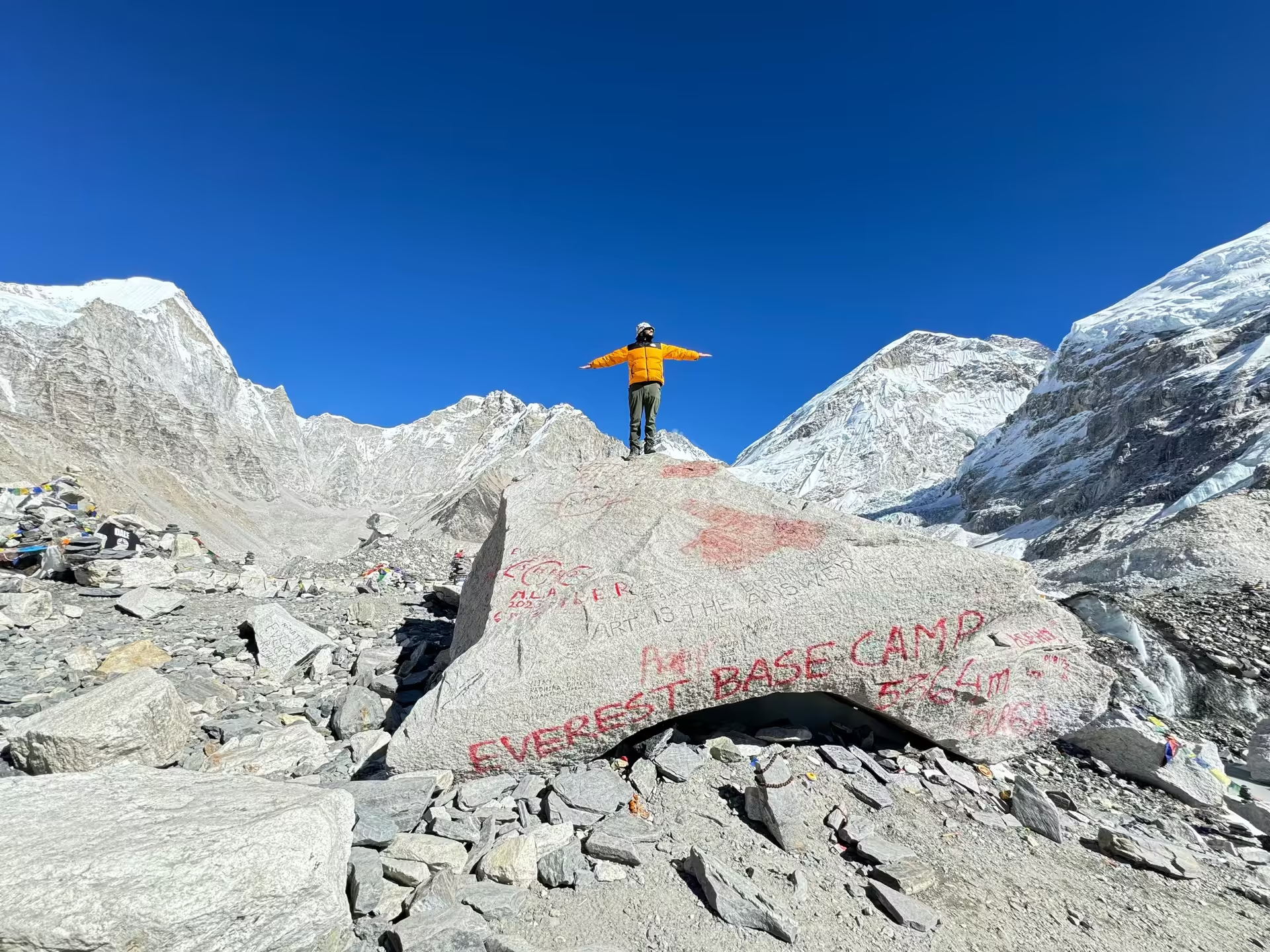
EBC reaches higher — 5,364 m at base camp, 5,545 m at Kala Patthar — and takes 12–14 days minimum; altitude sickness is the main challenge.
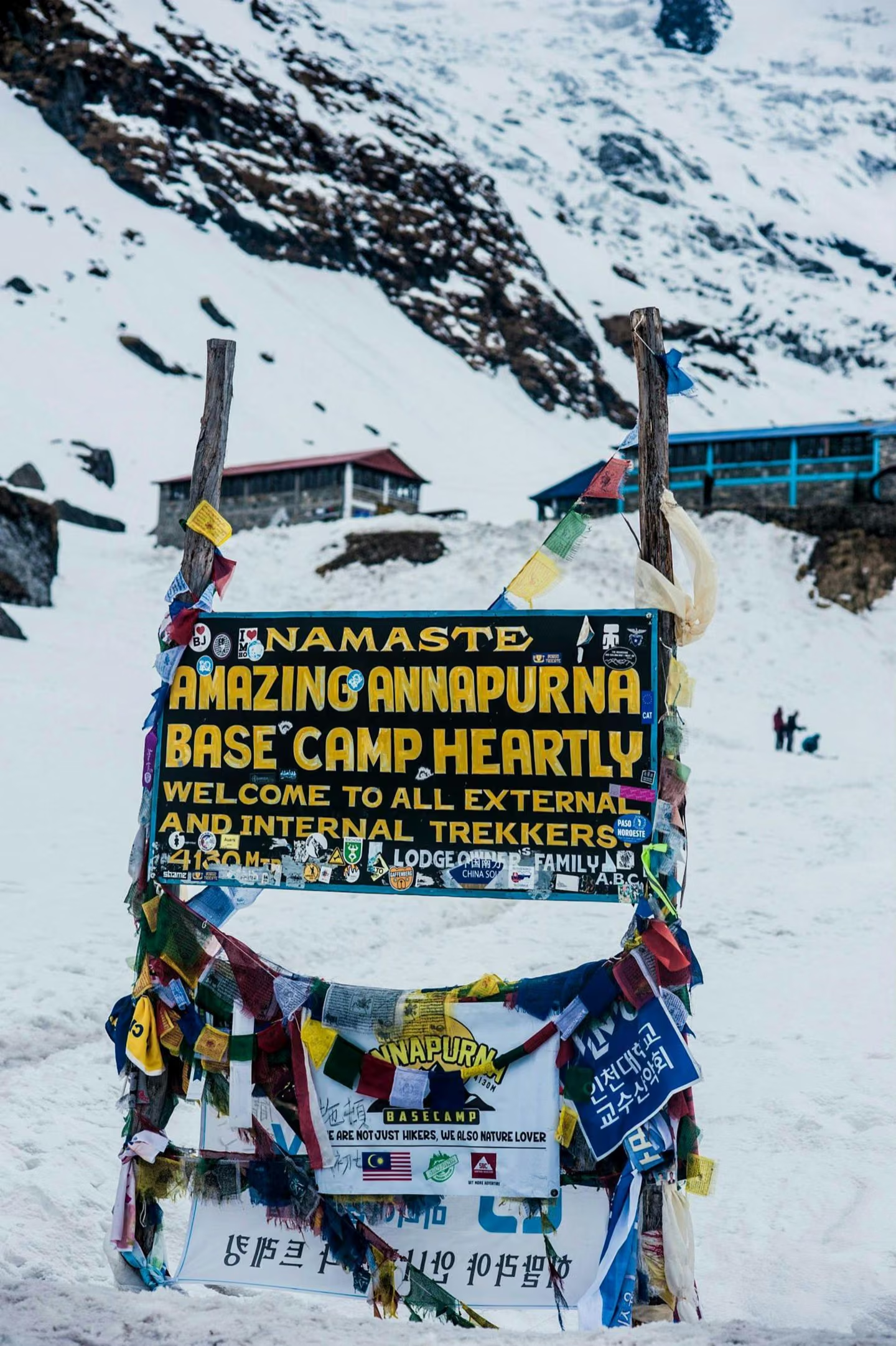
ABC is lower — 4,130 m — and takes 7–12 days with no mountain flight required; the scenery is arguably more dramatic per step.
Everest has the name. When you get home and say "I stood at Everest Base Camp," every room goes quiet. Annapurna won't do that — but trekkers who've done both often say Annapurna is the more beautiful walk.
Cost gap: the Lukla flight (Kathmandu → Lukla, often via Ramechhap in peak season) adds roughly US$400+ round trip to EBC; ABC needs no mountain flight.
Nobody regrets either. Almost everyone comes back saying "next time I'll do the other one."
Both are fully operational with EcoTourNepal guides — EBC details here and ABC details here.
The side-by-side at a glance
Max altitude — Everest Base Camp (EBC): 5,364 m (BC) / 5,545 m (Kala Patthar); Annapurna Base Camp (ABC): 4,130 m
Typical days — Everest Base Camp (EBC): 12–14 days; Annapurna Base Camp (ABC): 7–12 days
Getting there — Everest Base Camp (EBC): Fly Kathmandu → Lukla (or Ramechhap); Annapurna Base Camp (ABC): Road to Nayapul / Pokhara start
Flight cost — Everest Base Camp (EBC): ~US$400+ round-trip; Annapurna Base Camp (ABC): None
Main challenge — Everest Base Camp (EBC): Altitude, AMS risk; Annapurna Base Camp (ABC): Steep stair sections; lower AMS risk
Best season — Everest Base Camp (EBC): Mar–May, Oct–Nov; Annapurna Base Camp (ABC): Oct–Nov, Dec–Feb (lower sections)
Crowds — Everest Base Camp (EBC): High on the main trail; Annapurna Base Camp (ABC): Moderate; ABC bowl is less crowded
Scenery style — Everest Base Camp (EBC): Stark, lunar, Khumbu glacier; Annapurna Base Camp (ABC): Rhododendron forests, amphitheatre basin
Difficulty and where people actually struggle
On EBC
The altitude is the boss of this trek. Above 3,500 m, AMS symptoms — headache, poor sleep, nausea — can stop even fit trekkers cold. The itinerary is built around acclimatization: you go up, come down, sleep lower, go up again. Rushing it is the single biggest mistake people make.
The terrain itself is not technically difficult. Long walking days on rocky, dusty trail, with Namche Bazaar (3,440 m) as a natural checkpoint. Kala Patthar (5,545 m) is a pre-dawn slog in bitter cold, but the sunrise view of Everest's summit pyramid above the clouds is worth every step.
On ABC
The altitude challenge is real but more forgiving — 4,130 m is within range of most fit first-timers without the same AMS anxiety. What catches people off guard is the stair sections: the approach through the Modi Khola gorge involves thousands of stone steps cut into steep hillsides. Knees take a beating on the descent.
The reward is the Annapurna Sanctuary: a natural amphitheatre ringed by Annapurna I (8,091 m), Machapuchare (6,993 m, the sacred "Fish Tail" peak), Hiunchuli, and five other peaks. You sleep inside a bowl of giants.
The cost difference, honestly
Both treks include accommodation, meals, guide fees, porter fees, and permits when booked with EcoTourNepal. The price is case-by-case based on group size, season, and days — we don't print a single number because we'd rather give you an honest quote than a figure that doesn't fit your trip.
The structural difference is the Lukla flight. EBC requires flying to Lukla, and in peak season (March–May and October–November) CAAN shifts those flights from Kathmandu to Manthali/Ramechhap Airport — a 4–5 hour pre-dawn drive from the city before a 15-minute mountain flight. Round-trip Lukla flights for a foreign national typically run US$400+ and must be booked in advance.
ABC needs no mountain flight. You travel by road from Pokhara (or Kathmandu), which removes a cost layer and a weather-delay risk.
For a first-timer with limited days, consider Langtang or Mardi Himal — both offer dramatic mountain scenery in 7–10 days without the Lukla flight logistics or the high-altitude challenge. Our team will be honest about whether EBC or ABC suits your window. See all Nepal treks.
"Everest has the name, Annapurna has the beauty"
This is the line our founder uses, and it is genuinely the clearest way to split the choice.
Choose EBC if: the name Everest matters to you — for your own bucket list, for the story back home, for the feeling of standing where every great mountaineer has stood. The landscape is raw, austere, and unlike anywhere else on Earth. The Khumbu glacier moraine, the fluttering prayer flags at base camp, the sheer wall of the Lhotse Face above you — these are images that stay.
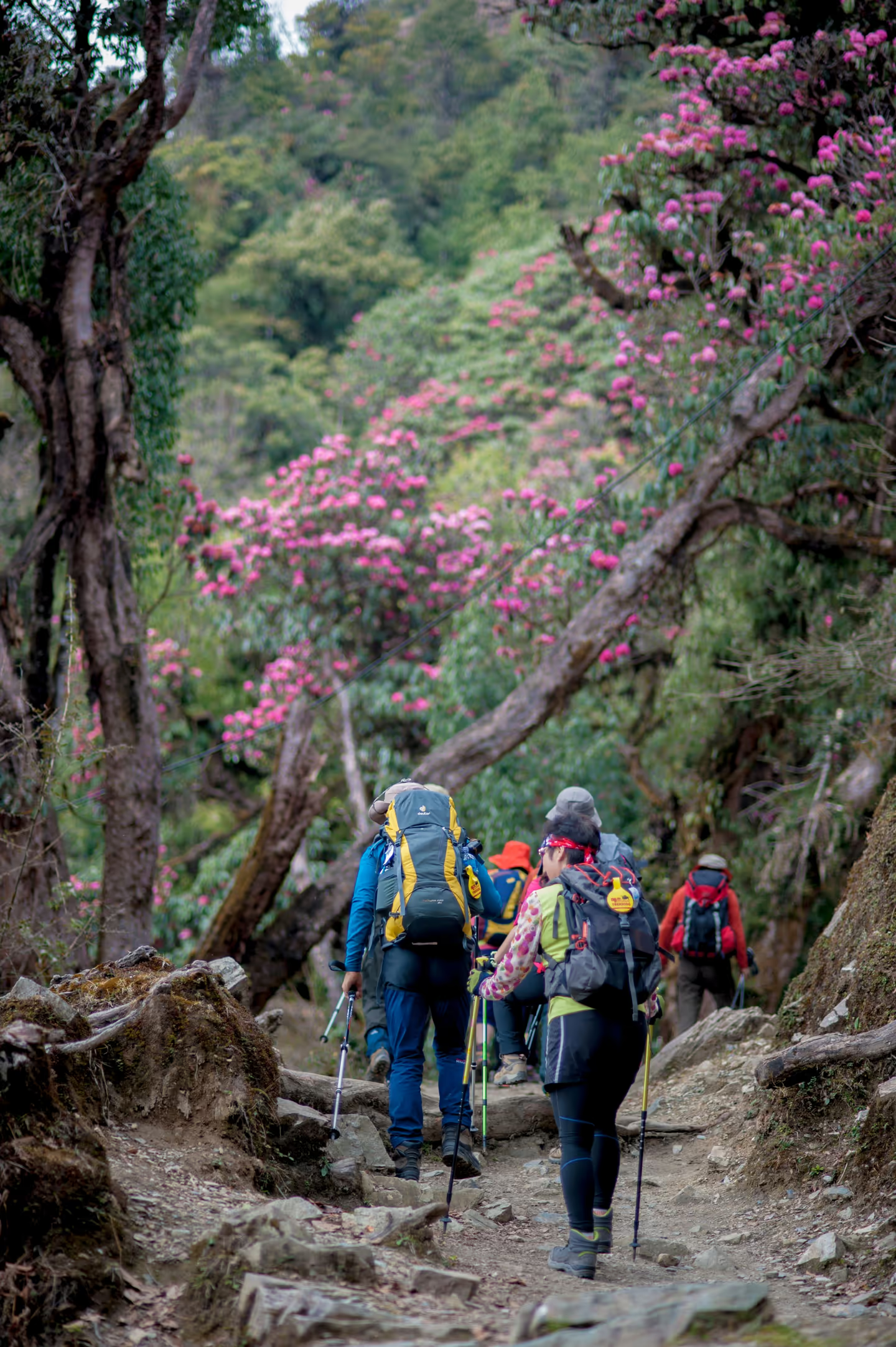
Choose ABC if: you want the most beautiful walk. The rhododendron forests in spring, the dramatic final gorge approach, and the moment you step into the Annapurna Sanctuary and see peaks in every direction — that is genuinely one of the great trekking experiences in the world, and it gets less traffic than Everest.
Nearly everyone who has done both says the same thing: they don't regret either, and they're already planning to come back for the one they haven't done. So if you're agonizing, go with whichever your gut says, and know the other one is waiting.
How EcoTourNepal helps you decide
When you reach out to us, we ask three questions: how many days do you have, what altitude experience do you bring, and which feeling matters more — awe at the name or awe at the scenery. From those answers we recommend the right trek or sometimes a hybrid itinerary (Gokyo Lakes + EBC, or ABC + Poon Hill).
Every booking includes all permits, licensed guides, porters, and accommodation. For EBC we manage the Lukla/Ramechhap logistics and build buffer days into the schedule so a flight delay doesn't collapse your itinerary.
Plan a custom Nepal trek — tell us your travel window and we'll send itinerary options within 24 hours.
FAQs
Frequently asked questions
Which trek is harder — Everest Base Camp or Annapurna Base Camp?
EBC is harder primarily because of altitude: you reach 5,364 m (5,545 m at Kala Patthar) versus ABC's 4,130 m, and altitude sickness is the main risk on EBC. ABC is more accessible altitude-wise but has punishing stair sections on steep terrain.
How many days does each trek take?
EBC typically takes 12–14 days including proper acclimatization stops. ABC can be done in 7–12 days. Neither should be rushed — cutting acclimatization days on EBC significantly increases AMS risk.
Which trek is more expensive?
EBC is generally more expensive because it requires a return Lukla mountain flight (approximately US$400+ round-trip for foreigners) on top of guide, porter, and permit costs. ABC needs no mountain flight, which removes that cost and the weather-delay risk.
Which trek has better scenery?
Both are spectacular but different. EBC scenery is raw and austere — glacier moraines, high Khumbu valley, the sight of Everest itself. ABC puts you inside the Annapurna Sanctuary, a dramatic basin ringed by eight major peaks. Many trekkers who have done both say Annapurna is the more beautiful walk.
Can I do either trek if I've never trekked at altitude before?
ABC is more suitable for altitude newcomers given its maximum of 4,130 m. EBC is achievable for beginners but carries more altitude risk — proper acclimatization days are non-negotiable. For a genuine first trek, Langtang or Mardi Himal are excellent starting points.
When is the best time to do EBC or ABC?
October–November (post-monsoon) is ideal for both — stable weather, clear skies, and good visibility. March–May (spring) is also excellent, especially for rhododendrons on ABC. Avoid the monsoon months (June–September) for EBC and ABC views.
Keep reading
 Treks & Peaks
Travel Insurance & Helicopter Rescue for Nepal Trekking — What You Actually Need
What altitude coverage to buy, how helicopter rescue really works in Nepal, the old fraud era that's now cleaned up, and why your operator matters in an emergency.
 Visas & Permits
Do You Need a Guide to Trek in Nepal? The Mandatory-Guide Rule, Honestly Explained (2026)
Solo trekking on Nepal's major routes is officially banned. Here's where the mandatory-guide rule applies, how it's enforced, and the honest take on whether it actually makes you safer.
 Planning
Money in Nepal 2026: ATMs, Cash, Cards, eSewa & Tipping Guide
Nepal ATM limits, fees, and which banks to use. How much cash to carry on a trek. Where to get the best exchange rate. Honest tipping norms for guides, porters, and drivers.