Work From Nepal
Nepal for AI and Startup Communities: A Retreat Idea for Builders
Why the Himalayas are an underrated destination for AI builders and startup communities — deep work, strong city internet, nature, and memorable team bonding.

The AI community has retreats in Bali. Startup weekends in Chiang Mai. YC events in San Francisco. What it does not have — yet — is a standing answer to the question every builder community asks at some point: where do we go that is genuinely different, that produces real focus, and that people will still be talking about a year later?
Nepal is that answer. The Himalayas do not care about your funding round, and that is exactly the point.
Quick summary
Nepal offers what builder communities actually need: deep-work conditions, strong city internet, dramatic nature for reset and bonding, low social distraction, and a cultural experience that is genuinely novel even for well-travelled founders.
Strong internet in Kathmandu and Pokhara: fibre broadband with real speeds (178 Mbps down / 87 Mbps up tested in-city), WiFi 6 routers now standard in quality properties, LAN option available for calls.
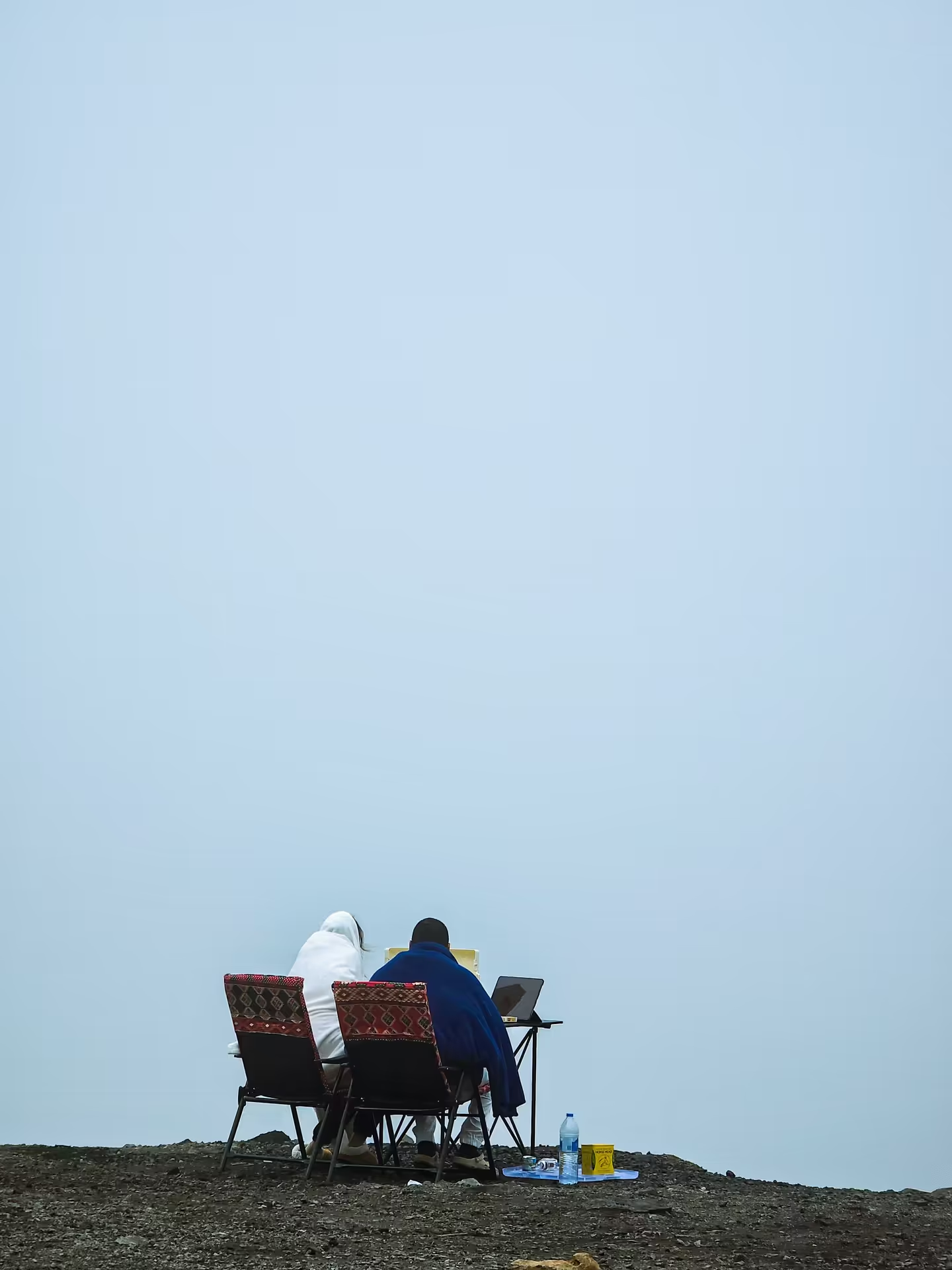
Memorable bonding is not a marketing line here: a sunrise trek to a Himalayan viewpoint, white-water rafting on the Trishuli, or paragliding over Pokhara's lake with your co-founder produces a shared reference point that Slack channels cannot replicate.
Target communities: SaaS founder groups, AI meetup communities, software outsourcing firms, coworking community offsites, accelerator cohort retreats.
EcoTourNepal organises this end-to-end: the founder is a software engineer who has built the infrastructure from a builder's perspective — desks, LAN, backup power, meeting rooms, weekend excursions, and community meetups by sector.
The soft pitch is not "come to Nepal": it is "come somewhere that makes you think differently" — Nepal earns that claim.
What builders actually need from a retreat
Most tech retreats fall into one of two failure modes: they try to be too much like a conference (talks, panels, networking, noise), or they try to be too much like a vacation (beach, drinks, loose days). Neither produces the thing builders come for, which is genuine creative output and authentic relationships.
The retreat format that works for builders has three ingredients:
Extended uninterrupted focus time — not 90-minute slots between panel sessions, but whole mornings where you can actually write, build, or think.
Shared physical experience — something adventurous enough that it generates trust and story, not just a team dinner.
An environment that rewards curiosity — a place where the world outside the screen is interesting enough that stepping away from the keyboard feels like gain, not loss.
Nepal delivers all three better than any beach destination and better than any city hotel conference room.
Why Nepal specifically — the builder's case
The deep-work conditions are real
Kathmandu sits at a lower altitude than most people expect (1,400 m), cool enough to think clearly, with long evenings that are quiet and dark rather than loud and lit. There is no ambient noise floor pulling you toward entertainment. The visual drama of a Himalayan backdrop is paradoxically less distracting than a beach bar — you take it in once, deeply, and then it becomes a stable background to sustained thought rather than a stimulus that demands social participation.
The founder of EcoTourNepal ran a speed test from his home office: 9 ms ping, 178 Mbps down, 87 Mbps up. Quality accommodation in Kathmandu and Pokhara routinely delivers comparable speeds, with backup power to handle the occasional grid dip. If your hackathon project needs a fast connection to an API, it will not fail because of Nepali internet.
The bonding experiences are genuinely differentiated
Trekking to a Himalayan sunrise viewpoint with the people you work with every day is not a team activity — it is a shared memory that changes the texture of your working relationship. The effort required, the altitude, the pre-dawn darkness, the sudden view: all of it is registered by the brain as significant. The relationships built on a Himalayan trail are different from the ones built on a beach.
For communities that want something shorter and more social, rafting on the Trishuli River (a 2-hour drive from Kathmandu) is a half-day that produces the same effect — you arrive as colleagues and you leave as people who have been through something together.
The cultural context is meaningfully unfamiliar
Bali is beautiful but the AI-founder community has been to Bali. Chiang Mai is quiet but it has been thoroughly colonised by the same co-working culture that turns every digital-nomad destination into a mirror of every other one. Nepal is different in the way that matters: the food, the architecture, the relationship to time, the religious texture of the streets are all unfamiliar without being alienating. That unfamiliarity is a cognitive resource — it disrupts the habitual patterns that produce the same thinking in the same situations.
The cost structure enables longer retreats
A week in Nepal at quality accommodation with all logistics handled costs a fraction of a week at equivalent quality in Bali premium properties or a Singapore conference hotel. For a community organiser trying to make a retreat accessible to founders at different funding stages, Nepal's cost structure is a genuine advantage.
For community organisers: the pitch is not "Nepal is exotic" — it is "Nepal is the retreat your community will still reference in three years, and you can run it without pricing out half the people you want in the room."
What a builder retreat in Nepal could look like
Format: 5–7 days, 12–30 participants
Days 1–2: Kathmandu — arrival, orientation, first deep-work session, UNESCO heritage morning for context and novelty
Days 3–5: Mountain base (Nagarkot, Dhulikhel, or Pokhara) — extended deep-work blocks, two facilitated community sessions, one major nature/adventure day (trek or rafting)
Days 6–7: Return to Kathmandu — final presentations or demos, celebration dinner, departures
What EcoTourNepal builds in:
All airport transfers and local ground logistics
Accommodation with real desks, LAN internet, backup power
Meeting room or outdoor facilitation space
Guided nature excursion on the adventure day
Cultural morning with a local guide who speaks the community's language (i.e., someone who understands what tech people actually find interesting)
Optional: sector-specific evening meetup connecting the retreat group with Nepal-based tech and startup community members
Which communities should bring a retreat to Nepal
SaaS founder groups and accelerator cohorts: the deep-work and strategy format maps directly to what these groups come for, and the cost savings over Bali or Singapore mean you can run a more ambitious programme for the same budget.
AI meetup communities and research groups: the combination of long focused evenings, fast internet, and a genuinely different environment is what AI builders need during periods of intense research or product development. The Kathmandu and Pokhara tech community is also growing — there are local AI and software engineers doing interesting work, and the right intro can add a dimension of local exchange that most foreign retreats miss entirely.
Software outsourcing firms with distributed teams: Nepal already has a substantial tech workforce (the country exports software engineers at scale), which means a Nepal retreat can serve double duty as an offsite for a distributed team and a moment of connection with local collaborators.
Coworking space communities: if you run a coworking space community that does annual retreats, Nepal differentiates your offering in a way that matters to the kind of member who joined a community rather than just a desk rental.
How to start a conversation with EcoTourNepal
The founder of EcoTourNepal is a software engineer who has lived the digital-nomad life and built the company specifically to serve remote workers, founders, and tech communities — not as an add-on to a general tour operation, but as the primary product. The logistics infrastructure — housing, internet, co-working links, meetup organisation — was built from first principles by someone who needed it himself.
If you are a community organiser, accelerator operator, or founding team thinking about a Nepal retreat, the first step is a conversation about what you actually need, what your community's working style is, and what success looks like at the end of the week. That conversation is what produces a retreat design — not a generic itinerary applied from a template.
Visit Founder Retreats for smaller founding-team formats, Team Offsites for larger groups, and Work From Nepal for individual and community remote-work infrastructure. To start planning, contact us — we will design something specific to your community rather than adapting a tour itinerary.
For teams interested in extending the retreat with individual remote-work stays before or after the group programme, Nepal's tourist visa allows up to 150 days per calendar year at low cost, with the option to extend at the immigration office in Kathmandu or Pokhara. See Why Travel With Us for more on what makes EcoTourNepal different from a general operator.
Frequently asked questions
Is Nepal's internet good enough for a developer or AI researcher retreat?
Yes. Kathmandu and Pokhara have fibre broadband with speeds regularly exceeding 100 Mbps. EcoTourNepal properties are tested on actual speed, not marketing claims, and LAN cable access is available for video calls and high-bandwidth work. WiFi 6 is now the standard for quality city properties.
What community sizes work for a Nepal builder retreat?
EcoTourNepal has run gatherings from 4-person founding teams to 25-person cohort retreats. For groups above 25, we can arrange block bookings at larger conference-capable properties — contact us with your headcount for specific options.
How is Nepal different from Bali or Chiang Mai for an AI or startup retreat?
Nepal offers dramatic Himalayan scenery, cooler temperatures, lower social distraction, and a cultural context that is genuinely novel even for well-travelled founders. The nomad scene is smaller and newer, which means less social noise but also a more focused environment. The weekends — trekking, rafting, Himalayan sunrise hikes — produce a different calibre of shared experience than beach days.
Can EcoTourNepal connect our community with local Nepal tech or startup people?
Yes. The founder runs sector-specific meetups connecting foreign remote workers and visiting tech communities with Nepal-based engineers, AI researchers, and startup founders. Nepal has a growing and substantial tech workforce, and the right introductions can add a local dimension that makes the retreat more memorable and productive.
What is the best time of year for a tech community retreat in Nepal?
October–November and March–May offer clear mountain views and stable weather — ideal for outdoor activities. December–February is quieter and cooler, which suits intensive deep-work formats. We do not recommend monsoon season (June–September) for groups that want outdoor excursions, though indoor retreat formats work fine year-round in the cities.
How long in advance should we plan a Nepal community retreat?
For groups of 10 or more, 6–8 weeks advance notice is ideal to secure the right accommodation block and arrange custom logistics. Smaller groups can sometimes be accommodated on shorter timelines — contact us with your dates and we will confirm availability.
Keep reading
 Work From Nepal
Founder Retreat in Nepal: Why the Himalayas Work for Deep Thinking
Why Nepal works as a founder retreat destination — mountains, focus, digital detox, and a 5-day outline built by a software engineer who knows both worlds.
 Work From Nepal
Team Offsite in Nepal: A Sample 7-Day Itinerary for Remote Companies
A concrete 7-day Nepal team offsite plan for remote startups — arrival, alignment sessions, nature, culture, optional trek, and the facilities that actually matter.
 Treks & Peaks
Travel Insurance & Helicopter Rescue for Nepal Trekking — What You Actually Need
What altitude coverage to buy, how helicopter rescue really works in Nepal, the old fraud era that's now cleaned up, and why your operator matters in an emergency.