Planning
Custom Nepal Itinerary: How We Design Trips Around Real People
Discovery, design, quote, refine, operate. Here's exactly how EcoTourNepal builds a Nepal trip around your dates, fitness, diet, budget, and pace — not a shelf package.
Most Nepal travel companies start with a product catalogue. We start with a conversation. A custom itinerary isn't just a reordered version of a shelf package — it's the result of asking the right questions first, then building around the answers.
Quick summary
The process has five stages: discovery (we ask the questions), design (we draft the itinerary), quote (transparent line-item pricing), refine (you push back, we adjust), and operate (we run it on the ground).
The questions we ask are specific: dates, fitness level, altitude comfort, interests, budget style, dietary restrictions, work needs, and preferred pace.
Common mix-and-match combos include trek + Chitwan wildlife, Kathmandu culture + Lumbini pilgrimage, Pokhara + soft adventure, and workcation + weekend mountain hikes.
Custom trips mean fewer wasted days — no generic buffer days built in for logistics you didn't ask for.
A custom itinerary links to every part of the site — once we know what you want, we'll point you to the right tours, seasons, and guides.
Contact us at /contact with even rough notes — we'll turn them into a detailed proposal.
Why a custom trip beats a fixed package
Fixed packages exist because they're efficient to sell and run. They're built for the average traveler, which means they fit no one perfectly. A 14-day Everest Base Camp package assumes you can do 12–16 km per day, that you eat everything, that you're flying in on a Saturday in October, and that you don't need a rest day for anything except the scheduled acclimatization stops.
If your reality is different from that — and most people's is — you end up either rushing through days you should enjoy or padding itinerary time you don't need.
Here's what we've built custom trips around:
A writer who needed three days in the same teahouse village to finish a research paper. Trek extended by six days. Best writing of his career, his words.
A family whose 11-year-old needed shorter daily distances but wanted to see the same mountain views.
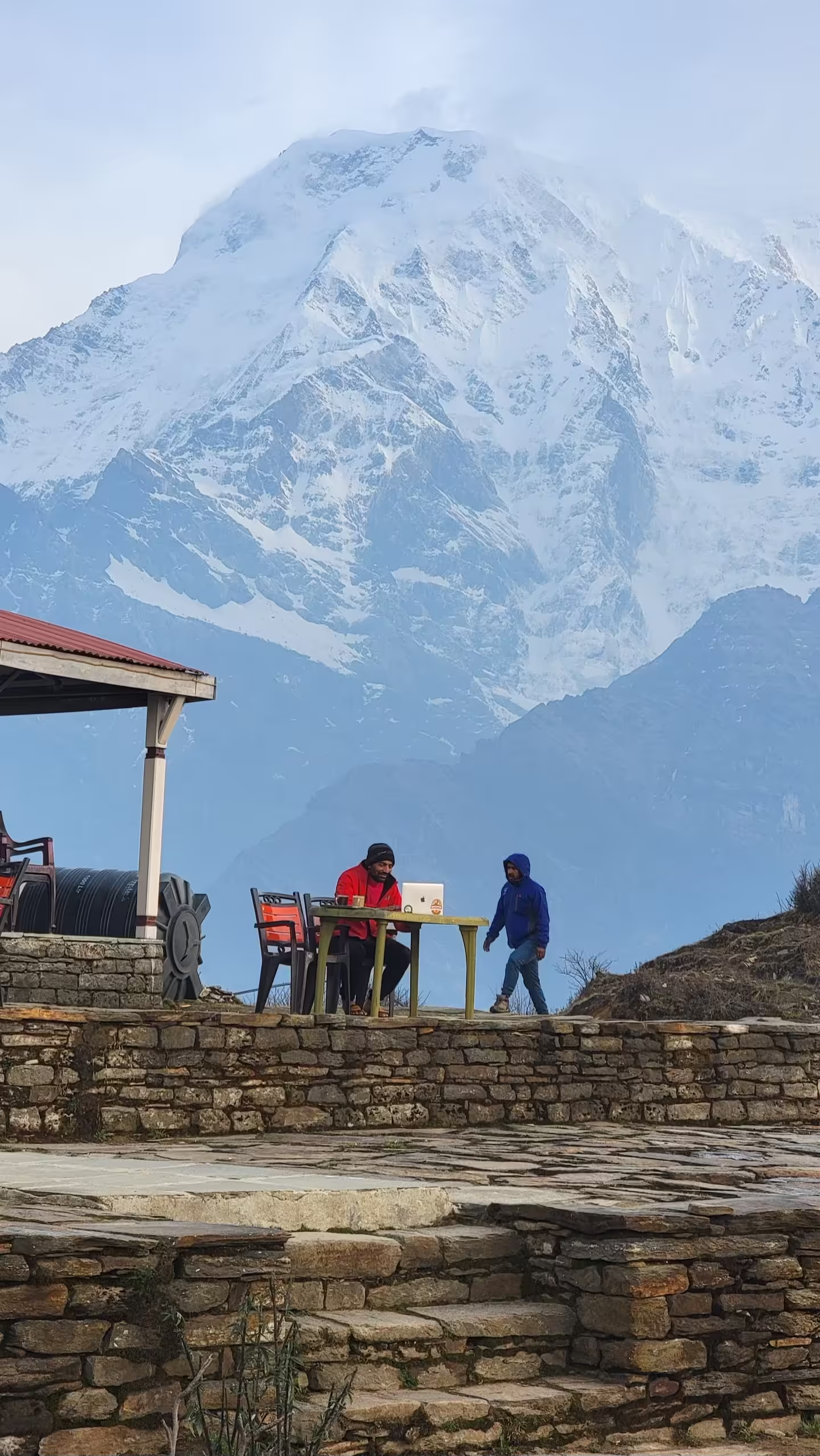
A remote team that wanted five mornings of focused work in Pokhara and afternoons on the lake, with a two-day trek at the end.
A solo traveler with a gluten allergy and a nut allergy who needed every meal pre-coordinated with the teahouse chain.
Stage 1: Discovery — the questions we ask
Every custom trip starts with these questions. You don't need perfect answers — rough notes are enough. We've worked with answers like "probably fit, did a 5k recently" and "somewhere between budget and not camping."
Dates and duration When are you arriving, when do you leave, and how many days can actually be used for travel vs. sitting in transit or a hotel? We ask this because "14 days in Nepal" often means 10 usable days once you factor in arrival recovery, Lukla flight windows, and departure logistics.
Fitness and trekking experience Not "are you fit" — that's too vague. We ask: can you walk six hours on uneven terrain? Have you been above 3,000 m before? Do you have any joint, cardiovascular, or altitude history? This tells us which routes are realistic and whether acclimatization days need to be built in beyond the standard protocol.
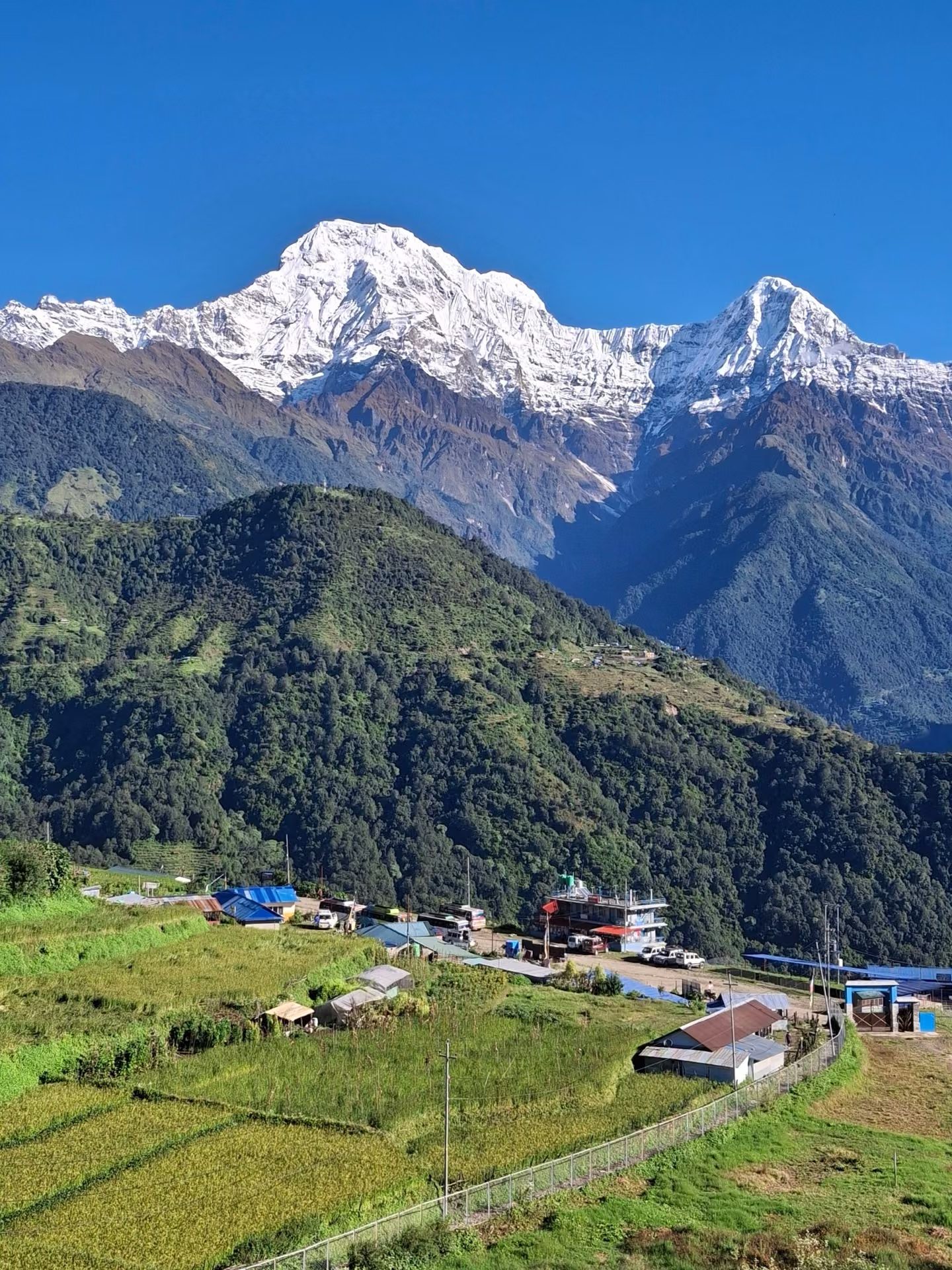
Altitude comfort and risk tolerance Some travelers want to go as high as possible. Others want to see the Himalayas without the altitude anxiety. Both are completely valid. Everest Base Camp sits at 5,364 m; Annapurna Base Camp at 4,130 m; Langtang Valley at around 3,870 m. Each is a fundamentally different physical experience.
Interests and non-negotiables Trek-only, or a mix? Wildlife, culture, pilgrimage, adventure sports, food? Do you want to see a specific festival? Is there something you've always wanted to do in Nepal that you're half-embarrassed to mention because it's "not serious enough"? (It probably isn't — we've arranged paragliding over Pokhara lake as the final day of a Himalayan trek, and it was a perfect ending.)
Budget style Not a specific number — a style. Are you comfortable in teahouses with shared bathrooms, or does the idea of that make you anxious? Do you want to splurge on one or two nights in a better lodge, or keep everything consistent? This guides every accommodation, transport, and guiding decision.
Dietary restrictions and food needs This matters more than most people realize. On remote treks, the menu at altitude is limited. We pre-coordinate with partner teahouses for vegetarian, vegan, and allergy needs — but we need to know before we book, not on the trail.
Work needs and connectivity For remote workers and founder-retreat clients, we ask about internet requirements, whether you need a dedicated desk, and whether you have standing video-call commitments at specific hours. (Time zone differences to the US and EU are real — we'll flag if your call schedule clashes with a trail segment.)
Pace preference Some clients want to walk hard, cover distance, feel physically tested. Others want to go slowly, take long lunches in teahouses, and arrive early enough to explore the village before dinner. Neither pace is wrong. A guide who is set to your pace changes the entire texture of a trek.
Stage 2: Design — building the itinerary
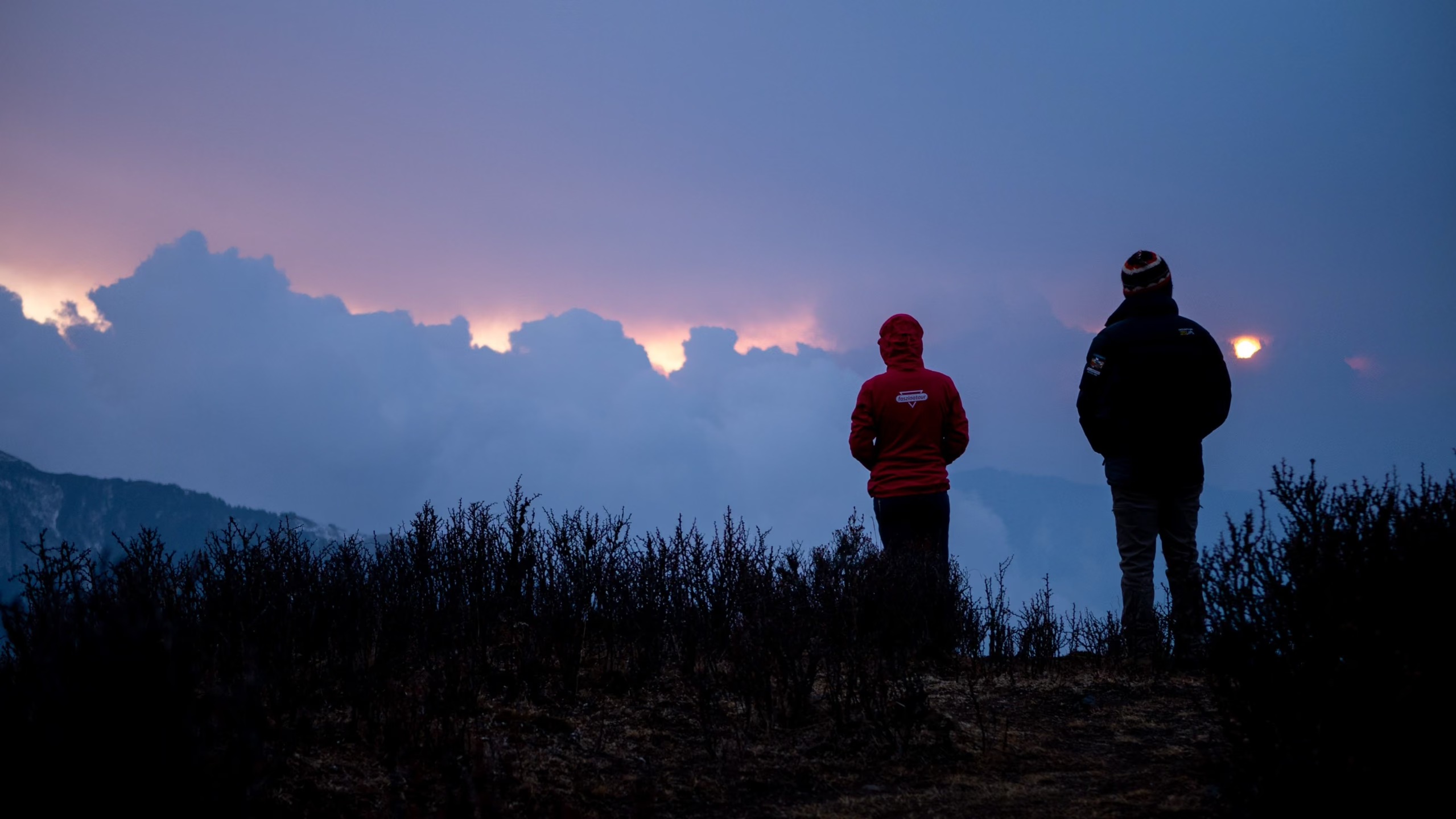
Once we have your answers, we draft a day-by-day itinerary. We're not pulling from a template — we're making route, pace, accommodation, and logistics decisions that fit your specific profile.
This is where we also raise the honest trade-offs. If you want EBC in 10 days, we'll tell you the acclimatization math doesn't work safely, and offer you a 12-day alternative or a different route. If you want to combine Manaslu Circuit with Chitwan and you have 18 days, we'll tell you the road from Pokhara to Sauraha adds a travel day you may not have accounted for.
Common mix-and-match combinations we design regularly:
Trek + Wildlife safari: Everest Base Camp or Annapurna Base Camp followed by 2–3 nights at Chitwan National Park. The contrast — Himalayas one week, jungle the next — is a favorite combination.
Pilgrimage + Kathmandu culture: Lumbini for 2–3 days, then Kathmandu's heritage circuit, then Pokhara. Good for travelers who want spiritual depth without a hard physical trek.
Pokhara + soft adventure: Lake, paragliding, short Mardi Himal or Australian Camp hike, rafting. All within a 45-minute radius. Excellent for mixed groups where some want adventure and others prefer scenic.
Workcation + weekend mountains: Kathmandu or Pokhara as your working base, with Friday-to-Sunday hikes in the surrounding hills. We connect remote workers with co-working setups, partner hotels with proper desks, chairs, monitors, and LAN internet. See Work From Nepal.
Stage 3: Quote — transparent pricing
We send a line-item quote. Not a single number. You see the guide cost, the porter cost, the permits, the accommodation tier, the domestic flights if any, and the transfers. You can see exactly where the money goes and make trade-off decisions — take a tourist bus instead of a private vehicle to Pokhara, skip the porter and carry your own pack, choose teahouses over lodges.
All permits and fees are included in the package price. Tips to guides and porters are the one item outside the package — we'll give you exact guidance on what's customary during the pre-trek briefing.
Stage 4: Refine — the back-and-forth
Almost every quote goes through at least one round of changes. The initial draft is our best interpretation of what you described. Your feedback tightens it. Maybe the pace on day six looks too ambitious, or you want to add a rest day in Namche, or you want to swap the Kathmandu heritage day for an extra Pokhara night. We adjust and re-quote.
The pre-trek briefing — the last refinement step before you depart — is where we go over the itinerary one final time, confirm your cash needs for the trail, check your gear, review the altitude protocol, and introduce you to your guide.
Stage 5: Operate — us on the ground
This is where being a local team matters. We call the teahouses two days before you arrive on that segment to ask about local conditions, road closures, and weather — information that only comes from a direct relationship with the people actually there. If something changes on the ground, we know before you do.
All transportation — including your airport pickup — is included in your package. Arriving in Kathmandu after a long flight and figuring out a taxi in a foreign language is not a good start. Our pickup vehicle has water and light snacks; your driver and our team member handle the luggage. Your trip starts before you leave the terminal.
Start with a message
You don't need a perfect plan to reach out. A rough idea of dates, where you've heard about Nepal, and one or two things you definitely want to do is enough for us to start. We'll ask the rest.
Frequently asked questions
How long does it take to get a custom itinerary from EcoTourNepal?
After your initial message with dates and rough interests, we typically come back with a draft itinerary within 24–48 hours. Refinement rounds then happen by email or a short call.
Can I mix a trek with a safari and city time in one trip?
Yes — trek + Chitwan wildlife safari + Kathmandu or Pokhara is one of our most common custom combinations. We design the logistics so transitions feel natural rather than rushed.
What if I don't know my fitness level?
Tell us what physical activity you do regularly — walking, cycling, gym, nothing recent. That's enough. We'll match you to a route and pace that's realistic, not aspirational.
Is a custom trip more expensive than a fixed package?
Not necessarily, and sometimes less. Fixed packages include days and services you may not need. A well-designed custom itinerary only includes what you actually want — fewer wasted days often means a lower total cost.
Can you accommodate dietary restrictions on remote treks?
Yes, if we know in advance. We pre-coordinate with our partner teahouse chain. Vegan, vegetarian, and common allergies are manageable on established routes; severe or multiple allergies need more planning, which is why we ask at the discovery stage.
What happens if the itinerary needs to change on the trail?
Our team on the ground monitors conditions continuously — we call ahead, check weather, and talk to local guides. If something changes (weather, health, a road closure), we adjust the itinerary in real time and rebook what's needed.
Keep reading
 Treks & Peaks
Travel Insurance & Helicopter Rescue for Nepal Trekking — What You Actually Need
What altitude coverage to buy, how helicopter rescue really works in Nepal, the old fraud era that's now cleaned up, and why your operator matters in an emergency.
 Planning
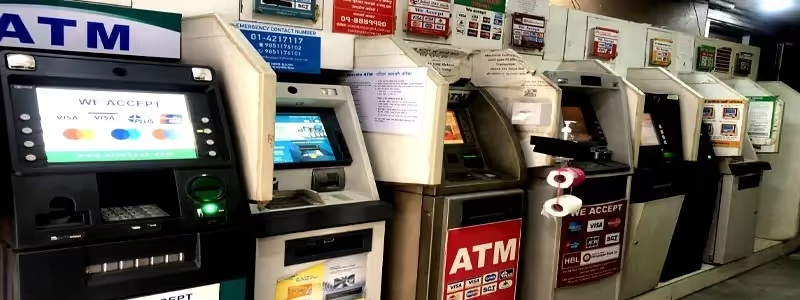
Money in Nepal 2026: ATMs, Cash, Cards, eSewa & Tipping Guide
Nepal ATM limits, fees, and which banks to use. How much cash to carry on a trek. Where to get the best exchange rate. Honest tipping norms for guides, porters, and drivers.
 Planning
Nepal Without Trekking: Best Trips for People Who Don't Want to Hike
Nepal is worth every day even if you never put on hiking boots. Culture, wildlife, Pokhara, Lumbini, scenic mountain flights, and food — a complete Nepal without a single trek.