Planning
Is Nepal Expensive or Cheap? A Realistic 2026 Travel Budget by Style
Nepal city travel runs US$20–100/day depending on style. What's unexpectedly expensive: domestic flights and remote logistics. Where it's great value: food, guides, and long stays.
The short answer: Nepal is genuinely good value at the mid-range and even the premium tier — until you hit the costs that most travel articles don't warn you about. Domestic flights and remote logistics can easily double what a traveler expects to spend. Here's the honest, current picture for 2026.
Quick summary
City daily budgets in 2026: budget travelers US$20–40/day, mid-range US$40–60/day, premium US$80–100+/day — all in Kathmandu or Pokhara.
Unexpectedly expensive: domestic flights (especially Lukla round-trip for EBC), restricted-area trekking permits, private transport on mountain roads, and teahouse extras at altitude (charging, hot water, wifi).
Great value: food, local transport in cities, professional guiding, long-stay accommodation, and cultural experiences that would cost multiples elsewhere in Asia.
The math changes completely on treks — fixed costs (guide, permits, flights) mean the per-day cost on a trek is often higher than in the city, regardless of your lifestyle.
Budget travelers can cut significantly by taking buses instead of domestic flights and carrying their own pack instead of hiring a porter.
Long stays (more than 2–3 weeks) disproportionately reward budget and mid-range travelers — Nepal is an excellent slow-travel destination.
Budget style: US$20–40 per day in the city
At this level you are sharing teahouse-standard guesthouses or budget hotels (NPR 800–2,000 per night), eating at local dal bhat restaurants (a full meal for NPR 200–350), taking Pathao or InDrive app rides between sights, and covering entrance fees yourself. This is genuinely comfortable living in Kathmandu and Pokhara — not roughing it.
What you get:
A clean, private room near Thamel or Lakeside Pokhara
Three meals including the classic dal bhat power set
App-based taxis at NPR 150–250 per ride within the city
Entry to heritage sites (Boudhanath, Swayambhunath, Patan Durbar Square — foreigners pay a one-time zone fee, verify current rates at ntb.gov.np)
Where this breaks down: A domestic flight from Kathmandu to Pokhara is roughly US$80–120 one-way for foreigners. That single expense can blow a budget-day budget for two to three days. The workaround: the Kathmandu–Pokhara tourist bus costs around US$8–10 and takes 6–7 hours. Not glamorous, but comfortable enough.
Mid-range style: US$40–60 per day in the city
This is the sweet spot for most independent travelers and the range where Nepal genuinely shines. You're in a proper 3-star hotel with en-suite bathroom, eating a mix of local and tourist restaurants, using a mix of app rides and the occasional private transfer.
What you get:
A hotel with AC, hot water, wifi, and usually a breakfast option — roughly US$30–60/night in central Kathmandu, less in Pokhara
Restaurant meals at NPR 500–1,500 — everything from momo cafes to rooftop restaurants with mountain views
Occasional private vehicle for a half-day valley tour without haggling
Museum entries, cooking classes, cultural experiences
At this budget level, Kathmandu's food scene is excellent. Buff (water buffalo) momo is the local specialty travelers always remember — different from Indian momo, denser and more flavourful. Newari cuisine — fermented khalpi, tama (bamboo shoot curry), and the set-piece Newari feast — is genuinely worth seeking out and extremely affordable.
Premium style: US$80–100+/day in the city
At the premium tier in Kathmandu and Pokhara, you access internationally ranked hotels (Heritage category properties, boutique conversions), private vehicles throughout, fine dining, and expert-guided cultural experiences. This is real luxury — not a compromise.
Kathmandu has hotels that compete with any major Asian city at this price point. A private guide for the Kathmandu heritage circuit — Pashupatinath, Boudhanath, Bhaktapur, Patan — with a deep cultural background and access to monastery interiors that independent travelers can't reach, costs roughly US$60–100/day. At the premium tier, that is included.
The trek budget: a separate calculation
Once you leave the city and start a trek, the budget model changes. Fixed costs dominate: the guide's daily wage, the porter (if you hire one), the permits, and the domestic flight if your trek starts with Lukla.
The Lukla flight is the biggest swing in a Nepal trek budget. A round-trip Lukla flight — for the Everest Base Camp trek — runs approximately US$350–450 per person. For a couple, that's US$700–900 before a single day of trekking. In peak season (March–May and October–November), flights operate via Ramechhap/Manthali Airport, which requires a 4–5 hour pre-dawn drive from Kathmandu, adding a car rental cost on top.
If budget is the primary concern, the workaround is to choose treks that start by road — Annapurna Base Camp, Langtang Valley, Mardi Himal — and take the tourist bus to the trailhead. This cuts the fixed logistics cost significantly.
Key permit costs (2026, for planning):
Sagarmatha National Park (Everest): NPR 3,000 + Khumbu Pasang Lhamu local fee NPR 3,000
ACAP (Annapurna Conservation Area): NPR 3,000
TIMS: NPR 2,000 (individual) or NPR 1,000 (group) via registered agency
Manaslu Restricted Area Permit: US$100/week in peak season (Sep–Nov), US$75/week off-season
Verify current permit fees at ntb.gov.np and immigration.gov.np before booking.
Teahouse extras: the costs altitude adds
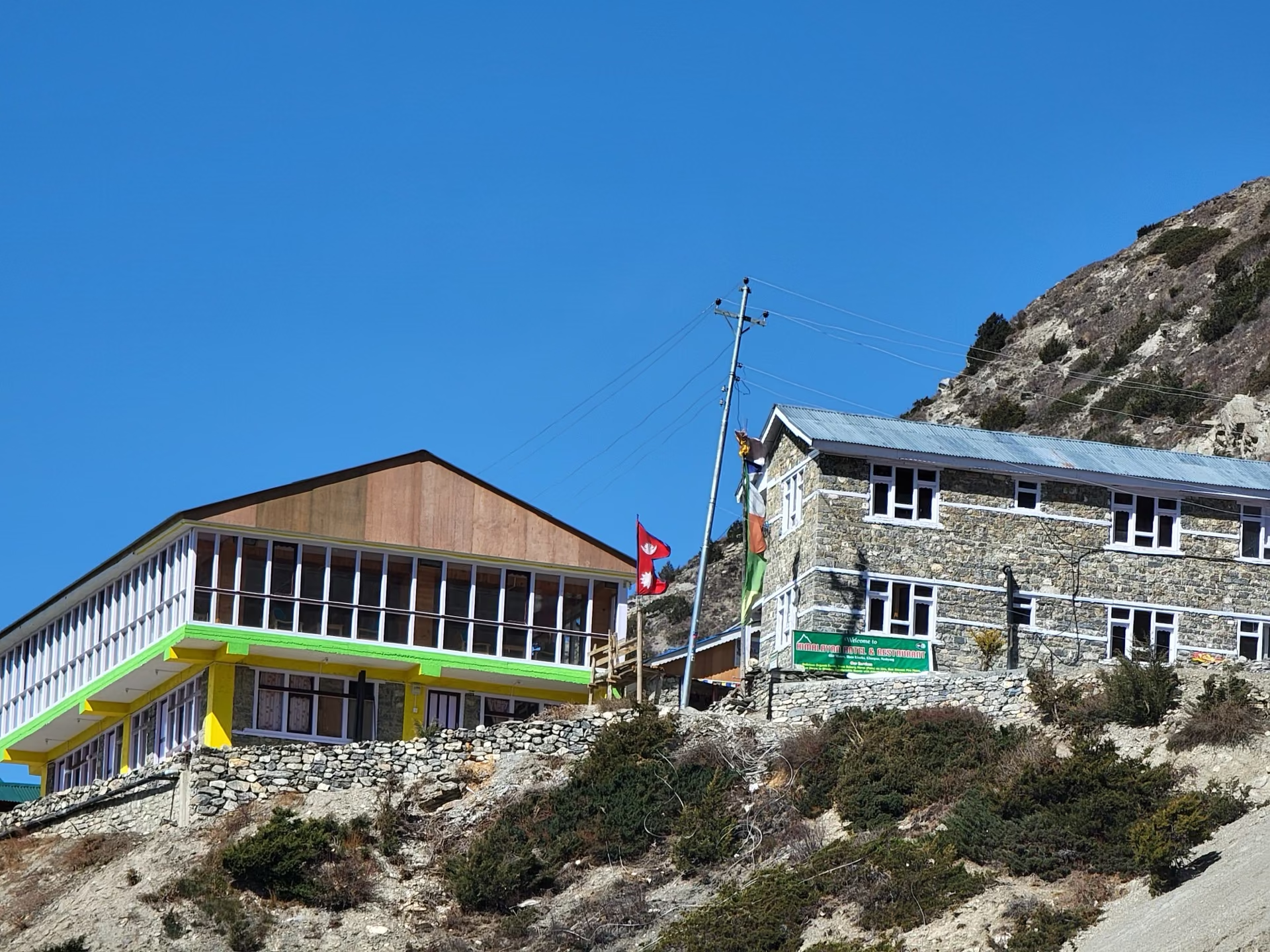
On the trail, your food and lodging are paid separately at each teahouse (not included in most guide packages). The teahouse-meal cost increases with altitude — because every ingredient is carried up by mule or porter, which is as much work as it sounds.
Beyond the meal, these per-use costs add up on a long trek:
Device charging: NPR 100–300 per device, often more above 4,000 m
Hot shower: NPR 200–500 per shower (where available)
Wifi: NPR 100–300 per session
Boiled water / refill: NPR 50–150 per litre — always choose boiled or filtered over plastic bottles (it's cheaper and far less waste)
A rough rule of thumb for out-of-pocket trail spending above and beyond a package: NPR 2,000–3,000 per day for a comfortable trekker. Plus tips: by trekking convention, your guide receives a lump-sum tip on the last day — the widely followed range is US$10–25/day for a guide, US$8–15/day for a porter.
Where Nepal is unexpectedly great value
Professional guiding is genuinely affordable compared to equivalent expertise in other mountain ranges. A licensed Nepali trekking guide who speaks English, has walked the route dozens of times, knows the local families, manages your safety, and handles all the on-trail logistics — at a cost that would seem implausibly cheap to travelers from Europe or North America.
Food at every level is a strong value. The NPR 250 dal bhat at a local restaurant is nutritious and delicious. The NPR 800 lunch with an Annapurna view at a Pokhara rooftop restaurant is a bargain. Buff momo for NPR 150 a plate is a daily pleasure.
Long-stay accommodation rewards travelers who slow down. Weekly and monthly rates in Kathmandu and Pokhara are significantly below the nightly rate. For a remote worker or a longer traveler, Nepal's month-to-month cost of living — roughly US$600–1,000 comfortable, from US$400–500 frugal — is competitive with the cheapest Southeast Asian bases.
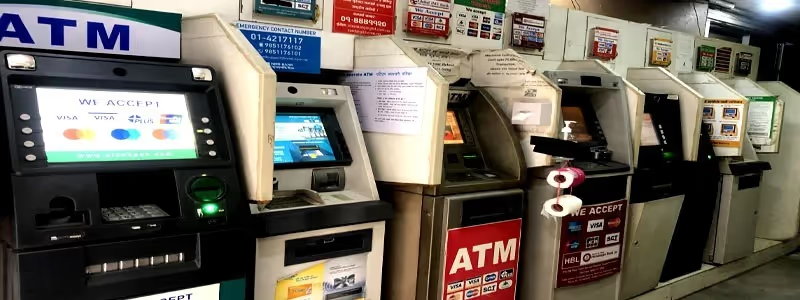
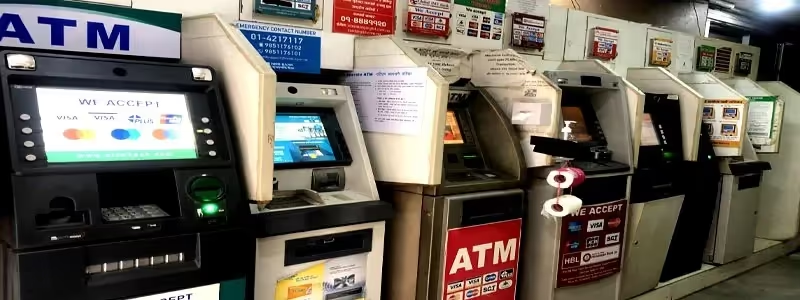
Cash tip: exchange money in Thamel (Kathmandu) or Lakeside (Pokhara), not at the airport. Thamel money changers (Annapurna, Goodwill, Thamel Universal are known names) give consistently better rates. ATMs cap foreign withdrawals at NPR 20,000–35,000 per transaction and charge roughly NPR 500 per withdrawal — always withdraw the maximum to minimize fee impact.
The honest summary
Nepal rewards thoughtful budgeters and generous spenders equally. The value is real at both ends. The surprises — domestic flights, remote permit costs, altitude extras — are foreseeable if someone tells you about them in advance. That's what we're for.
Get a transparent, line-item quote for your Nepal trip — we show you exactly where the money goes before you commit to anything.
Frequently asked questions
What is a realistic daily budget for Nepal in 2026?
For city travel (Kathmandu or Pokhara): budget travelers US$20–40/day, mid-range US$40–60/day, premium US$80–100+/day. Trek budgets work differently because of fixed guide, permit, and flight costs that don't scale linearly with days.
What makes Nepal unexpectedly expensive?
Domestic flights (especially the Lukla round-trip at US$350–450 per person for the Everest trek), restricted-area trekking permits, private transport on mountain roads, and per-use teahouse extras at altitude (charging, hot water, wifi) that accumulate over a 14-day trek.
How can budget travelers cut costs significantly in Nepal?
Two big moves: take tourist buses instead of domestic flights for routes like Kathmandu–Pokhara (US$8–10 vs US$80–120 by air), and carry your own pack instead of hiring a porter. These two decisions alone can cut a trek's total cost by 20–35%.
Where is Nepal the best value in Asia?
Food, professional guiding, and long-stay accommodation. A licensed trekking guide's daily rate is significantly cheaper than equivalent mountain expertise in Europe or North America. Dal bhat at a local restaurant costs under US$3. Monthly accommodation for a remote worker runs US$400–1,000 depending on standard.
Is it cheaper to travel in Nepal than Southeast Asia?
Comparable to mid-budget Southeast Asia for city living, but trekking costs — guides, permits, domestic flights — have no direct equivalent in most of SEA. For cultural and city travel, Nepal is excellent value. For mountain travel, the cost is justified but higher than a beach holiday in Thailand.
How much cash should I bring for a Nepal trek?
There are essentially no ATMs above the trailhead on most mountain routes. For a 10–14 day teahouse trek, plan NPR 2,000–3,000 per day in out-of-pocket spending on food, extras, and tips — plus your guide and porter tip as a lump sum at the end. Exchange in Thamel before you leave the city.
Keep reading
 Treks & Peaks
Travel Insurance & Helicopter Rescue for Nepal Trekking — What You Actually Need
What altitude coverage to buy, how helicopter rescue really works in Nepal, the old fraud era that's now cleaned up, and why your operator matters in an emergency.
 Planning
Money in Nepal 2026: ATMs, Cash, Cards, eSewa & Tipping Guide
Nepal ATM limits, fees, and which banks to use. How much cash to carry on a trek. Where to get the best exchange rate. Honest tipping norms for guides, porters, and drivers.
 Planning
Nepal Without Trekking: Best Trips for People Who Don't Want to Hike
Nepal is worth every day even if you never put on hiking boots. Culture, wildlife, Pokhara, Lumbini, scenic mountain flights, and food — a complete Nepal without a single trek.