Treks & Peaks
Altitude Sickness in Nepal: Prevention, Diamox & the Honest Truth
Real acclimatization protocols, AMS warning signs, Diamox facts, and how EcoTourNepal's guides and on-call doctor keep trekkers safe at altitude.
 ByDr. Barsha DahalMedical Lead
Published
Altitude sickness is the most misunderstood risk on a Nepal trek — not because it is rare, but because it arrives quietly, disguises itself as tiredness, and can turn serious in hours. Understanding it before you leave is the single most important thing you can do to protect your trip.
Medical disclaimer: This article is general information only and is not medical advice. Consult a licensed physician before taking any medication or making health decisions related to high-altitude travel. If you suspect severe altitude sickness on a trek, descend immediately and seek professional medical care.
Quick summary
AMS signs to know: headache is the first flag — plus nausea, loss of appetite, dizziness, fatigue, and poor sleep. Any of these above 3,000 m deserves attention.
Climb high, sleep low is the golden rule. Raise your sleeping altitude by no more than ~500 m per night and take a rest day every ~1,000 m of sleeping-altitude gain.
Diamox (acetazolamide) is the most evidence-based preventive drug, but it is a prescription medication — ask your doctor before you leave, not on the trail.
EcoTourNepal builds acclimatization into every itinerary and has a doctor on call for teleconsultation throughout the trek.
Descent is always the cure. Never push upward when symptoms are worsening — not for a summit, not to stick to a schedule.
AMS is not weakness. Fitness does not protect you; acclimatization does.
What altitude sickness actually is
Acute Mountain Sickness (AMS) is your body's response to reduced oxygen at high elevation. Above roughly 2,500 m — and especially above 3,500 m — the body needs time to produce more red blood cells and adapt its breathing patterns. When you ascend faster than that adaptation can happen, AMS follows.
On an Everest Base Camp trek, you are sleeping at 5,364 m. On Mera Peak, you top out above 6,476 m. These are serious altitudes. The good news: AMS is almost entirely preventable with the right schedule and the right attitude toward slowing down.
The classic symptoms
The Himalayan Rescue Association and the CDC Yellow Book on altitude illness both describe the same warning cluster:
Headache — the defining symptom; almost always present
Nausea or loss of appetite
Dizziness or light-headedness
Unusual fatigue
Poor or restless sleep
Mild AMS with only a headache is common and usually resolves with rest. The danger is ignoring it and pushing higher. If symptoms worsen, involve ataxia (loss of balance), or include confusion, you are looking at High Altitude Cerebral Edema (HACE) — a medical emergency requiring immediate descent and evacuation.
The acclimatization protocol our guides actually use
On every EcoTourNepal trek above 3,000 m, our guides follow a specific evening routine that most operators skip because it takes an extra hour.
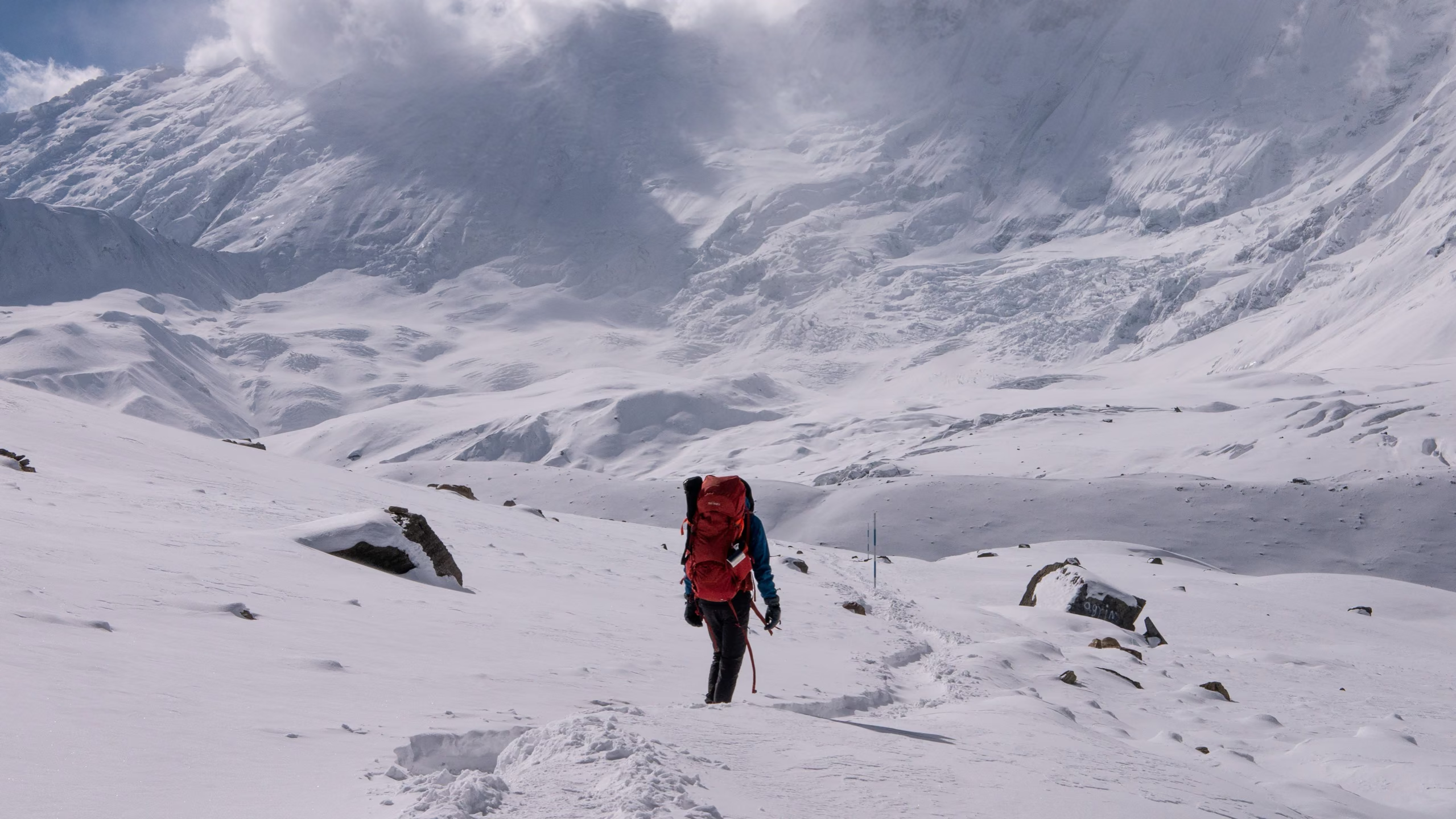
After reaching the teahouse for the night, we do not let clients collapse into bed. Bags go down, everyone has a cup of tea, and then the group does a short hike — roughly 200 m of elevation gain above the sleeping altitude. Take photos, breathe the air, enjoy the view. Then come back down and sleep at the lower altitude.
This is the "climb high, sleep low" principle made practical. You expose your body to the higher elevation signal without spending the night there. Guides watch clients during this walk for anything unusual — a stumble, a grey face, a sudden silence from someone who was chatting all day.
All of our guides are trained to recognise AMS symptoms. The training matters, because guests rarely self-report early symptoms — nobody wants to be the one who "ruined" the trek. A good guide reads body language, pace, and appetite. By the dinner table it is usually obvious if someone is not right.
Acclimatization days — and why we don't cut them
Many cheaper operators trim itineraries by removing acclimatization rest days. We don't. The standard protocol calls for a rest day roughly every 1,000 m of sleeping-altitude gain. On an EBC itinerary that means a dedicated rest day in Namche Bazaar (3,440 m) and another in Dingboche or Lobuche before pushing higher.
If a client gets a delayed Lukla flight and arrives in Namche a day late, we extend the trek — we do not compress it. The acclimatization schedule is non-negotiable. Rushing it to "make up" days is how people end up in a helicopter.
Diamox: what the research says (ask your doctor)
Diamox — generic name acetazolamide — is the most widely studied drug for AMS prevention. It works by stimulating faster breathing, which helps the body absorb more oxygen sooner. Crucially, it treats the underlying cause rather than masking symptoms the way dexamethasone does.
The literature (including Wilderness Medical Society guidelines) typically discusses prophylactic doses around 125 mg every 12 hours, started the day before significant ascent. But dosage, timing, and suitability depend entirely on your medical history, other medications, and sulfa allergies — Diamox is a sulfonamide derivative.
Our pre-trek process: Every client booking an EBC or high-altitude trek with EcoTourNepal receives a pre-trek briefing that includes a doctor consultation. The doctor reviews existing medications, asks about relevant health history, and gives personalised guidance on Diamox. That same doctor remains available by teleconsultation throughout the trek. If something feels off at altitude, clients can call.
This is not common in the industry. Most agencies hand you a permit and a map. We hand you a doctor's number.
The descent rule — and why no one follows it until it is too late
Every serious altitude medicine authority agrees on one rule: if AMS symptoms are worsening, descend. Immediately. Do not sleep on it.
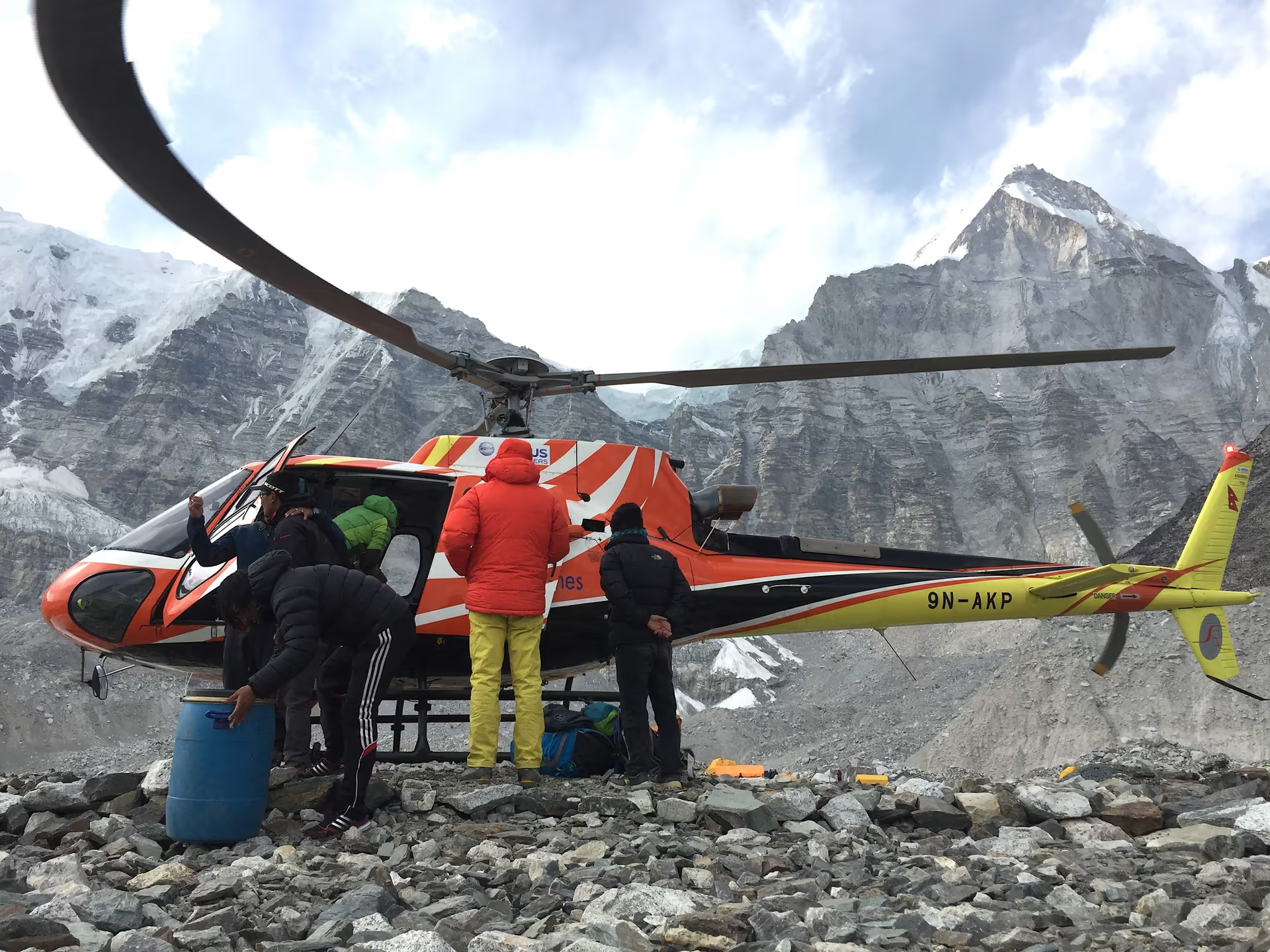
A descent of even 300–500 m can produce dramatic improvement within hours. Guides carry emergency dexamethasone and know when to use it as a bridge until evacuation, but descent is always the priority.
The most common failure mode on treks is bargaining. "I'll see how I feel in the morning." Night at altitude can make AMS significantly worse, not better. If the guide says it is time to go down, it is time to go down.
How EcoTourNepal helps
Acclimatization is not something you can add on as an afterthought — it is baked into the route design. Our itineraries for Everest Base Camp Trek, Annapurna Base Camp Trek, and Mera Peak Climbing all include the appropriate rest days and the evening "climb high, sleep low" routine as standard.
Our guides hold current wilderness first-aid certification and AMS awareness training. Our on-call doctor is a real person you can reach by phone from the trail. And if descent or evacuation becomes necessary, we coordinate it — you are not calling an emergency number in a foreign language at 5,000 m on your own.
If you want to discuss your specific health situation before booking, reach out to us directly. We would rather have that conversation in advance than manage a crisis on the mountain.
Plan a custom Nepal trek · See all mountain treks · Why travel with us
Frequently asked questions
What altitude does altitude sickness start in Nepal?
AMS can begin as low as 2,500 m, but most trekkers notice symptoms above 3,000 m. The Everest Base Camp trail climbs to 5,364 m and Kala Patthar to 5,545 m — both well into the range where proper acclimatization is essential.
Should I take Diamox for the EBC trek?
Many trekkers do, but Diamox is a prescription drug and the right choice depends on your health history and other medications. Consult a doctor before your trek — our pre-trek briefing includes a doctor consultation for exactly this reason.
What is the 'climb high, sleep low' rule?
It means you can hike to a higher elevation during the day, but you return to a lower altitude to sleep. This exposes your body to the acclimatization signal while giving it the night to recover. Our guides build a short acclimatization hike (~200 m gain) into each evening above 3,000 m.
Can fit people get altitude sickness?
Yes. Fitness has almost no bearing on AMS susceptibility — previous altitude experience is a better predictor, and even that is imperfect. Many experienced mountaineers get AMS if they ascend too fast.
What happens if I get AMS on a trek with EcoTourNepal?
Our guide assesses severity. Mild symptoms trigger rest and monitoring. If symptoms worsen, the protocol is immediate descent. We have a doctor on call for teleconsultation throughout the trek and coordinate helicopter evacuation if needed.
Is AMS covered by travel insurance?
If you have appropriate high-altitude trekking insurance, yes — helicopter evacuation due to AMS is a covered medical emergency under most Nepal trekking policies. See our related article on travel insurance and helicopter rescue for details on what to look for in a policy.
Keep reading
 Treks & Peaks
Travel Insurance & Helicopter Rescue for Nepal Trekking — What You Actually Need
What altitude coverage to buy, how helicopter rescue really works in Nepal, the old fraud era that's now cleaned up, and why your operator matters in an emergency.
 Planning
Money in Nepal 2026: ATMs, Cash, Cards, eSewa & Tipping Guide
Nepal ATM limits, fees, and which banks to use. How much cash to carry on a trek. Where to get the best exchange rate. Honest tipping norms for guides, porters, and drivers.
 Planning
Nepal Without Trekking: Best Trips for People Who Don't Want to Hike
Nepal is worth every day even if you never put on hiking boots. Culture, wildlife, Pokhara, Lumbini, scenic mountain flights, and food — a complete Nepal without a single trek.