Getting Around
Domestic Flights in Nepal 2026: Lukla, Pokhara Airport & How Not to Get Stranded
Everything you need to know about Nepal's domestic flights in 2026 — Lukla via Ramechhap in peak season, Pokhara airport status, baggage limits, and why you must build buffer days.
 ByRohan KCTour & Trekking Guide
Published
Nepal's domestic flight network is what makes the Himalayas accessible — but it is also the single thing most likely to quietly wreck an itinerary. A weather closure at Lukla, a last-minute reroute through Ramechhap, a tight connection with no buffer — these are the situations an honest guide covers upfront. Here is the current reality for 2026.
Quick summary
Lukla flights operate from Ramechhap (Manthali Airport) during peak season (March–May and October–November), not from Kathmandu — requiring a 4–5 hour pre-dawn drive.
Pokhara International Airport remains largely domestic-only in 2026; Flydubai's daily Pokhara–Dubai service is approved to begin 23 September 2026, its first regular international route.
Baggage limits are strict: Lukla and STOL flights typically cap at ~10 kg checked + 5 kg cabin (~15 kg total); excess may be bumped to a later flight.
Delays are real and frequent — especially at Lukla, where mountain weather rules everything. Build a minimum of two buffer days into any Everest itinerary.
When delays happen, your trek timeline shifts — not your acclimatization schedule. Never rush the days that keep you safe at altitude.
Airlines operating these routes: Tara Air and Summit Air are the main Lukla carriers; Buddha Air, Yeti Airlines, and others serve the wider domestic network.
The Lukla situation: Ramechhap in peak season
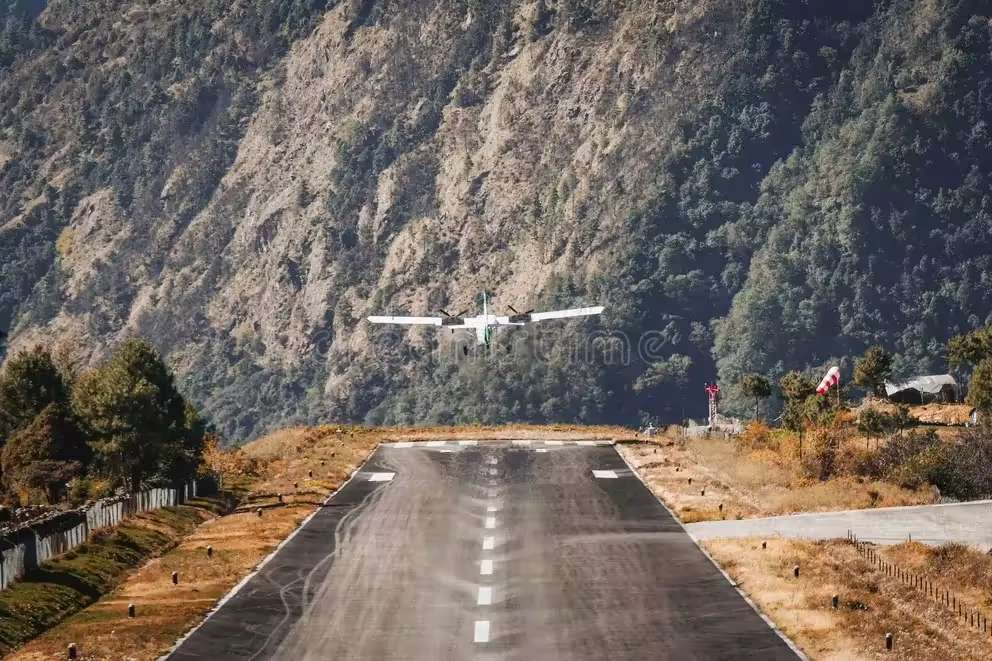
Lukla (Tenzing-Hillary Airport) is the gateway to Everest Base Camp and some of the most dramatic flying in the world. The airstrip is short, steep, and set at 2,860 m — which is exactly why CAAN (Civil Aviation Authority of Nepal) periodically restricts how many flights can depart from Tribhuvan International (TIA) in Kathmandu.
During peak trekking season (March–May and October–November), flights are shifted from TIA to Manthali Airport in Ramechhap, roughly 132 km east of Kathmandu. The logic: fewer aircraft competing for the same mountain weather window, fewer delays. The reality for trekkers: you board a vehicle at 1–2 AM for a 4–5 hour drive through the hills to catch an early morning flight.
This is not a problem if you know it is coming — it is simply part of the itinerary. Every EcoTourNepal Everest package accounts for the Ramechhap drive. What catches people out is booking independently, assuming the flight is from Kathmandu, and discovering otherwise 48 hours before departure.
Off-peak (December–February, June–September outside the monsoon), flights typically operate directly from TIA. Confirm with your operator or airline which airport applies to your dates.
Weather delays: honest expectations
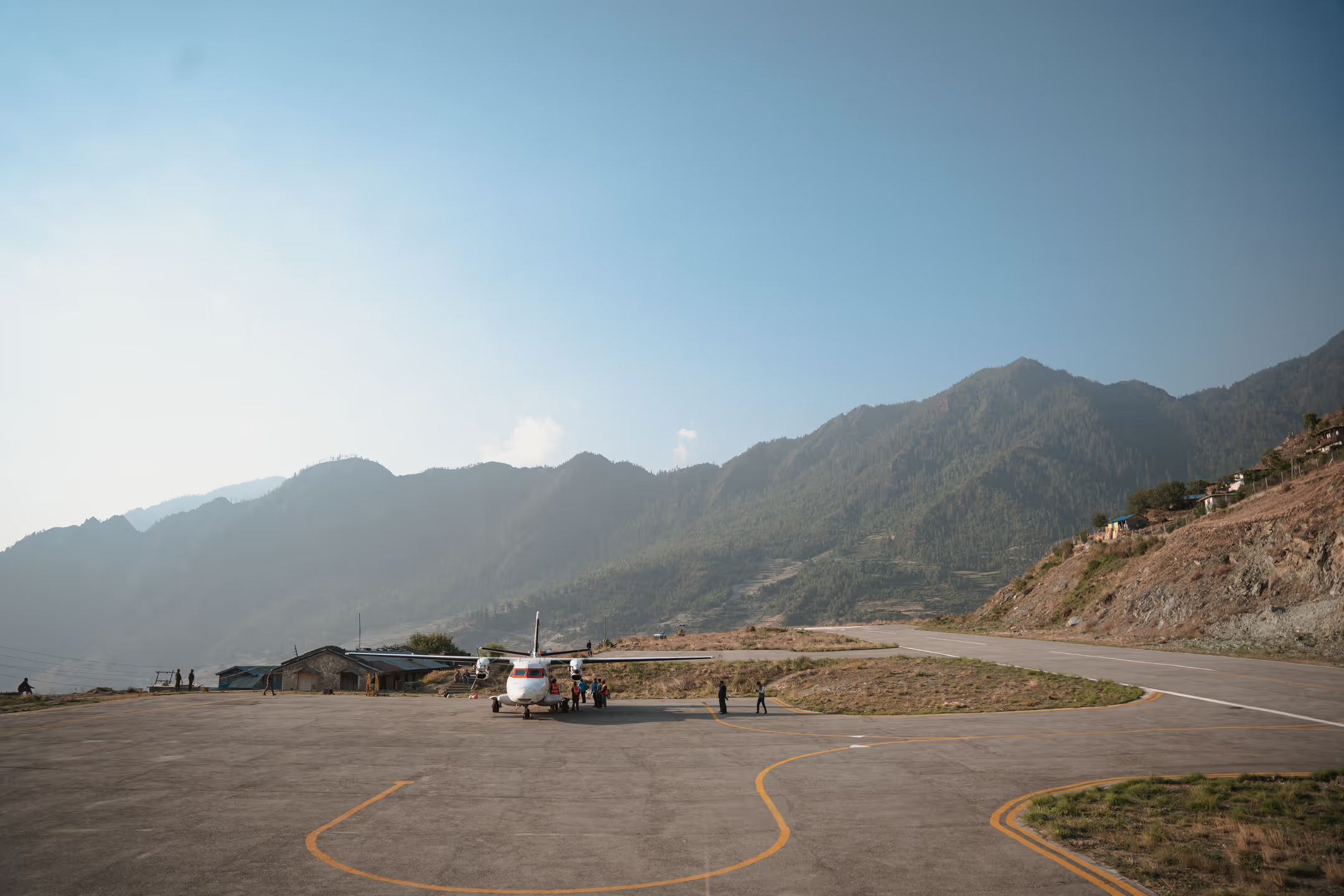
Lukla operates under visual flight rules — if visibility drops or the wind picks up, flights stop. It is not uncommon for Lukla to close for a day or more at a time, particularly during the shoulder-week transitions in April/May and October/November.
The EcoTourNepal approach to delays is non-negotiable: when a delay happens, the entire itinerary moves. Acclimatization days are never compressed. The one thing that injures Himalayan trekkers more than anything else is rushing — skipping rest days or pushing bigger altitude gains to make up for lost time. An extra day at Namche Bazaar because the weather grounded your flight is an inconvenience; altitude sickness on a truncated schedule is an emergency.
This means building at least two buffer days into any EBC itinerary. Some operators don't advertise this because shorter itineraries look cheaper. We tell clients upfront because a stranded traveler who missed their return flight because they had zero buffer has a worse story than someone who planned for it.
The rule EcoTourNepal follows: the trek takes as long as it is supposed to take. You cannot rush acclimatization, and over-exertion at altitude has serious consequences. Budget the days; the mountains will not negotiate on your behalf.
Pokhara International Airport — the honest status
Pokhara's gleaming new international airport opened in January 2023 and was immediately under-utilized — no international airline was willing to commit to routes into an airport with limited slot history and uncertain demand. More than three years later, the situation is slowly improving.
As of mid-2026, Pokhara International remains largely domestic, serving the Kathmandu–Pokhara route (35–45 minutes, far quicker than the 6–7 hour drive) and a handful of domestic destinations. Flydubai daily Pokhara–Dubai flights are approved to begin 23 September 2026 — this would be the first regular scheduled international service into the airport. Whether that launch date holds is worth confirming before you plan around it.
For most visitors, the practical implication: fly domestic Kathmandu–Pokhara rather than expecting international connections. A one-way domestic ticket runs roughly NPR 4,000–8,000 depending on airline and booking time — well worth it versus a full-day road journey if your time is limited.
Baggage: where people always get it wrong
Lukla and other STOL (short takeoff and landing) airstrips have strict weight limits driven by aircraft payload: typically ~10 kg checked + 5 kg cabin (~15 kg total) per person. Tara Air and Summit Air both publish limits — confirm the exact figure when you book, as it does occasionally change.
Excess baggage is either charged at a per-kg rate or, in a full flight, bumped to a later aircraft. This has happened to trekkers who packed their full city wardrobe for a two-week EBC expedition. The fix is simple: leave the city gear in a hotel storage room in Kathmandu (most guesthouses do this for free or a small daily fee) and fly to Lukla with only your trek kit.
EcoTourNepal's pre-trek briefing covers exactly what to pack for the flight vs what to store. Planning an Everest Base Camp trek or Mera Peak expedition? This conversation happens before you leave Kathmandu.
How EcoTourNepal handles domestic flights
All domestic flight logistics — booking, timing the Ramechhap drive if needed, baggage briefing, and contingency planning for delays — are included in trek packages. The team monitors flight statuses and local conditions, and if Lukla closes, the communication chain starts immediately: clients are informed, accommodation is extended, and the itinerary is adjusted without panic.
This local operational layer — knowing which day to give extra slack, having relationships with teahouses along the route — is what separates an agency on the ground from a booking platform. Reach out to plan a custom itinerary and ask specifically how your Lukla window is structured.
Frequently asked questions
Frequently asked questions
Do Lukla flights leave from Kathmandu or Ramechhap in 2026?
During peak trekking season (March–May and October–November), CAAN redirects Lukla flights to Manthali Airport in Ramechhap — a 4–5 hour pre-dawn drive east of Kathmandu. Off-peak, flights typically operate from Kathmandu's TIA. Confirm with your operator based on your specific travel dates.
How often are Lukla flights delayed?
Delays at Lukla are common due to mountain weather — visibility and wind conditions dictate operations under visual flight rules. Closures of one to two days are not unusual, particularly at the shoulder of peak season. Always build a minimum of two buffer days into any EBC itinerary.
Is Pokhara International Airport operating international flights in 2026?
As of mid-2026, Pokhara International remains primarily domestic. Flydubai's daily Pokhara–Dubai route is approved to begin 23 September 2026, which would be its first regular international service. Verify before planning international connections through Pokhara.
What is the baggage limit on Lukla flights?
Typically around 10 kg checked + 5 kg cabin (approximately 15 kg total) per person on STOL flights. Confirm the exact limit with Tara Air or Summit Air when booking. Excess may be charged per kg or bumped to a later flight if the aircraft is full.
How much is a domestic flight from Kathmandu to Pokhara?
Roughly NPR 4,000–8,000 one-way depending on airline and how far in advance you book. The flight takes 35–45 minutes versus a 6–7 hour drive. Booking in advance is advisable during peak season when seats fill quickly.
Which airlines fly to Lukla?
Tara Air and Summit Air are the primary operators on the Lukla route. Buddha Air, Yeti Airlines, and others serve the broader domestic network including Kathmandu–Pokhara, Kathmandu–Bhairahawa (for Lumbini), and other regional routes.
Keep reading
 Planning
Nepal Travel News 2026: What Changed This Season (Updated June 2026)
The 2026 Nepal travel roundup: Uber launch in Kathmandu, visa and TIMS updates, Pokhara airport's first international route, festival dates, and permit notes — verified June 2026.
 Treks & Peaks
Travel Insurance & Helicopter Rescue for Nepal Trekking — What You Actually Need
What altitude coverage to buy, how helicopter rescue really works in Nepal, the old fraud era that's now cleaned up, and why your operator matters in an emergency.
 Planning
Money in Nepal 2026: ATMs, Cash, Cards, eSewa & Tipping Guide
Nepal ATM limits, fees, and which banks to use. How much cash to carry on a trek. Where to get the best exchange rate. Honest tipping norms for guides, porters, and drivers.