Destination Deep-Dives
Ilam Tea Country Guide: Nepal's Soft Green Escape
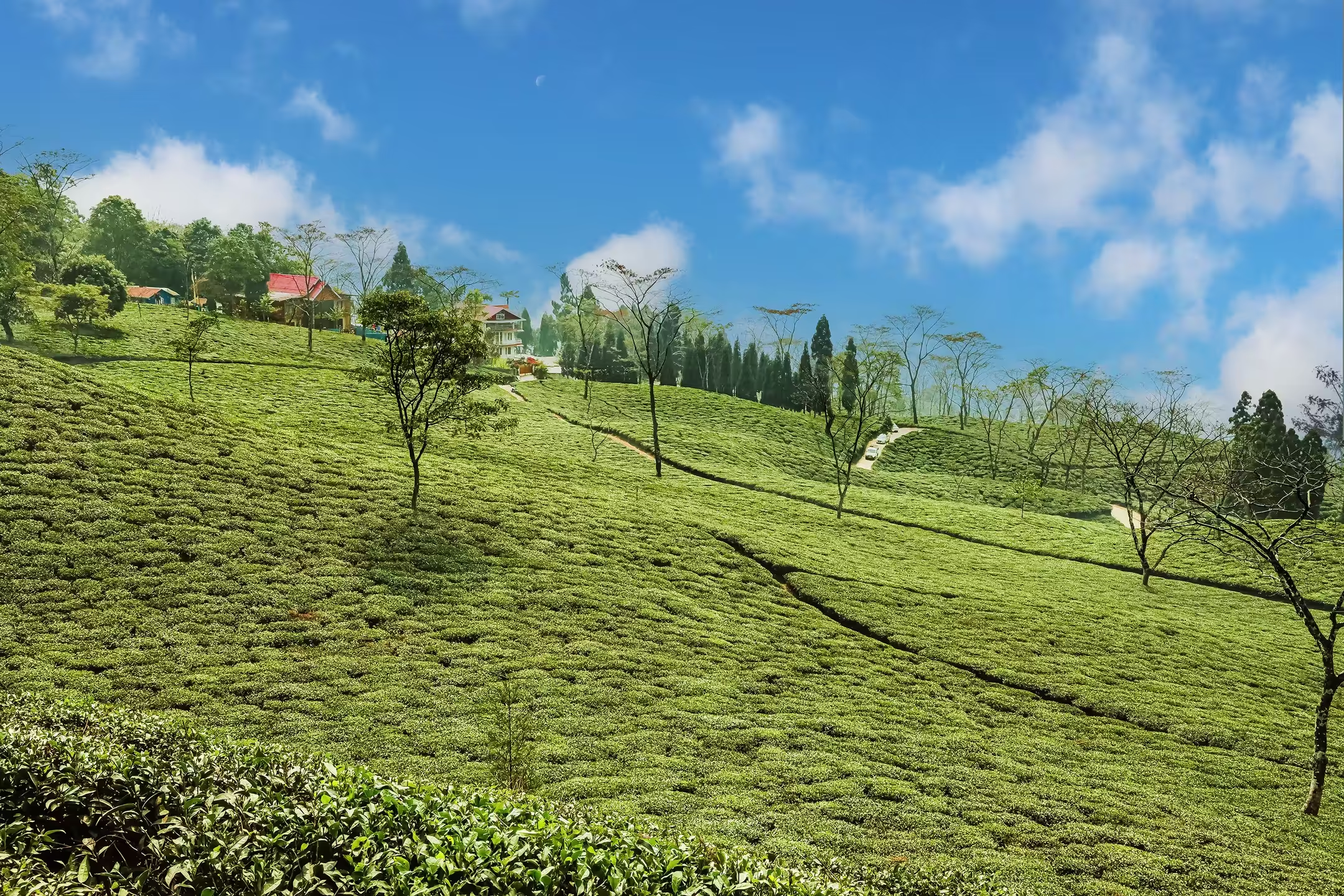
Rolling tea gardens, cool hill air, and almost no crowds. Ilam is Nepal's answer to Darjeeling — perfect for non-trekkers, photographers, and travelers seeking a slow, green escape in eastern Nepal.
 ByRohan KCTour & Trekking Guide
Published
There is a version of Nepal that has nothing to do with mountain trekking, medieval temples, or wildlife safaris. It is a softer, greener Nepal — and it lives in the eastern hills of Ilam district, where tea bushes roll across the ridges in neat rows, the mornings smell of mist and fresh leaf, and the pace of life is calibrated to the slow rhythm of a picking season.
Most international travelers never get this far east. That is, from a traveler's perspective, an opportunity.
Quick summary
Where: Ilam district, Province 1, far eastern Nepal — approximately 600 km from Kathmandu.
Best for: Travelers who do not want to trek but want natural beauty; photographers; tea lovers; those looking for a Darjeeling alternative without the India permit complexity.
Best season: Autumn (September–November) and spring (March–May) for clear views, pleasant temperatures, and the first and second flush picking seasons.
Getting there: Fly Kathmandu to Bhadrapur (the nearest airport), then 2–3 hours by road to Ilam town. Alternatively, overland from Kathmandu (2+ days by bus) or combined with a Darjeeling border crossing.
Difficulty level: This is gentle hill country. Walking the tea garden paths is easy; there are no mountain passes or altitude concerns.
What it is not: A commercial trekking destination with teahouses every two hours. Ilam requires some planning and rewards travelers who can slow down.
Why Ilam Feels Like Nepal's Secret
Ilam shares its geography and its product with the famous Darjeeling hills just across the border in India, but without the international name recognition. The tea grown here has an equally distinguished provenance — Ilam teas, particularly the spring first-flush varieties, are increasingly sought by specialty buyers in Europe and Japan. Yet the gardens themselves attract a fraction of the tourists that Darjeeling's hillsides do.
The result is a landscape that feels genuinely unhurried. Tea-pickers work the rows in the early morning. Small processing factories, some of which accept visitors, are filling with the green leaf smell of a new season's harvest. The hill town of Ilam itself is a functioning Nepali market town — not a tourist village — which means that the restaurants serve local food at local prices and the accommodation is functional rather than curated.
Best Season: Autumn and Spring
The tea cycle defines the Ilam calendar for visitors:
Spring (March–May): The first flush picking season — the most prized leaves of the year, yielding lighter, more delicate teas. This is when the gardens are most active, mornings are clear after winter, and the rhododendrons in the surrounding forests are in bloom. The light is excellent for photography.
Autumn (September–November): After the monsoon, the air clears and the views to Kangchenjunga — the world's third-highest mountain, clearly visible from Ilam on good days — are at their best. The second flush and post-monsoon pickings are underway. This is the season with the most reliable weather for combining Ilam with other eastern Nepal destinations.
Monsoon (June–August): The garden is intensely green, but rain is frequent and visibility is poor. Not recommended for photographers or Kangchenjunga views, though the lush landscape has its own appeal.
Winter (December–February): Cool and quiet. Some parts of Ilam's higher ridges can see frost. The tea production slows; gardens are less active. Can be a peaceful, uncrowded visit for the right traveler.
What to Do in Ilam
Walk the Tea Gardens
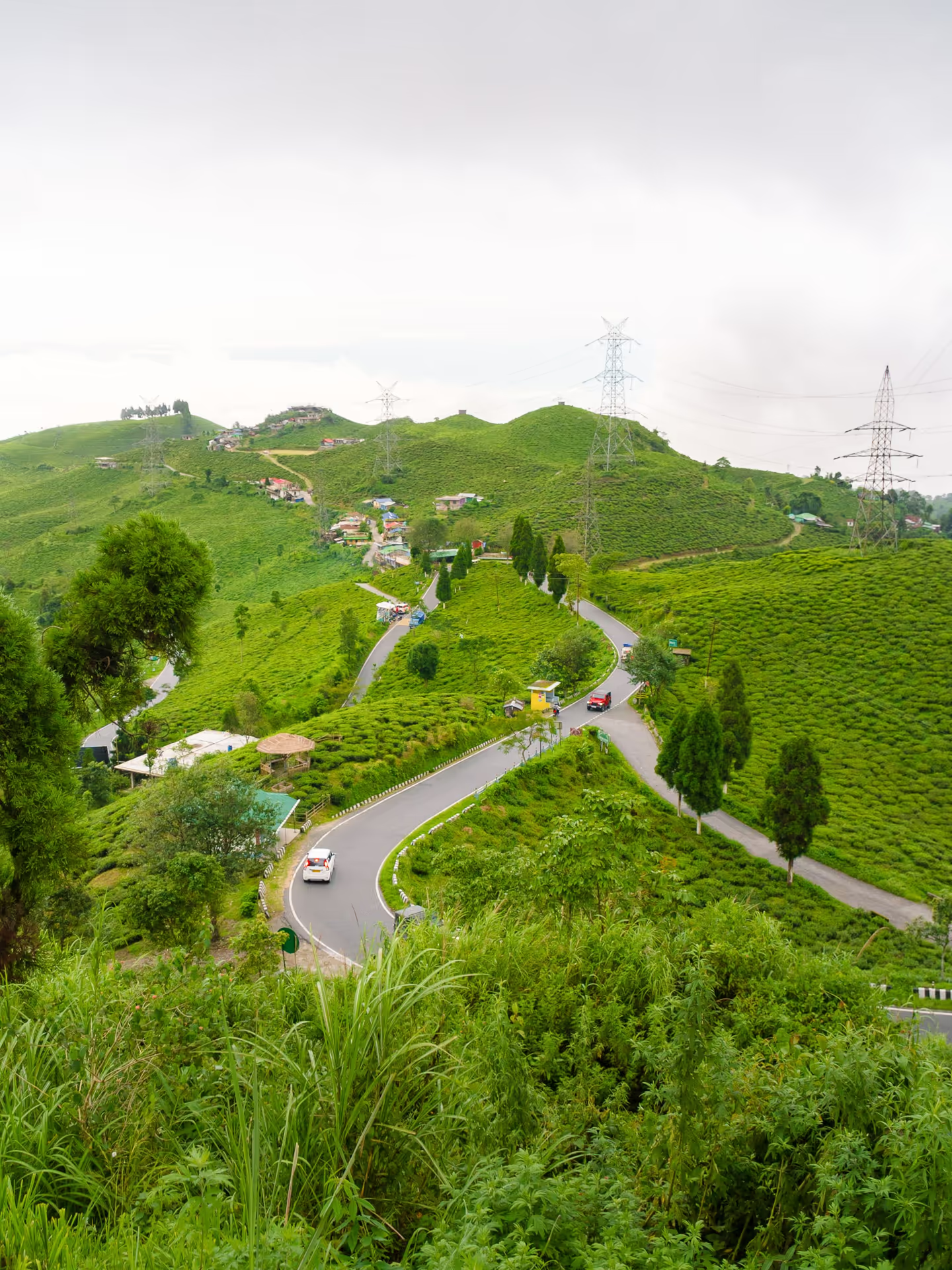
The gardens around Ilam town are open to visitors and the path through the rows is simply a walk — no trail-finding, no altitude, no technical skill required. The best time to walk is early morning when the light is horizontal and the pickers are at work. Carry a camera; the geometry of the tea rows and the colors in good morning light photograph exceptionally well.
Visit a Tea Factory
Several factories near Ilam accept visitor walkthroughs during picking season, showing the process from fresh leaf through withering, rolling, oxidation (for black tea), and drying. The smell inside a working factory during first flush is one of those sensory experiences that attaches strongly to memory. Arrangements are best made through a local contact or tour operator.
Kangchenjunga Views from Mai Pokhari and Sandakpur
Ilam district's higher ridges offer some of the clearest Himalayan panoramas in eastern Nepal. Mai Pokhari (a small lake at around 2,200 m above Ilam) is a sacred site surrounded by rhododendron forest with mountain views. Sandakpur, right on the Nepal-India border ridge, offers a full Himalayan sunrise panorama that includes Kangchenjunga, Makalu, and on particularly clear days, Everest. The walk to Sandakpur is a gentle 2–3 hour hike from the ridge road — accessible to most reasonably fit travelers.
Eastern Nepal Circuit
Ilam combines naturally with a broader eastern Nepal itinerary. Koshi Tappu Wildlife Reserve (October–March for birdwatching) is roughly 150 km southwest. The Kangchenjunga Base Camp trek begins further north in the Taplejung district. For travelers flying into Bhadrapur, Ilam is a natural first stop before continuing into the hills or combining with a cross-border visit to Darjeeling.
A note for tea travelers: if you want to buy good Ilam tea to take home, buy directly from a factory shop rather than the tourist-facing stalls in Kathmandu. The factory prices are lower and the tea is fresher — spring first-flush in particular is best purchased as close to the source as possible.
Is Ilam Suitable for Foreign Travelers?
Yes, though it takes more logistical effort than well-trodden routes like Pokhara or the Kathmandu Valley. The town has accommodation ranging from basic to comfortable mid-range; English is less widely spoken than in tourist centers, which makes a local guide or pre-arranged logistics more valuable here than elsewhere.
For non-trekkers specifically — those who want Nepal's natural beauty without altitude or physically demanding days — Ilam is one of the most satisfying answers in the country. The tea garden walking is gentle, the scenery is genuinely beautiful, and you are seeing a part of Nepal that most international visitors completely miss.
How EcoTourNepal Helps
Ilam is one of the destinations where local knowledge makes the difference between a generic visit and a genuinely good one. Knowing which factories welcome visitors, which garden path gives the best morning light, which guesthouse is actually clean and which restaurant is actually good — that is the kind of practical knowledge that EcoTourNepal's team can provide.
Ilam can be built into an eastern Nepal itinerary that also includes wildlife watching at Koshi Tappu, and the heritage culture tours program can be extended to include this region. For travelers combining Nepal with a longer South or Southeast Asia trip, eastern Nepal is a natural addition before or after Bangladesh or a Darjeeling visit.
Contact EcoTourNepal to plan an eastern Nepal itinerary that includes Ilam. See also: Heritage & Culture Tours and Wildlife & National Parks for other non-trekking Nepal experiences.
Getting There: Practical Options
Fly Kathmandu → Bhadrapur (~1 hour) then road to Ilam (~2–3 hours). Bhadrapur is the closest airport; flights operate on most Buddha Air and Yeti Airlines schedules.
Overland from Kathmandu: Long (12–16+ hours by bus or jeep depending on road conditions and route). Not recommended for a short visit.
From Darjeeling (India): The Kakadbhitta land border crossing is roughly 90 minutes from Ilam. Travelers combining a Darjeeling visit with eastern Nepal can enter here.
Frequently asked questions
Is Ilam worth visiting if I only have 2–3 days?
Yes, 2–3 nights is enough for the tea garden walks, a factory visit, and a sunrise from Mai Pokhari or the upper ridge. Flying into Bhadrapur makes the logistics manageable for a short trip.
How do Ilam teas compare to Darjeeling teas?
Ilam and Darjeeling share the same climatic belt and soil conditions — both produce light, muscatel-toned teas with similar terroir. Specialty buyers increasingly treat first-flush Ilam tea as comparable in quality. The main difference is name recognition: Darjeeling is an international brand; Ilam is Nepal's best-kept secret.
Can I see Kangchenjunga from Ilam?
Yes, from the higher ridges of Ilam district — particularly from Sandakpur on the Nepal-India border ridge and from Mai Pokhari — Kangchenjunga (8,586 m, the world's third highest) is clearly visible on good days in autumn and spring.
Is Ilam suitable for travelers who don't want to trek?
It is ideal for non-trekkers. Walking through tea gardens is flat to gently undulating. The highest viewpoints involve a short uphill walk of 2–3 hours, but there is no altitude concern, no technical terrain, and no camping — it is an entirely different category from Himalayan trekking.
What is the best way to combine Ilam with the rest of Nepal?
Fly Kathmandu to Bhadrapur, spend 3–4 nights in Ilam, then fly back from Bhadrapur. Alternatively, combine with Koshi Tappu Wildlife Reserve (birdwatching, Oct–March) to the south, or use the Kakadbhitta border crossing to combine with a Darjeeling visit.
Keep reading
 Destination Deep-Dives
Bandipur Guide: The Best Small-Town Stop Between Kathmandu and Pokhara
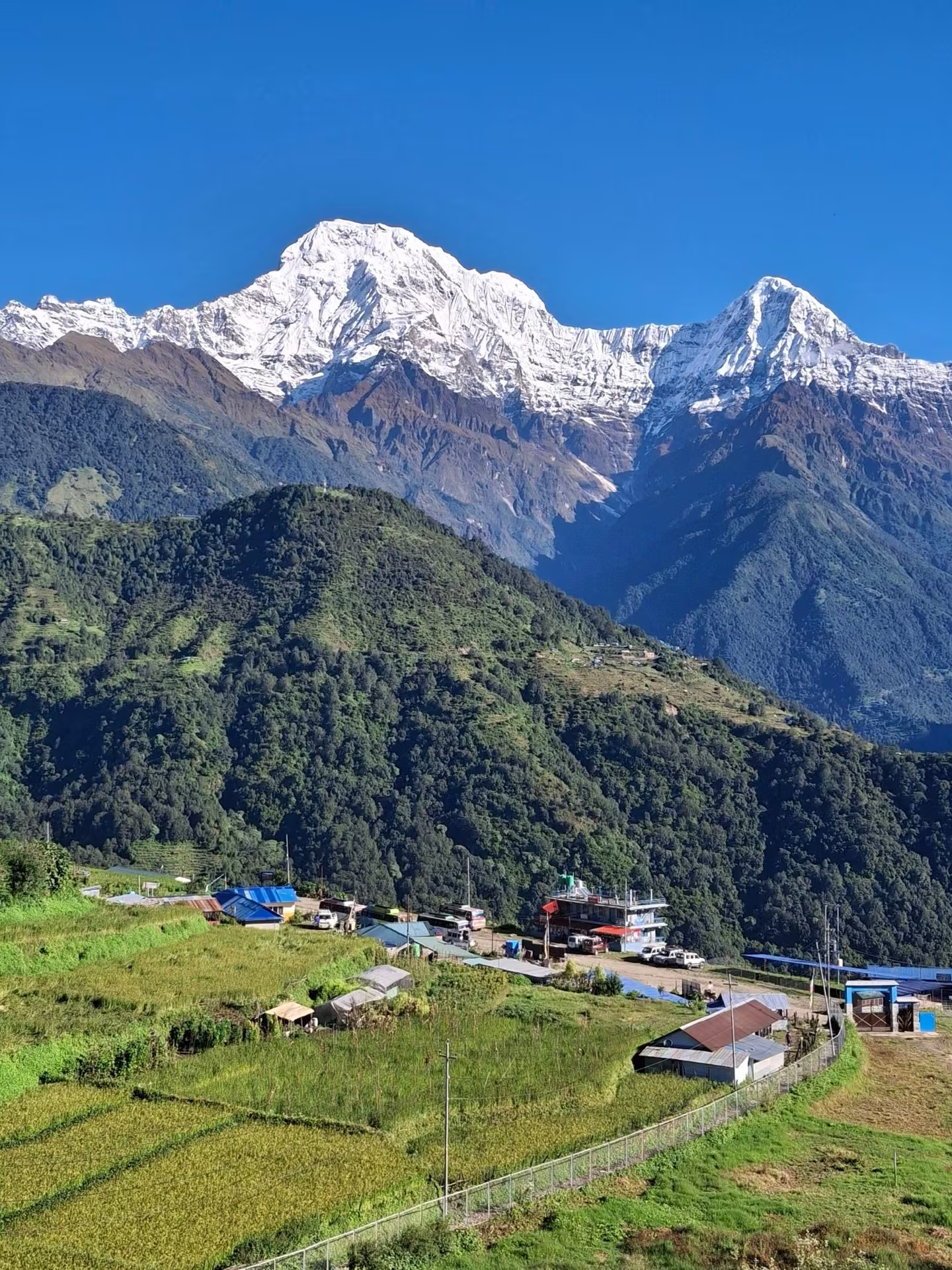
Why Bandipur deserves one night of your Nepal itinerary: a pedestrian heritage hill town with mountain views, Newari architecture, and an atmosphere that every photographer and slow traveler notices immediately.
 Wildlife
Koshi Tappu Birdwatching Guide: Nepal's Best Birding Destination
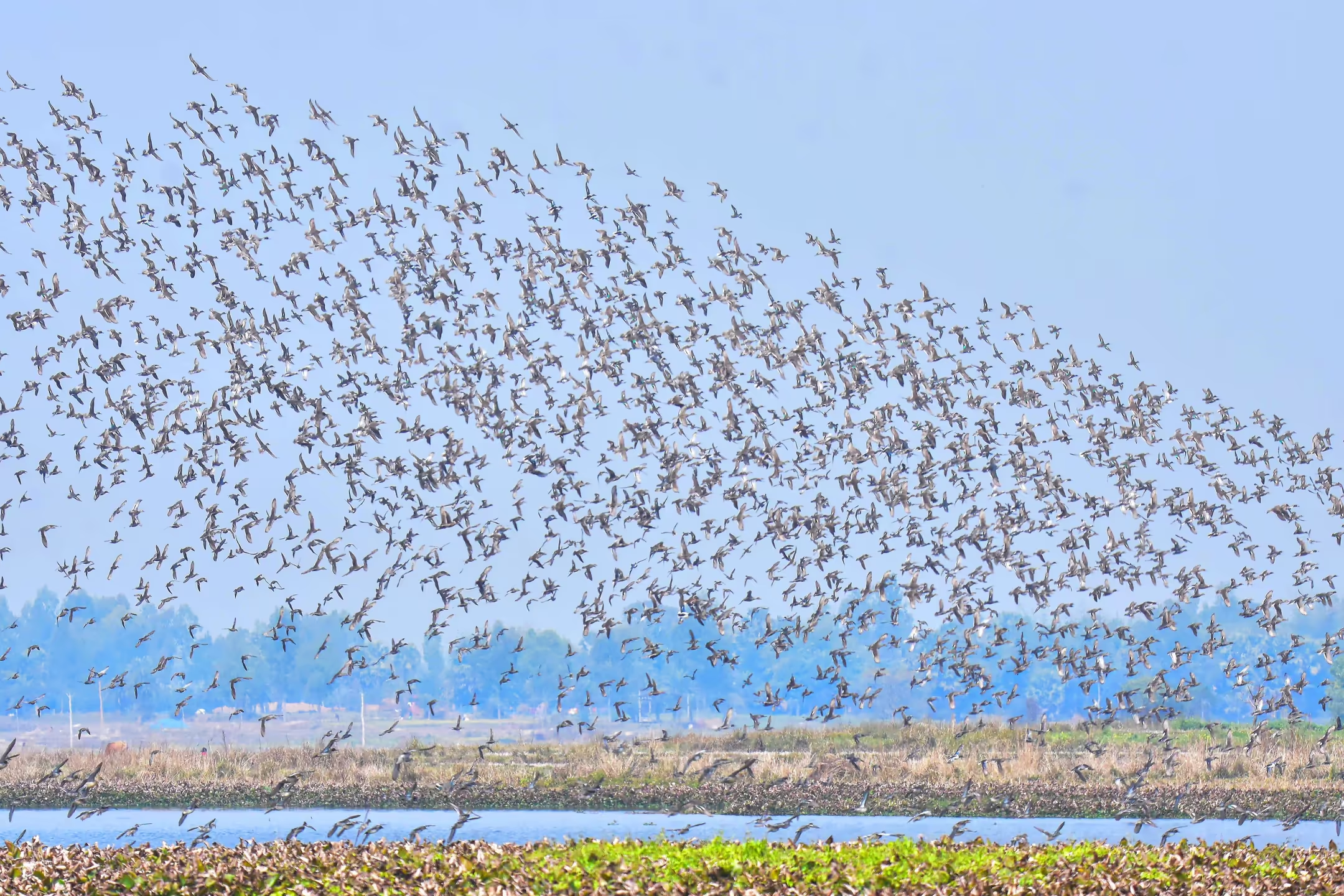
Koshi Tappu Wildlife Reserve is Nepal's premier birdwatching destination — over 500 species, best October to March, and ideal for both casual visitors and serious birders.
 Treks & Peaks
Travel Insurance & Helicopter Rescue for Nepal Trekking — What You Actually Need
What altitude coverage to buy, how helicopter rescue really works in Nepal, the old fraud era that's now cleaned up, and why your operator matters in an emergency.