Destination Deep-Dives
Bandipur Guide: The Best Small-Town Stop Between Kathmandu and Pokhara
Why Bandipur deserves one night of your Nepal itinerary: a pedestrian heritage hill town with mountain views, Newari architecture, and an atmosphere that every photographer and slow traveler notices immediately.
 ByRohan KCTour & Trekking Guide
Published
Most travelers do the Kathmandu-to-Pokhara run as a single eight-hour road journey or a 25-minute flight. Both are perfectly reasonable. But between the two cities, sitting on a ridge above the Marshyangdi River valley at 1,030 meters, there is a small hill town that rewards anyone willing to stop for a night and slow down.
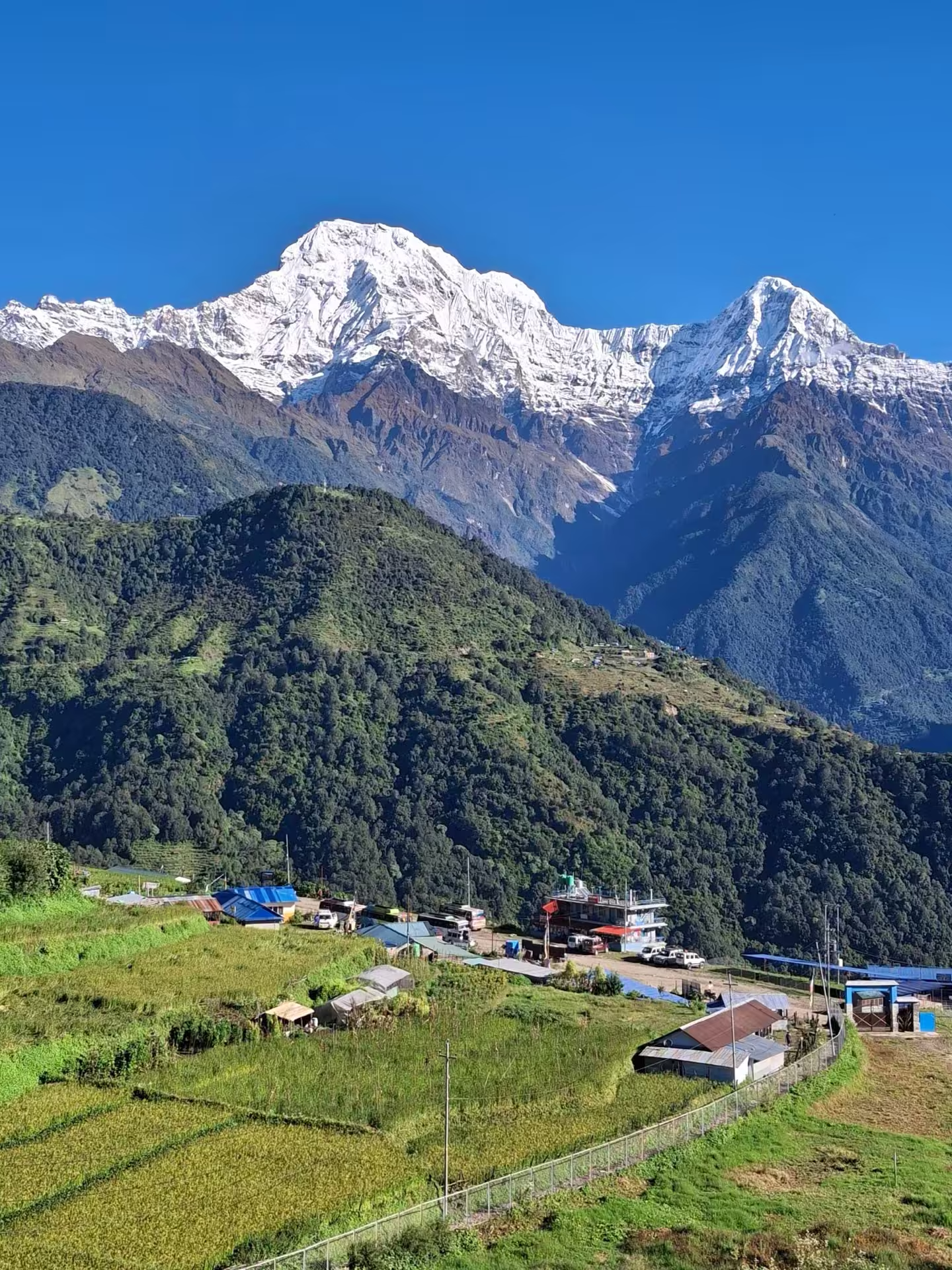
Bandipur is a medieval Newari trading settlement that froze, architecturally speaking, in the 18th century when the Prithvi Highway bypassed it. The road going elsewhere was the best thing that ever happened to Bandipur. The bazaar street is still pedestrian-only. The carved wooden facades on the old merchant houses are still intact. And on a clear morning, the full sweep of the Annapurna, Lamjung Himal, and Manaslu ranges sits directly north of the ridge on which you are standing.
Quick summary
Location: Tanahu district, 8 km above Dumre on the Prithvi Highway — roughly midway between Kathmandu and Pokhara.
What it is: A pedestrian-only heritage bazaar town on a forested ridge, with Newari architecture, mountain views, and a small but good selection of guesthouses and restaurants.
The right stay: One night is the sweet spot — long enough to see the town at its best (evening light, early morning, before the day-trippers arrive), short enough to fit into any Kathmandu-Pokhara itinerary.
Who loves it most: Photographers, architecture travelers, slow travelers who want to feel Nepal rather than tick it off, and families who need a break from the road.
What is inconvenient: The 8 km road up from the highway is steep and rough, unsuitable for large buses; some shops close early; the small town fills up quickly on weekends and public holidays.
Does not have: A party scene, a beach, or anything remotely connected to adventure sports. This is a heritage-and-views destination.
The Bandipur Bazaar: Nepal's Pedestrian Time Capsule
The main street of Bandipur is its defining feature. Unlike every other market town in Nepal at similar size and importance, Bandipur's bazaar is traffic-free — vehicles cannot reach the old town center, which means the streets are paved with brick and stone rather than asphalt, and the rhythm of the place is set by foot traffic rather than motorcycles.
The merchant houses that line the street were built by Newari traders who settled here after it was established as a commercial center in the 18th century. The facades are the giveaway: carved wooden windows of the style you see in Kathmandu's old city, deep-set balconies with decorative brackets, and heavy wooden doors that open into internal courtyards. Many of these houses are still occupied by the same families whose ancestors built them.
Walking the bazaar early in the morning — before 8 am — is the Bandipur experience at its best. The light is horizontal and warm on the wooden facades. The vegetable sellers are setting up. The temples at each end of the street are receiving their first offerings of the day. It is a scene of a Nepal that has not been rebuilt for tourists because it was never on the main route.
The Mountain Views
Bandipur sits on a long east-west ridge, and the northern face of that ridge opens onto an unobstructed view of three of Nepal's major mountain massifs: Annapurna II and IV directly north, Lamjung Himal to the northwest, and Baudha (Himal Chuli) and Manaslu visible further east. On a clear day in October or November, this is one of the better accessible Himalayan panoramas in the middle hills — the kind that makes you suddenly understand the scale of what is standing above the rest of the landscape.
The viewpoint at the north end of the ridge (a short walk from the bazaar) is the best spot. Sunrise here, when the first light turns the snow peaks orange, is the reason most photographers who have been to Bandipur talk about it the way they do.
The key thing most visitors miss: go to the northern viewpoint the evening before to check what you can see and confirm the direction, then set an alarm for 30 minutes before sunrise and walk up in the dark. The view at golden hour in the morning is incomparably better than in full daylight, when haze builds.
Who Bandipur Is Best For
Photographers: Few places in Nepal offer this combination of architectural detail and mountain backdrop within 200 meters of each other. The carved facades, the morning light on the bazaar, and the mountain panorama at golden hour make Bandipur one of the more rewarding photography stops in the country.
Culture travelers: Bandipur's Newari heritage is genuine and unrestored — these are not reconstruction projects but living buildings that have been continuously inhabited. Visitors who have been to the Valley's Durbar Squares will find Bandipur a smaller, quieter, more intimate version of the same architectural culture.
Slow travelers: If your Nepal itinerary is already too dense — too many places, too many departure times — Bandipur is the corrective. One night here, with nothing to do but walk and eat and look at mountains, has a reset effect that the rest of a busy itinerary benefits from.
Families with children: The pedestrian bazaar is safe for children to wander. The guesthouses are comfortable. The surrounding area has easy walking (the Siddha Cave, a 20-minute walk below town, is a large limestone cavern that children find fascinating). The town is small enough to feel contained and safe.
Getting There
Bandipur is not directly served by tourist buses; you need to arrange separate transport or take a local vehicle from Dumre junction on the Prithvi Highway.
If traveling by private car (the best option): the Kathmandu-to-Bandipur drive takes 4–5 hours via the Prithvi Highway; Bandipur to Pokhara is 2–3 hours. A stop in Bandipur breaks the journey naturally.
By public bus: Take any Kathmandu-Pokhara bus and get off at Dumre junction; from there, local transport (jeep/microbus) runs the 8 km up to Bandipur regularly.
Note: The road up from Dumre is steep and narrow. Large touring buses cannot navigate it, which is one of the structural reasons Bandipur has avoided mass tourism.
Accommodation and Food
Bandipur has a small but good selection of guesthouses and heritage hotels, ranging from budget to comfortable mid-range. The best options fill up on weekends and during school holidays; book ahead.
Food is straightforward Nepali and Indian-influence cooking plus some Western standards aimed at travelers. Nothing is extraordinary, but the dal bhat at most guesthouses is honest and good. The Newari restaurant options in the bazaar are worth seeking out for the local flavors.
How EcoTourNepal Helps
For travelers doing a Kathmandu-to-Pokhara private transfer, EcoTourNepal can arrange a Bandipur overnight stop as part of the package. The car drops you in the evening, picks you up the following morning after the sunrise viewpoint, and continues to Pokhara. It adds one night to the journey and changes the experience from a road trip to a proper itinerary stop.
Bandipur also fits naturally into itineraries that include the Annapurna Base Camp trek or Pokhara tour — it is a cultural counterpoint to the mountain focus of both.
Plan your Kathmandu to Pokhara journey with a Bandipur overnight stop.
See also: Heritage & Culture Tours and the Kathmandu Heritage Tour for more Newari architecture and culture.
Practical Information
Best season: October–November and February–April for mountain views. Monsoon visits are fine for the bazaar and architecture but cloud obscures the Himalayan panorama.
Altitude: ~1,030 m — no altitude concerns.
Duration: One overnight is the ideal stay; two nights suits photographers or travelers who want to explore the surrounding area (Siddha Cave, nearby trails).
Weekend warning: Bandipur is popular with domestic tourists and urban Nepalis on weekends; book guesthouses ahead and expect more crowd on the bazaar on Saturday.
Frequently asked questions
Is Bandipur worth a night's stay or just a day trip?
One night is strongly recommended. The magic of Bandipur is in the early morning — the quiet bazaar before day-trippers arrive, and the mountain panorama at golden hour. A day visit gets you neither of those, and the 8 km road up and back from the highway eats into your time.
How do I get from Kathmandu to Bandipur by public transport?
Take any Kathmandu-Pokhara public bus and ask to be dropped at Dumre junction (roughly 4–5 hours from Kathmandu). From Dumre, local jeeps and microbuses run the 8 km up to Bandipur town, usually NPR 50–100.
What mountains can I see from Bandipur?
On a clear day you can see Annapurna II and IV, Lamjung Himal, Baudha (Himal Chuli), and Manaslu. October and November offer the clearest views before winter haze builds; early morning is significantly better than midday.
Is Bandipur good for families with children?
Yes. The pedestrian bazaar is safe for children to explore, the surrounding area has easy walks (including Siddha Cave, a large limestone cavern), and the town is small and easy to navigate. Guesthouses are comfortable and family-friendly.
Does Bandipur have ATMs or card payment?
As of 2026, ATM options in Bandipur are limited. Bring sufficient cash (NPR) from Kathmandu or Pokhara. Card payments are not reliable in smaller guesthouses and restaurants.
Can I combine Bandipur with the Annapurna trekking region?
Yes — Bandipur is 2–3 hours from Pokhara, which is the gateway to both the Annapurna Base Camp and Annapurna Circuit treks. Stopping in Bandipur the night before or after a trek gives you a cultural counterpoint to the mountain experience.
Keep reading
 India to Nepal
Nepal for Indian Travellers in Summer/Monsoon 2026: Visa, Weather, Costs & Best Trips
Planning Nepal from India in summer or monsoon 2026? Here is what Indian travellers need to know about visa-free entry, weather, money, routes, road trips, and the best short itineraries.
 Destination Deep-Dives
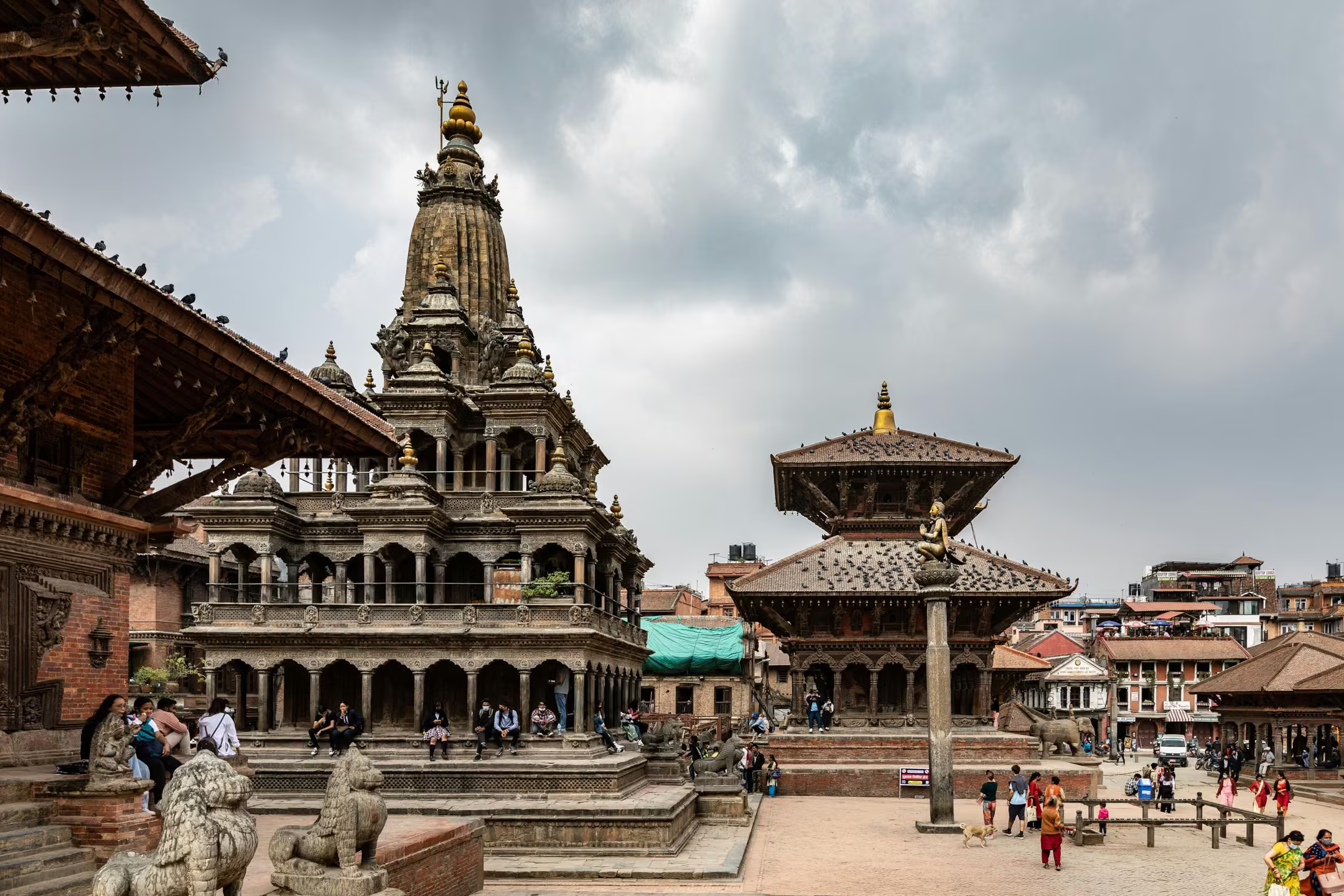
Patan (Lalitpur) Guide: Art, Courtyards, Cafes & Heritage
Why Patan beats Thamel for remote workers and culture travelers: calmer streets, independent cafes, world-class Newari art, and a creative expat scene just 20 minutes from central Kathmandu.
 Destination Deep-Dives
Ilam Tea Country Guide: Nepal's Soft Green Escape
Rolling tea gardens, cool hill air, and almost no crowds. Ilam is Nepal's answer to Darjeeling — perfect for non-trekkers, photographers, and travelers seeking a slow, green escape in eastern Nepal.