Planning
Luxury Travel in Nepal: What Premium Actually Means Here
Luxury in Nepal means city hotels, private vehicles, helicopter options, and expert guides — not 5-star teahouses. Here's what premium can and cannot deliver in the Himalayas.
 ByRohan KCTour & Trekking Guide
Published
Luxury travel in Nepal is real — but it doesn't work the same way as luxury in Tokyo or the Maldives. The Himalayas impose physical and logistical limits that no amount of money can fully override. Understanding where premium dollars go a long way, and where they hit a wall, is the difference between a genuinely exceptional trip and an expensive disappointment.
Quick summary
What you can genuinely upgrade: city hotels, private vehicles and transfers, guide quality and depth, helicopter options, food planning, and boutique lodge stays on some routes.
What cannot be made luxury on remote treks: certain teahouse rooms, shared toilet facilities above a certain altitude, mountain weather, and flight delays at Lukla.
Who should buy premium: older travelers, executives, families, short-time visitors who want maximum quality per day, and comfort-focused groups where one difficult night would spoil the trip.
Helicopter options dramatically change the access equation — flying into Lukla or returning from EBC by helicopter saves days and bypasses the most unpredictable logistics.
Guide quality is the single most impactful upgrade. A deeply experienced, well-connected guide changes what a trip reveals.
A premium Nepal trip is not about avoiding Nepal — it's about experiencing it without unnecessary friction.
Where premium actually makes a difference
City hotels
Kathmandu has genuinely world-class hotels. Properties like Dwarika's, Hotel Yak & Yeti, and the Hyatt Regency offer spa facilities, fine dining, and heritage-adjacent settings. Pokhara has boutique lakeside properties with Annapurna-range views that are worth the splurge on arrival night. These are real luxury experiences, comparable to premium hotels anywhere in Asia.
For the Kathmandu Heritage Tour — Pashupatinath, Boudhanath, Bhaktapur, Patan — staying in a heritage-converted property in Patan rather than a business hotel in Thamel is the premium move. The difference in atmosphere is significant.
Private vehicles and transfers
All EcoTourNepal packages include airport-to-hotel transport. At the premium level, that extends across the entire trip: a private vehicle and driver for the Kathmandu valley circuit, private car to Pokhara instead of a tourist bus, dedicated 4WD on mountain roads. This matters practically — mountain roads in Nepal are unpredictable, and a driver who knows the route and has your team's contacts in case of a closure is worth the cost.
Guide quality
This is the single most impactful upgrade most travelers don't think about. Nepal has thousands of licensed trekking guides. The difference between a guide who has walked Annapurna Base Camp three times and one who has done it forty times — and knows every teahouse owner personally, has a friend in every village, and speaks four languages — is not marginal. It's the difference between seeing Nepal and understanding it.
A story from our operations: a guide brought clients to a local family home in a mountain village — not a guesthouse, an actual family living space — because he'd grown up with the grandfather. The clients talked to the family through the guide, shared tea, saw things no itinerary can schedule. That is what an experienced, well-connected guide enables.
At the premium tier, we assign our most senior guides — people who have done a route enough times to know when a weather pattern is developing, which teahouses actually serve safe food at altitude, and how to read a client's altitude symptoms accurately.
Helicopter options
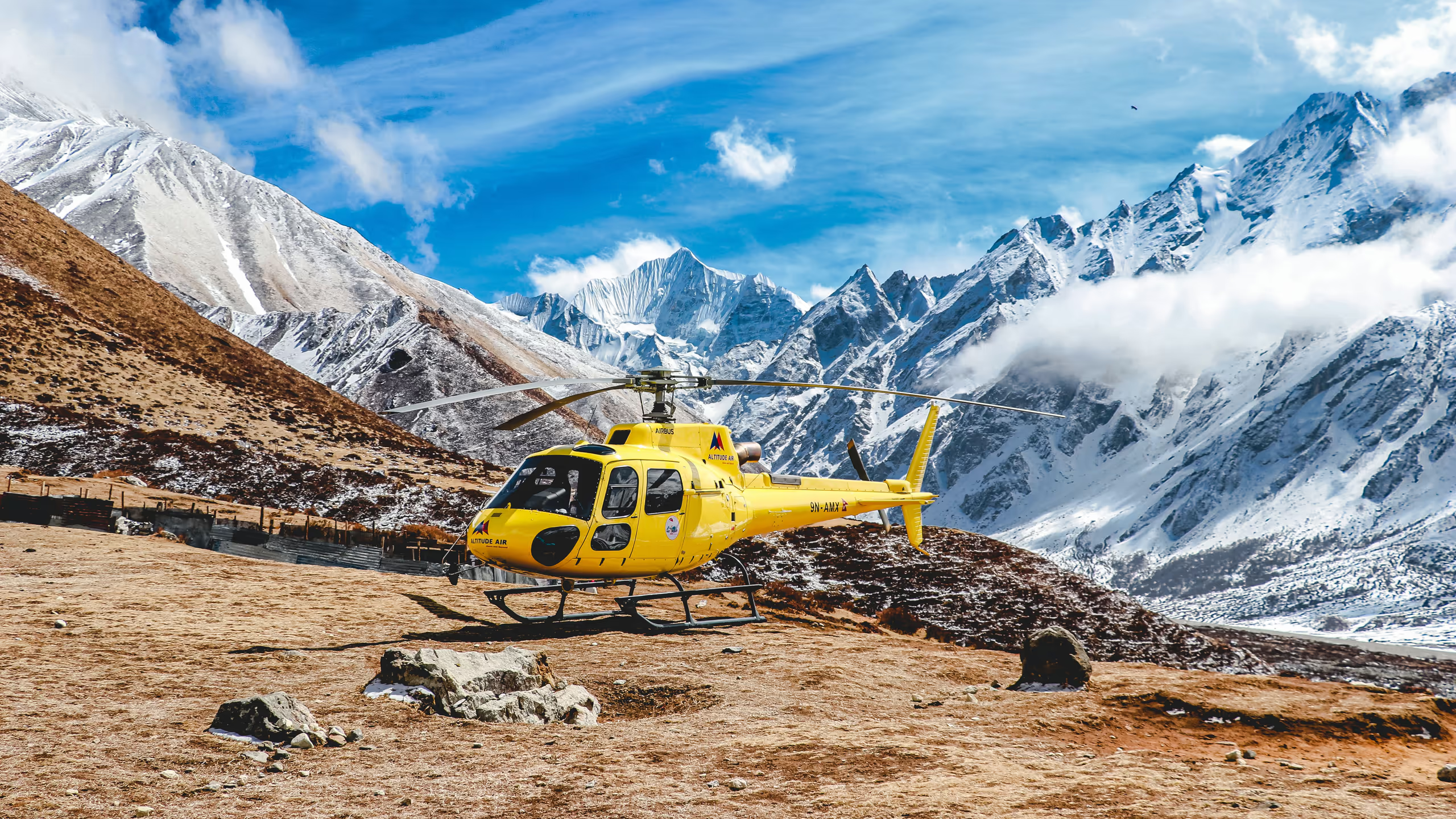
Helicopters change the access equation in Nepal in ways that nothing else can. A few options worth knowing:
Lukla by helicopter instead of fixed-wing: sidesteps the weather-dependent small-plane delays that cost trekkers days. On a tight schedule, this is often worth the premium.
Helicopter return from Everest Base Camp: you trek in, experience the route properly, then fly out instead of walking back down the same path. It compresses the overall trip without skipping the journey.
One-day Everest Base Camp helicopter tour: fly in from Kathmandu, land at EBC or a nearby high point, fly back. This is a half-day or full-day experience — not a substitute for trekking, but remarkable for travelers who want the view without the weeks. Important caveat: the altitude exposure is real even on a one-day tour; no overnight means no acclimatization, so do not plan to stay.
Base-camp-to-jungle in one afternoon: you can be at -20°C at Everest Base Camp in the morning and in the heat of Chitwan jungle the same afternoon. That extremes-in-hours experience is something travelers never forget.
Helicopter pricing in Nepal varies by season, availability, and route. Contact us for current rates — we arrange these directly.
Boutique lodge stays
On some routes, boutique lodges exist as alternatives to standard teahouses. The Everest region has a handful of better-equipped lodges in Namche Bazaar and Tengboche. The Annapurna circuit has improved significantly in recent years. These are not luxury hotels — but they offer private rooms with better bedding, reliable hot water, and in some cases, better food options. At the premium booking tier, we prioritize these.
What premium cannot change
Being honest about this is part of what makes a premium operator trustworthy.
Teahouse rooms above ~4,000 m are what they are. The infrastructure at high altitude is difficult to build and maintain — wood and supplies are carried up on mules or porters' backs. A "better" room at EBC or near ABC is a better teahouse room, not a hotel room. Private, yes. Heated, probably not. Attached bathroom at that altitude is rare to nonexistent. The people who understand this and accept it have a wonderful time; people who expect five-star rooms at 5,000 m will be disappointed regardless of what they paid.
Mountain weather does not negotiate. Lukla airport has weather-related delays that are genuinely unpredictable. A premium trip builds buffer days into the schedule around flights rather than trying to override the weather.
The physical demands of altitude apply equally to every traveler at every price point. Acclimatization cannot be purchased. Our guides follow the proven protocol — hike high, sleep low, never skip acclimatization days to save time — and this is non-negotiable on any booking tier.
Who should invest in premium
Executives and founders on limited time: if you have 10 days and want Nepal to be genuinely remarkable rather than merely survivable, the premium version delivers far more per day.
Older travelers or those with health considerations: private guides, private transport, and premium teahouse selection reduce friction and allow better management of any physical issues.
Families with mixed interests: one family member may want the hard trek while another wants the heritage tour. A private premium setup accommodates that without compromise.
Travelers for whom one bad night would spoil the trip: if the idea of a shared bathroom at altitude is a dealbreaker, premium tier on more accessible routes (Langtang, lower Annapurna) gives you the Himalayas with minimized discomfort.
How we build premium trips
We don't have a fixed "luxury package." Every premium trip is designed around the specific client — their route, their accommodation preferences, whether helicopters are on the table, how much of the trip is city versus mountain. Start with a conversation and we'll tell you honestly what premium buys on your specific itinerary.
Frequently asked questions
Are there 5-star hotels on Nepal trekking routes?
No — not on the mountain trails themselves. What exists are better-equipped lodges in towns like Namche Bazaar (Everest region) and Ghorepani (Annapurna). In Kathmandu and Pokhara, genuine 5-star hotels exist and are genuinely luxurious.
Is a helicopter tour to Everest Base Camp worth it?
For time-limited travelers, it's an extraordinary experience — you can be at EBC in the morning and back in Kathmandu by afternoon. It is not a substitute for trekking, and the altitude exposure is real even on a day trip, so plan accordingly.
What's the most impactful premium upgrade on a Nepal trek?
Guide quality. An experienced, well-connected guide who knows every family and teahouse owner on a route reveals a version of Nepal that money alone cannot access. This is the upgrade with the highest return.
Can private vehicles be arranged for the whole trip including mountain roads?
Yes. For city and valley touring, private cars are standard. For mountain approaches (roads to Solu Khumbu, Manaslu, etc.), we arrange dedicated 4WD vehicles with experienced drivers who know the route conditions.
Is luxury trekking in Nepal realistic for people over 60?
Absolutely. Our oldest client was 82 years old. The key is matching the route to the traveler's fitness and altitude comfort, building proper acclimatization time, and having a private guide and medical support on call. Premium tier makes this safer and more comfortable.
Keep reading
 Treks & Peaks
Travel Insurance & Helicopter Rescue for Nepal Trekking — What You Actually Need
What altitude coverage to buy, how helicopter rescue really works in Nepal, the old fraud era that's now cleaned up, and why your operator matters in an emergency.
 Planning
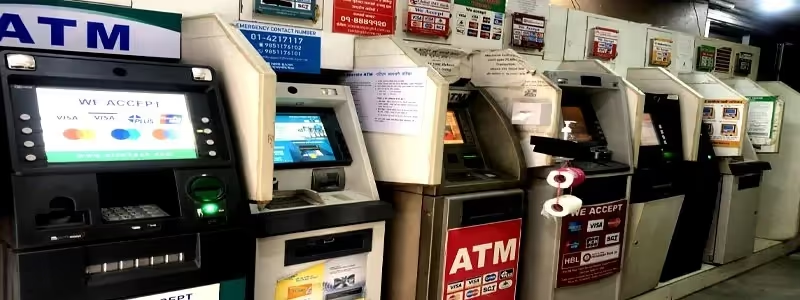
Money in Nepal 2026: ATMs, Cash, Cards, eSewa & Tipping Guide
Nepal ATM limits, fees, and which banks to use. How much cash to carry on a trek. Where to get the best exchange rate. Honest tipping norms for guides, porters, and drivers.
 Planning
Nepal Without Trekking: Best Trips for People Who Don't Want to Hike
Nepal is worth every day even if you never put on hiking boots. Culture, wildlife, Pokhara, Lumbini, scenic mountain flights, and food — a complete Nepal without a single trek.