Getting Around
Nepal Road Travel Guide 2026: Private Jeep, Tourist Bus, Local Bus and When to Fly
Private jeep, tourist bus, local bus, or domestic flight — here's how to choose based on comfort, safety, time, and budget, with honest road-delay realities for Nepal in 2026.
 ByRohan KCTour & Trekking Guide
Published
Getting between Nepal's destinations is where many itineraries meet reality. The country's main roads are dramatic, sometimes breathtaking, and sometimes slow — occasionally all three at once. Understanding your transport options before you book is the difference between a smooth trip and a day spent waiting at a landslide.
Quick summary
Private jeep or car: best for families, groups, premium travelers, anyone with a tight schedule or airport transfer. Fixed price, door-to-door, flexible stops.
Tourist bus: fine for budget travelers with time flexibility and a high tolerance for a long day. Dedicated routes with English-speaking drivers, AC in most cases.
Local/public bus: very cheap, very slow, very crowded, and not recommended for international travelers on most routes — but an authentic experience if that's your goal.
Domestic flight: fastest and the right call for Pokhara/Lumbini if time matters, or for Lukla if you're doing EBC. Price gap has narrowed significantly.
Road-delay reality: landslides, construction, festival rush, and traffic can double journey times. Build buffer or fly.
EcoTourNepal handles transport: all packages include private transport. We also arrange standalone airport pickups and intercity transfers.
The main routes and what each takes
Kathmandu → Pokhara
The most traveled road route in Nepal. Distance: 200 km. By tourist bus: 7–8 hours on a good day, 9–10+ hours with traffic or a road event. By private car: 5–6 hours with a competent driver and no delays. By plane: 25 minutes.
The Prithvi Highway linking the two cities is mostly paved and passes through dramatic gorge scenery along the Trishuli River. It's not boring. But it is a mountain road with switchbacks, construction zones, and occasional single-lane sections. If your onward flight, train, or appointment is the same day you arrive in Pokhara, fly.
Kathmandu → Chitwan (Sauraha)
Approximately 5–6 hours by private car, 7–8 hours by tourist bus. The road descends from the hills into the Terai flatlands, which makes the second half of the drive noticeably faster. No domestic flight to Sauraha itself; the nearest airport is Bharatpur. Private vehicle is the standard choice.
Kathmandu → Lumbini
Option 1: fly to Bhairahawa (Gautam Buddha Airport) — 35 minutes, around US$113 one way for foreigners. Option 2: 7–9 hours by car or tourist bus. For pilgrimage travelers or anyone wanting to maximize time at the site rather than on the road, the flight is worth it.
Pokhara → Mustang (Jomsom or beyond)
This route is a combination. You can fly Pokhara → Jomsom (20 minutes, mountain STOL flight) or drive — which means a long, rough day on an increasingly difficult road. For Upper Mustang beyond Jomsom, the only practical option is driving from Jomsom onward by 4x4. EcoTourNepal coordinates the full logistics.
Choosing your mode
Private vehicle — when we recommend it
For families, for any group larger than two people traveling together, for premium clients, and for any itinerary where the transport day is also an arrival or departure day: private vehicle. EcoTourNepal uses private cars and jeeps for all client airport pickups. After a long international flight with luggage, negotiating a taxi or waiting for a tourist bus is not how anyone wants to start a trip.
The private vehicle advantage is real: you stop when you want, you don't wait for a bus that may or may not fill up on time, and your luggage is with you. On mountain roads, the quality of the vehicle and the driver's experience matters. We use experienced drivers who know these roads and know when something doesn't look right.
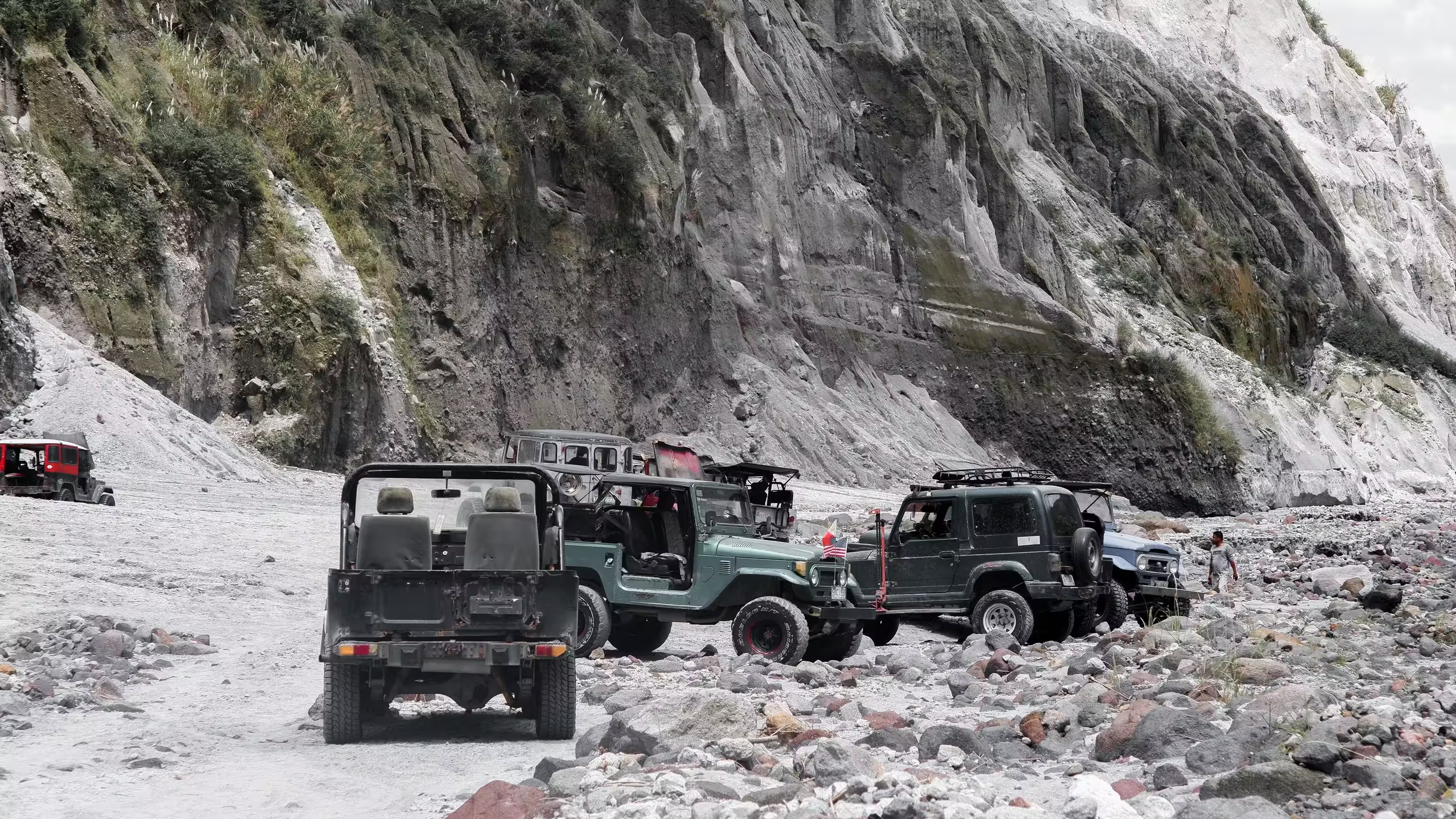
For off-road routes — into Mustang, into the Langtang Valley approach road, into remote Terai areas — a 4x4 jeep is necessary. The roads require it. Nepal does not have a fleet of electric SUVs for mountain driving yet (EV infrastructure is developing fast in cities, but the remote roads still require diesel 4x4). EcoTourNepal uses EVs where possible and diesel where the terrain demands it.
Tourist bus — when it works
For budget travelers with flexible schedules, the tourist bus from Kathmandu to Pokhara is a reasonable option. Most services (Greenline, Buddha Bus, Prithvi Bus and several others) run air-conditioned coaches with assigned seats, depart from Thamel or near Kantipath, and drop at Lakeside in Pokhara. Prices run approximately NPR 800–1,500 (~$6–12) depending on the operator and season.
The tourist bus is not what it looks like on paper. It leaves on time only roughly on time. The roads create unavoidable motion and seat comfort declines over hour seven. But it's safe, it's established, and for a solo traveler with time and no onward commitment, it works.
Local/public bus — honest assessment
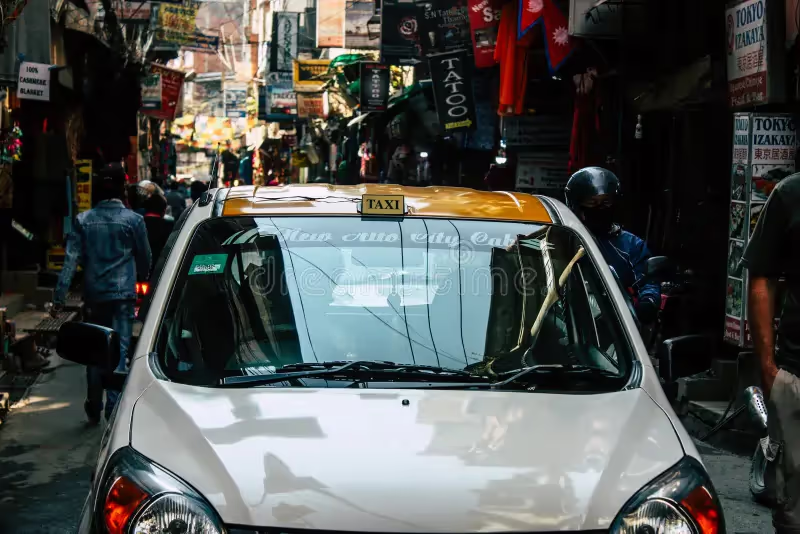
Local buses are how most Nepalis travel. They are very cheap, very crowded, often have live chickens and roof luggage, and stop at every town. For most international travelers, the local bus between major cities is not the right call — not because of safety but because the experience is exhausting, the communication is all Nepali, and the journey takes significantly longer than the tourist alternatives.
For short local trips within a city or to a nearby town, local microbuses and tempos are actually useful and cheap. For the Kathmandu valley or short Pokhara routes, locals use them constantly and they're fine.
Domestic flight — when to just fly
Flight prices in Nepal are subsidized for Nepali citizens and higher for foreigners, but the premium over a tourist bus is often smaller than travelers expect. Kathmandu to Pokhara: approximately NPR 5,000–8,000 ($40–65 USD). That converts four to five hours of mountain road into 25 minutes.
For Lumbini, flying to Bhairahawa saves most of a day of driving. For EBC/Everest access, the Lukla flight is not optional — there is no road to Lukla. In peak season (March–May, October–November), Lukla flights operate from Ramechhap/Manthali Airport, a 4–5 hour pre-dawn drive from Kathmandu, rather than directly from TIA. This is a real logistics consideration EcoTourNepal builds into every EBC itinerary.
The rule of thumb: if the road journey is more than five hours and you have a budget that allows the flight, fly. The cost difference is small; the time and energy difference is large.
Road-delay realities
Nepal's roads run through mountains. That means landslides happen, particularly in monsoon (June–September) and immediately after. Construction is ongoing across the network — the Kathmandu–Pokhara fast track is transforming the main corridor, and construction zones create slowdowns. Festival season (October, Dashain and Tihar) creates massive domestic movement: roads fill, buses are booked out, and delays compound.
EcoTourNepal monitors conditions before every road departure. The call is made to local contacts — not just Google Maps — because a road that shows open online may have had a fresh rockfall at 6 AM that the apps haven't caught. For itineraries with fixed onward connections, this ground-check is part of the service.
How EcoTourNepal handles transport
All EcoTourNepal packages include private transport — airport arrivals, intercity moves, and day trips are handled by our own vehicles and drivers. Clients don't need to think about it.
For travelers arranging some days independently within a trip, we're happy to advise on which route to fly vs drive on a given day, and we can arrange private transfers for individual legs.
If you're planning a multi-destination Nepal trip — say, Kathmandu, Chitwan, Pokhara, and Lumbini — talk to us about the transport logic. The order you visit these places, and which legs you fly vs drive, significantly affects how much energy and time you actually spend seeing Nepal vs sitting in a vehicle.
Intercity transport — quick reference
Kathmandu → Pokhara: fly (25 min, ~$40–65) or private vehicle (5–6 hr) or tourist bus (7–9 hr).
Kathmandu → Chitwan: private vehicle (5–6 hr) or tourist bus (6–7 hr).
Kathmandu → Lumbini: fly to Bhairahawa (35 min, ~$113) or private vehicle/bus (7–9 hr).
Pokhara → Kathmandu: same as above in reverse.
Lukla (EBC): fly only — from TIA off-peak, from Ramechhap in peak season.
Jomsom (Mustang): fly from Pokhara (20 min, STOL), or long road from Pokhara via Beni.
Frequently asked questions
How long does it take to travel from Kathmandu to Pokhara by road?
By tourist bus it's typically 7–9 hours; by private car 5–6 hours on a good day. Road conditions, construction, and traffic can add significant time. By domestic flight it's 25 minutes.
Is a tourist bus safe in Nepal?
Yes, reputable tourist bus services are safe. They run established routes, have experienced drivers, and are used by thousands of international travelers annually. For maximum safety and flexibility, a private vehicle is better.
When should I just fly instead of taking the road in Nepal?
Fly when the road journey is more than five hours and your budget allows it. Also fly when you have a fixed onward connection that cannot absorb delays, or during monsoon season when road closures are a real possibility.
Can I get a direct bus from Kathmandu airport to Pokhara?
There are tourist bus services from central Kathmandu (Thamel area) to Pokhara. From the airport, you'd need to get to the city first. EcoTourNepal includes airport pickup in all packages, which avoids this whole question.
Do road conditions change by season in Nepal?
Significantly. Monsoon season (June–September) brings the highest risk of landslides and road closures. Festival season (October, Dashain) brings heavy traffic. Spring and autumn are generally the most reliable for road travel.
Does EcoTourNepal provide private transport for all trips?
Yes. All packages include private transport from airport arrival through to departure. For custom itineraries, transport between destinations is included and planned around flight vs road logic based on your schedule and preferences.
Keep reading
 Treks & Peaks
Travel Insurance & Helicopter Rescue for Nepal Trekking — What You Actually Need
What altitude coverage to buy, how helicopter rescue really works in Nepal, the old fraud era that's now cleaned up, and why your operator matters in an emergency.
 Planning
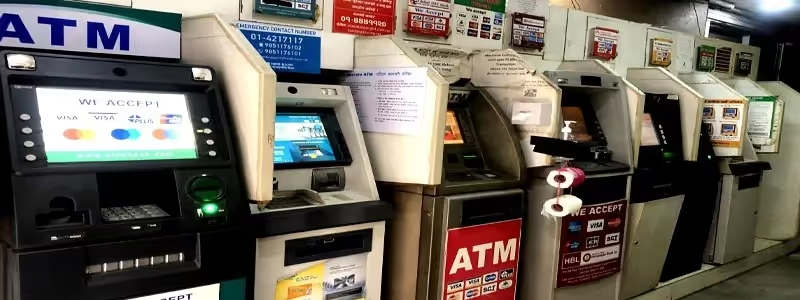
Money in Nepal 2026: ATMs, Cash, Cards, eSewa & Tipping Guide
Nepal ATM limits, fees, and which banks to use. How much cash to carry on a trek. Where to get the best exchange rate. Honest tipping norms for guides, porters, and drivers.
 Planning
Nepal Without Trekking: Best Trips for People Who Don't Want to Hike
Nepal is worth every day even if you never put on hiking boots. Culture, wildlife, Pokhara, Lumbini, scenic mountain flights, and food — a complete Nepal without a single trek.