Getting Around
Nepal SIM Card, eSIM & Internet 2026: Ncell vs NTC, Mountain Coverage & Data Prices
Ncell vs NTC: which SIM to buy, what data costs, where coverage dies on trek, and whether eSIM works in Nepal in 2026. Essential for trekkers and remote workers.

Staying connected in Nepal is easier than most travelers expect in the cities — and more nuanced than most guides admit on the trekking routes. Here is what the carriers actually do, what data costs, and a trick from the EcoTourNepal team that means your group will almost always have signal somewhere in the mountains.
Quick summary
Two main carriers: Ncell (faster 4G in cities) and NTC (widest mountain coverage). Both are good; the best choice depends on where you are going.
If you are trekking in a group, split carriers: one person on Ncell, one on NTC. Coverage depends on which company's tower is nearest to each particular ridge — in a group, someone will almost always have signal.
SIM cards cost NPR 90–150 at the airport and most shops; a 30-day 5–10 GB data pack runs NPR 500–1,000 (~$4–8).
Both Ncell and NTC support eSIM in 2026; international providers like Airalo run on the Ncell network.
NTC has the edge at high altitude: it carries furthest on Khumbu/EBC-route teahouses; some signal even near base camp at 5,364 m.
City internet is fast: home and hotel broadband in Kathmandu routinely hits 150–180 Mbps down / 80+ Mbps up. Cafe wifi is excellent at good spots, slower if the router is on the far side of a crowded room.
Ncell vs NTC: which one?
This is the most common connectivity question travelers ask, and the honest answer is: both, if you can manage it.
Ncell is the better urban experience. In Kathmandu, Pokhara, Chitwan, and along the tourist corridors, Ncell's 4G is consistently fast — easy to use for video calls, streaming, and navigation. Most tourists lean on Ncell for the city portions of their trip.
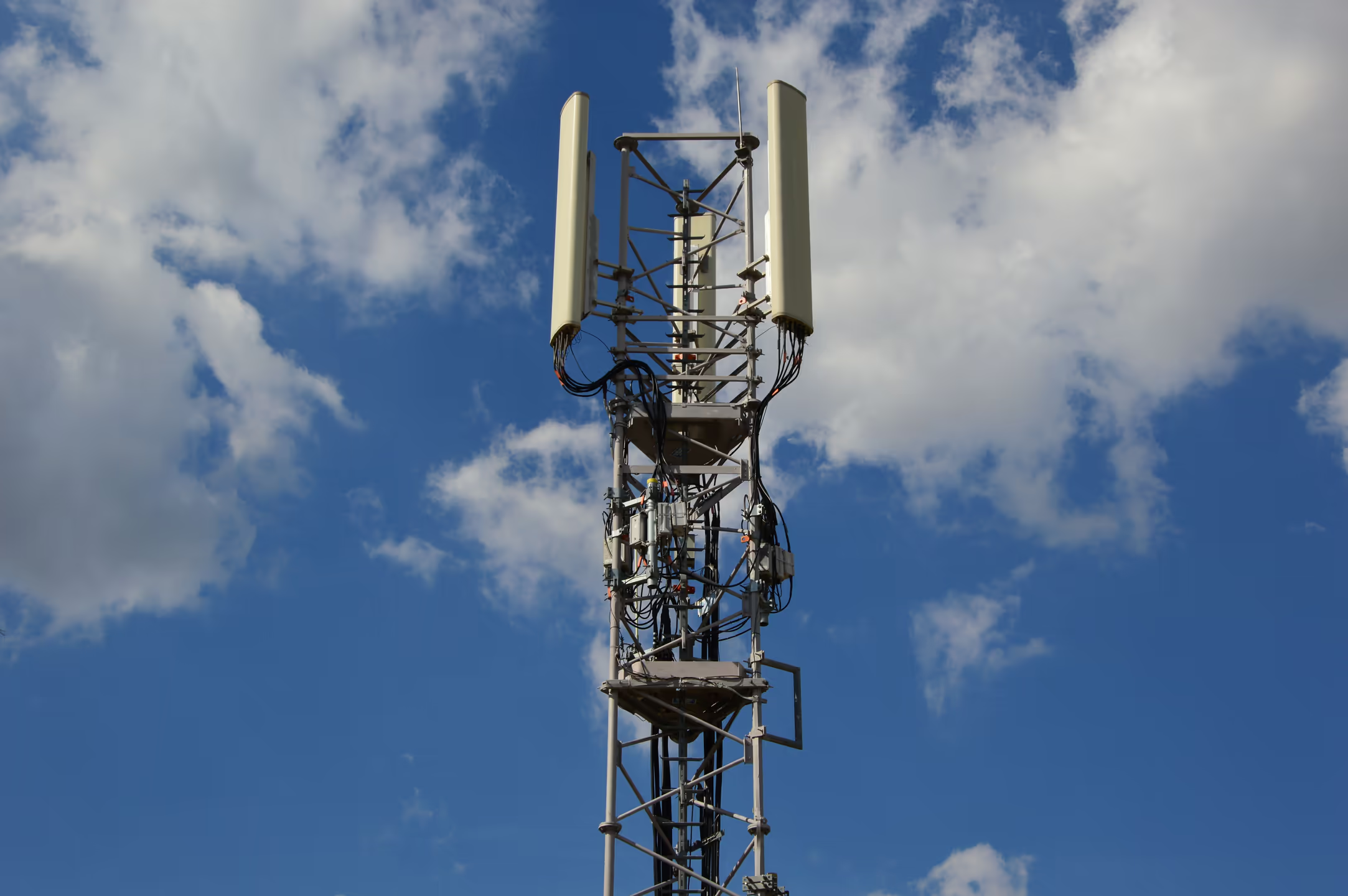
NTC (Nepal Telecom) is the government operator and has the most extensive rural infrastructure. On trekking routes — particularly the Khumbu/Everest region — NTC signal reaches higher and further. Reports from Khumbu teahouses consistently give NTC the edge above Namche Bazaar; some signal has been recorded approaching EBC at 5,364 m, where Ncell typically drops out earlier on the lower stretches.
The EcoTourNepal recommendation for groups: send one person to the Ncell counter and one to the NTC counter at TIA arrivals. It costs the same, takes the same time, and means your group has a backup when one carrier loses signal on a particular slope. In a genuine emergency on a remote trail — a medical situation, a weather update, a logistics call — that backup could matter.
What a SIM and data actually costs
SIM card: NPR 90–150 at most counters and shops (free or subsidized at some promotions)
30-day, 5–10 GB data pack: NPR 500–1,000 (~$4–8)
30-day near-unlimited pack: NPR 1,500–2,000 (~$12–16)
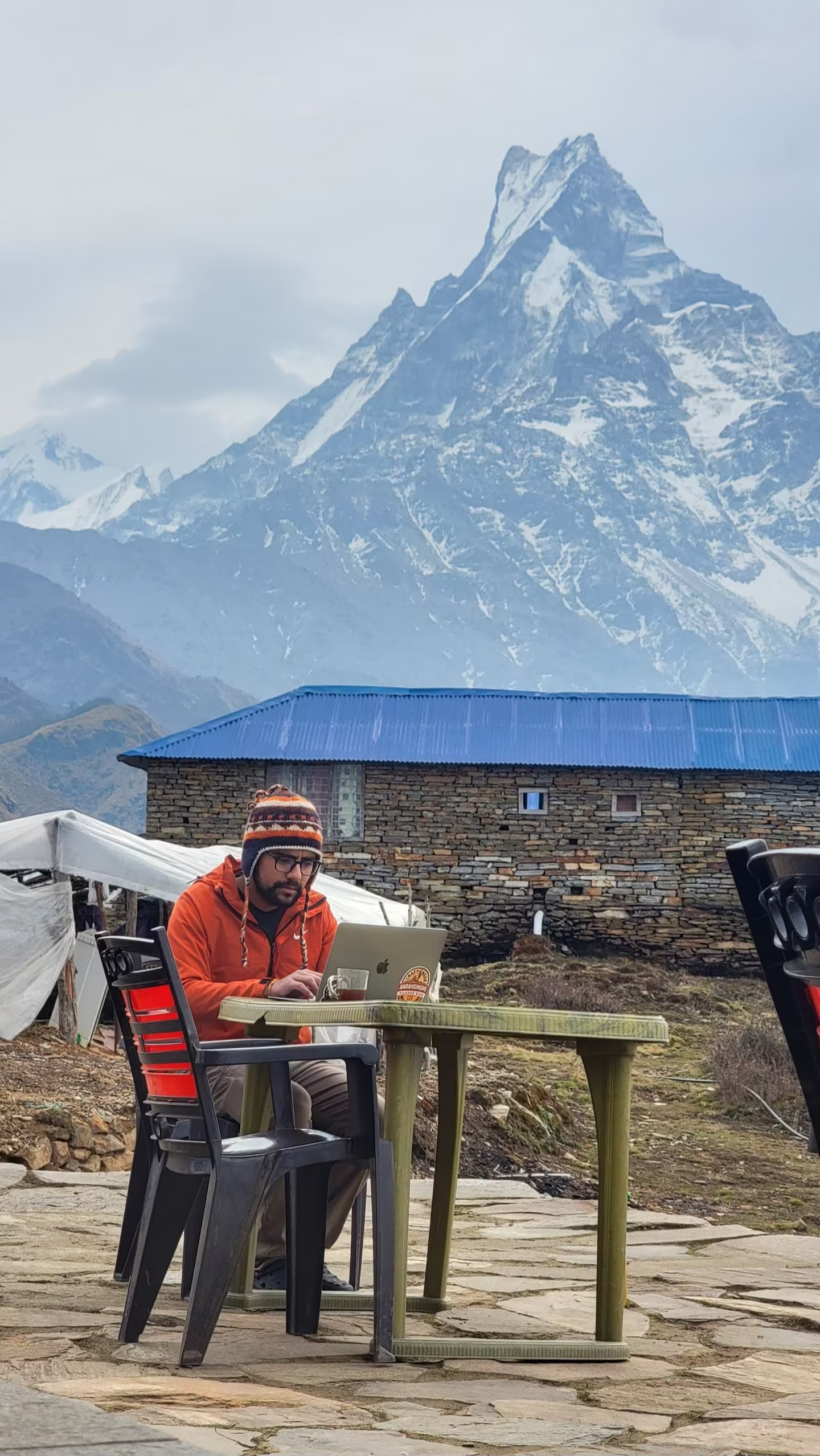
For most trekkers, a 5–10 GB pack is more than enough — data use drops significantly once you leave Kathmandu and get into the mountains. For digital nomads working from Nepal, mobile data is a backup rather than a primary connection; home and coworking broadband is what you will actually work on.
Coverage on the trekking routes
Everest Base Camp (EBC) route
Coverage is patchy above Namche Bazaar (3,440 m) and drops further with altitude. NTC reaches furthest — some signal reported near EBC itself. Ncell gives good coverage in the lower Khumbu (Lukla, Phakding, Namche) but thins out above that. Many teahouses in the Khumbu region offer paid "Everest Link" wifi — speeds vary, and you pay per hour or per gigabyte. Fine for a WhatsApp message or a weather check; not fast enough for a video call at altitude.
Annapurna Base Camp (ABC) route
Better connectivity overall than Khumbu, particularly on the lower trails. Signal extends reasonably high; villages like Chhomrong and Dovan generally have both carrier coverage and teahouse wifi. Ncell works well here. ABC trek details.
Langtang Valley
NTC performs well through most of the Langtang route. The valley saw major disruption after the 2015 earthquake and infrastructure has been rebuilt — connectivity is generally reliable up to Kyanjin Gompa. Langtang trek details.
Manaslu Circuit
More remote. Connectivity is available but less consistent; NTC again carries further. On restricted-area routes like Manaslu, having a working phone for safety communication is important — this is one reason certified guides carry satellite communication devices on remote expeditions.
The practical rule: for any trek above 3,500 m, do not depend on mobile data for critical communication. NTC is your best bet for spot connectivity. Alert your family/contacts before you enter a low-signal zone and set a check-in schedule via teahouse wifi or satellite messenger if appropriate.
eSIM in 2026
Both Ncell and NTC now fully support eSIM, which is good news for travelers with unlocked devices who want to activate connectivity before landing. International eSIM providers (Airalo, eSIM.net, and others) run on the Ncell 4G network — easy to activate on hotel wifi before leaving home or on airport wifi on arrival.
Practical advice: eSIM is excellent for city use, for travelers who prioritize Ncell's urban 4G, and for those who want zero airport-counter time. If your trekking itinerary goes high into the Khumbu or other NTC-favored areas, consider adding a physical NTC SIM as well — the dual-SIM capability in most modern phones handles this neatly.
Internet for remote workers: what to actually expect
Kathmandu's home and hotel broadband is genuinely fast. The EcoTourNepal founder's home connection — on Worldlink fiber — runs at 9 ms ping, 178 Mbps download, 87 Mbps upload. Not the best connection in the world, but fully capable of smooth 4K video calls and large file transfers. Most quality hotels and co-working spaces in Kathmandu and Pokhara have equivalent or comparable speeds.
Cafe wifi can be slower depending on how far you are from the router and how many people are sharing it. Most good cafes in Thamel (Kathmandu) and Lakeside (Pokhara) run on Wifi 6 routers and prioritize their guest internet — the experience is genuinely comparable to a good European or North American cafe.
Load shedding (power cuts) was a serious problem years ago in Kathmandu. It is essentially solved now — outages happen occasionally due to transformer maintenance or cable work, typically lasting an hour or two. The EcoTourNepal team's workaround: a router UPS battery (roughly $20) that keeps the router running through short cuts. Good coworking spaces and cafes all have this, so your call will not drop.
For more on working from Nepal — neighborhoods, co-working spaces, and what to expect — see the Work From Nepal section or read about founder retreats.
Getting your SIM at the airport
The Ncell and NTC counters are in the TIA arrivals hall. Staff are experienced with foreign passports — this is a routine transaction. Bring:
Passport (required for registration)
A passport photo if you have one (some counters can take a photo; having one speeds it up)
The whole process takes under 10 minutes per SIM. Top up the data pack at the same counter. You will walk out of arrivals with working data — which you will want immediately to use maps and book a ride to your hotel.
Plan a trip to Nepal with everything sorted from arrival
Frequently asked questions
Frequently asked questions
Which is better for Nepal: Ncell or NTC?
Ncell has faster 4G in cities (Kathmandu, Pokhara, Chitwan). NTC has wider mountain coverage, particularly above Namche Bazaar on the Everest route. If you are trekking in a group, the best strategy is to split — one person on each carrier — so you almost always have signal somewhere.
How much does a Nepal SIM card cost in 2026?
A SIM card costs NPR 90–150 at airport counters and most mobile shops. A 30-day 5–10 GB data pack runs NPR 500–1,000 (~$4–8); a near-unlimited 30-day pack runs NPR 1,500–2,000 (~$12–16).
Does eSIM work in Nepal?
Yes. Both Ncell and NTC support eSIM in 2026. International eSIM providers like Airalo run on the Ncell 4G network. Activation works on airport or hotel wifi. For remote trekking, a physical NTC SIM alongside the eSIM gives better mountain coverage.
Is there internet on the Everest Base Camp trek?
Some. NTC carries furthest — there is reportable signal approaching EBC at 5,364 m. Ncell covers the lower Khumbu well. Many teahouses sell paid Everest Link wifi cards (per hour or per GB). Above Namche Bazaar, treat connectivity as a bonus rather than a guarantee.
Can I work remotely from Nepal?
Yes. Kathmandu and Pokhara have fast home and hotel broadband (routinely 100–180 Mbps down) and good cafe/coworking wifi. Load shedding is largely resolved with occasional short outages. The main challenge for remote workers is time zone overlap with US/EU business hours.
Where is the best place to buy a Nepal SIM card?
At Tribhuvan International Airport arrivals hall — both Ncell and NTC have counters. Bring your passport. You can also buy at shops throughout Thamel and most urban areas. The airport is convenient because you want data immediately for maps and ride apps.
Keep reading
 Work From Nepal
Workcation in Nepal 2026: Real Cost of Living, Coworking Spaces & Where to Base
Real monthly budgets for Kathmandu and Pokhara, coworking spaces, internet reality with power-cut backup, weekend trips, and who actually thrives working from Nepal.
 Treks & Peaks
Travel Insurance & Helicopter Rescue for Nepal Trekking — What You Actually Need
What altitude coverage to buy, how helicopter rescue really works in Nepal, the old fraud era that's now cleaned up, and why your operator matters in an emergency.
 Planning
Money in Nepal 2026: ATMs, Cash, Cards, eSewa & Tipping Guide
Nepal ATM limits, fees, and which banks to use. How much cash to carry on a trek. Where to get the best exchange rate. Honest tipping norms for guides, porters, and drivers.