Work From Nepal
Workcation in Nepal 2026: Real Cost of Living, Coworking Spaces & Where to Base
Real monthly budgets for Kathmandu and Pokhara, coworking spaces, internet reality with power-cut backup, weekend trips, and who actually thrives working from Nepal.

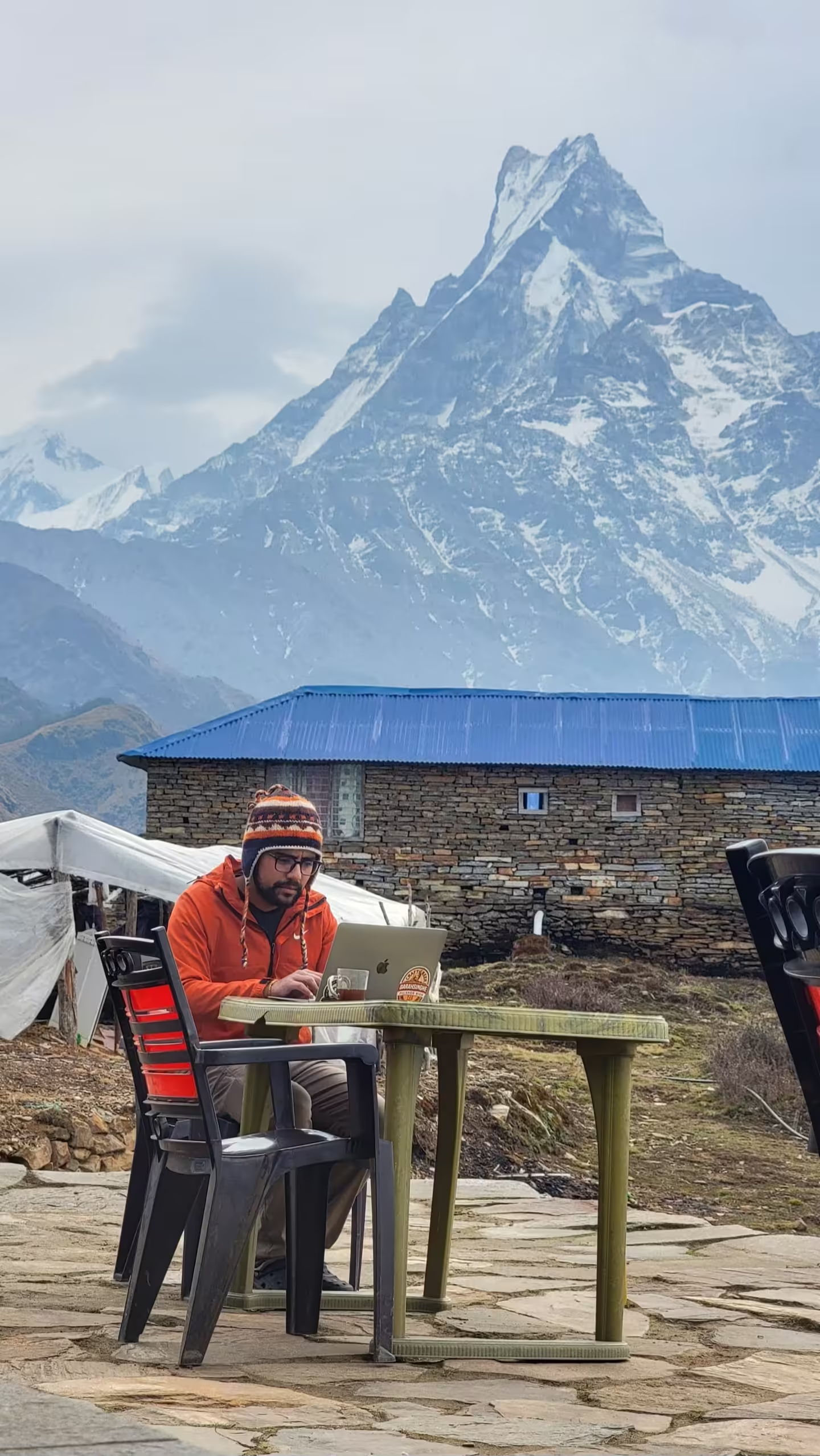
Nepal doesn't appear on most digital nomad shortlists — and that's exactly why it works. While Bali and Chiang Mai are negotiating coworking queue lines and six-month waitlists for "slow travel" Airbnbs, Nepal offers fast fiber internet in Kathmandu's cafes, genuine mountain weekends within an hour of your desk, and a monthly budget that leaves real money left over. EcoTourNepal's founder is a software engineer who has lived this life from the inside — here's what it actually costs and how to make it work.
Quick summary
Monthly budget: comfortable nomad life runs ~$600–1,000/month in Kathmandu; Pokhara is roughly 20–30% cheaper.
Internet is genuinely good in cities — fiber is now standard; brief power cuts of 1–2 hours happen, and a $20 router battery backup solves them entirely.
Coworking spaces exist in both cities, with hot desks from around $40/month; café work is also excellent in the right neighborhoods.
Time zone advantage: Nepal (UTC+5:45) suits teams with European morning meetings or South/Southeast Asian clients.
Weekend trips from Kathmandu and Pokhara are remarkable — Sarangkot, Kulekhani, Nagarkot, paragliding — all within easy reach.
Who thrives: people who can schedule their own time and need occasional syncs, not live US/EU hours coverage.
Real monthly budgets
Kathmandu
Kathmandu is a real metro city — that surprises many travelers who picture only mountains and villages. A 1-bedroom apartment in a good central neighbourhood (Jhamsikhel, Lazimpat, Patan) runs $200–400/month. Outside the center you can get a decent flat for $100–150. Food from local restaurants costs very little ($2–4/meal at a sit-down Nepali restaurant, $5–8 for a western café meal). Your realistic comfortable monthly total:
Rent: $200–350
Food (mix of local + café): $150–200
Coworking or café internet: $40–80
Local transport (apps + occasional taxi): $30–50
Miscellaneous: $50–100
Total: ~$470–780/month
A genuinely comfortable life with a good apartment and regular café work lands at $700–900/month.
Pokhara
Pokhara runs around 20–30% cheaper than Kathmandu for rent, with the added bonus of the lake directly outside. Lakeside is the concentration point for cafes, restaurants, and hotels. A 1-bedroom near the lake is $120–250/month. Monthly total:
Total: ~$400–650/month
Pokhara suits those who want a quieter pace, mountain views, and proximity to the outdoors — the Annapurna trailheads are a short drive away.
Coworking spaces
Kathmandu
Work Around — a popular central option with hot desks from around NPR 4,500 (~$40/month). Clean, decent internet, good coffee nearby.
Raya Space — located in Maharajgunj, a calmer residential area. Suited to longer-term stays.
Café work — Kathmandu has a strong café culture in Jhamsikhel, Lazimpat, and around Patan. Many cafés actively cater to laptops; wifi is typically fast. The catch is seating competition during peak hours at popular spots.
Pokhara
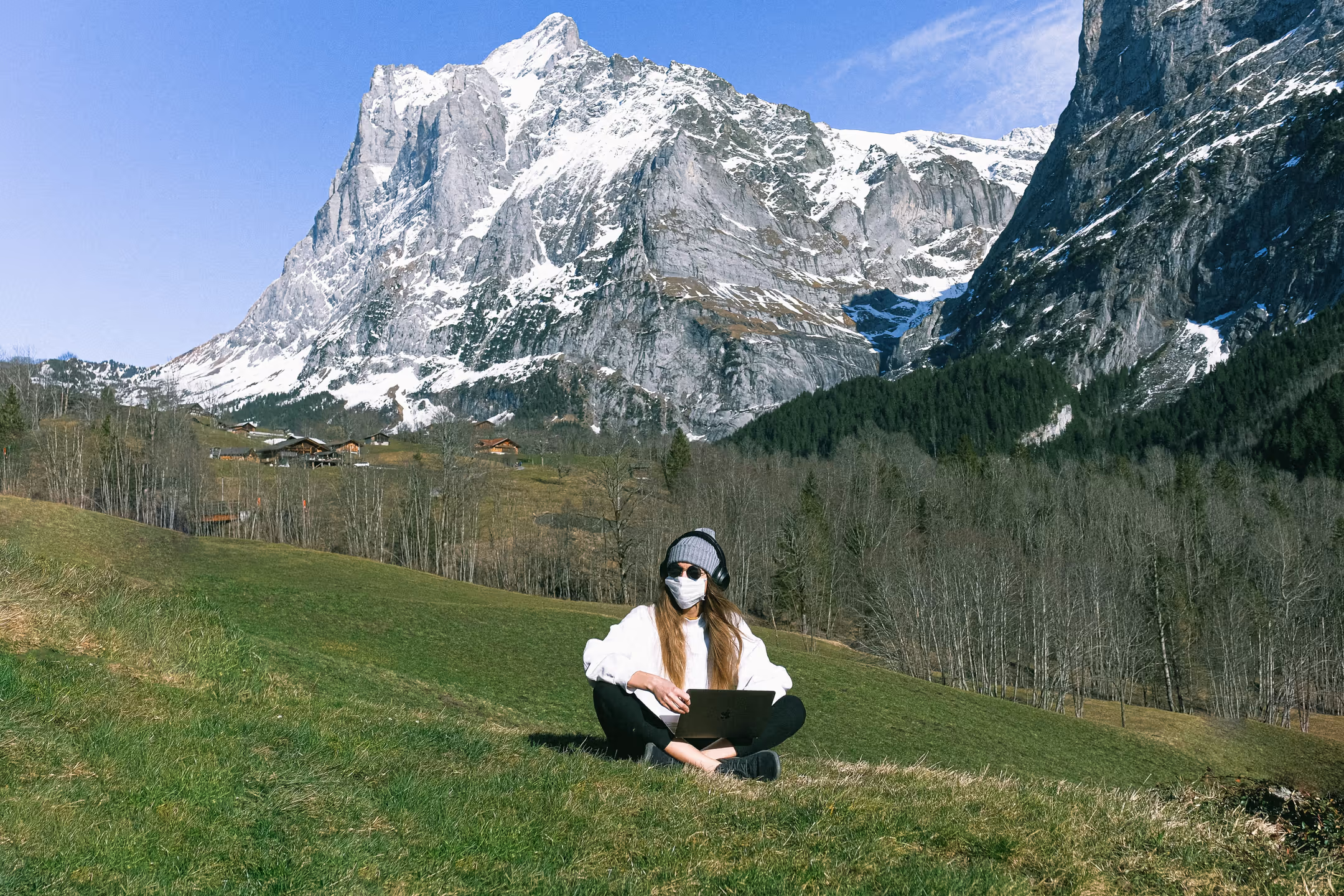
Pokhara Coworking (near Lakeside) — the main dedicated space in the city. Hot desks by the day or month, with views that make it hard to focus in the best way.
Lakeside cafés — several cafés with reliable fiber and outdoor seating are effectively informal coworking spaces during business hours.
Tip: In any café, the wifi speed depends on router proximity and the number of simultaneous users. If you have a video-heavy workday, arrive early or sit near the router. Most established coworking spaces don't have this problem — they run dedicated lines.
Internet reality and power cuts
This is the question every nomad asks. The honest answer in 2026: internet in Kathmandu and Pokhara is excellent. EcoTourNepal's founder runs a home setup with Worldlink fiber — the most recent speedtest shows 9ms ping, 178 Mbps down, 87 Mbps up. That's better than many European cities.
The load-shedding era (Nepal famously had 18-hour daily power cuts a decade ago) is over. Power is now largely stable in cities. What does happen is brief outages of 1–2 hours when a transformer trips or underground cable work causes disruption. The fix is simple: a $20 router battery backup keeps the router running for 8 hours through any short outage. Every good coworking space and most cafés already have this. For a home setup it's a one-time purchase.
Mobile data (Ncell 4G or NTC) is a perfectly usable backup for calls if the home internet drops. The two-SIM strategy (Ncell + NTC) that works on the trek is equally smart in the city — if one provider has a local issue, the other usually doesn't.
Best neighborhoods to base yourself
Kathmandu
Jhamsikhel / Patan — calmer than central Kathmandu, good international food and cafés, strong expat and creative community, excellent coworking access.
Lazimpat — embassy district, quieter, international-feeling, easy ride-app access.
Thamel — convenient for first arrivals and short stays, but noisy and tourist-concentrated for longer stays.
Pokhara
Lakeside (Baidam) — the natural nomad base; concentrated with cafés, restaurants, and everything within walking distance.
Weekend trips that actually recharge you
One of the real advantages of basing in Nepal is what's accessible without a flight.
From Kathmandu:
Nagarkot — 1–2 hour drive, clear Himalayan panorama at dawn, hill-station guesthouses.
Nuwakot — old palace, terraced fields, quiet valley.
Kulekhani — reservoir trek, day hike with water activities.
Shivapuri — national park hiking at the edge of the city.
From Pokhara:
Sarangkot — the classic: take a jeep up the evening before, stay the night, watch the Annapurna range at sunrise, paraglide back down.
Paragliding — 30-minute tandem flight above Phewa Lake; booked with EcoTourNepal's paragliding package.
Beginner treks — Dhampus, Australian Camp, Mardi Himal start near Pokhara and offer Himalayan views without a long commitment.
Who thrives — and who struggles
Nepal is not for every nomad. Here's the honest breakdown:
Thrives in Nepal:
People who can work at their own schedule and need to sync with colleagues only occasionally — a developer who pushes code, a writer, a designer, a researcher.
People who value meaningful weekends over nightlife and beach lifestyle.
People curious enough to engage with where they are — the local meetup scene, joining sector-specific events (IT, finance, AI), exploring at a real pace.
Anyone with South Asian, Middle Eastern, or European clients — Nepal's time zone (UTC+5:45) is workable for most of those regions.
Struggles in Nepal:
Anyone who needs live US East Coast hours (your workday would be 8:45 PM–5:45 AM Nepal time — possible, but rough).
People expecting beach lifestyle, consistent sunshine, or tropical weather year-round.
Anyone who hates the idea of brief winter cold or monsoon humidity.
How EcoTourNepal sets you up
EcoTourNepal is run by a software engineer who has lived the nomad life from Kathmandu. The Work From Nepal offering is designed from that experience — not from a travel brochure.
Practically, that means: accommodation options with proper desks, chairs, monitors, and LAN internet (not just wifi); connections to coworking spaces and introductions to the local professional community; organized sector meetups (IT, finance, AI, general remote workers); and weekend trip planning so you're not figuring out Kulekhani logistics alone on a Friday afternoon.
For teams, the Founder Retreats and Team Offsites programs go deeper — facilitated work blocks combined with mountain experiences.
If you're considering making Nepal a base for a month or more — or bringing your team here — reach out to plan it properly. The logistics are more straightforward than they look from the outside.
Nepal's digital nomad visa is in rollout (proposed terms: 5-year multiple-entry, ~$1,500/mo income threshold, 5% tax if you stay 186+ days) — not yet live at the counter as of mid-2026. Until it lands, remote workers use the tourist visa: up to 150 days per calendar year ($30/$50/$125 for 15/30/90 days), extendable at $3/day. The visa year resets January 1, making a 300-day two-year straddle possible for those timing their arrival right. Confirm the current status at immigration.gov.np.
Frequently asked questions
What is the realistic monthly cost for a digital nomad in Kathmandu in 2026?
A comfortable nomad life — decent 1-bedroom apartment, regular café and coworking use, local food with occasional western restaurants — runs approximately $700–900/month in Kathmandu. Frugal is possible from $500; Pokhara runs about 20–30% cheaper.
Is the internet fast enough for video calls in Nepal?
Yes, in Kathmandu and Pokhara. Fiber is now standard in both cities; speeds of 100–200 Mbps down are common at home and in coworking spaces. Brief power cuts of 1–2 hours occur occasionally; a $20 router battery backup keeps your connection live through them.
Which city is better for remote work — Kathmandu or Pokhara?
Kathmandu has more coworking infrastructure, a larger professional network, and the international airport. Pokhara is quieter, cheaper, and better for outdoor access. Many nomads split their time between both.
Can I use foreign apps like Slack and Zoom normally in Nepal?
Yes, there are no VPN requirements or blocked services. Zoom, Slack, Google Meet, and all standard tools work normally on the fiber connections in Kathmandu and Pokhara.
Is Nepal's digital nomad visa live yet?
As of mid-2026, the proposed 5-year digital nomad visa is not yet available over the counter — it remains in policy rollout. Remote workers currently use the tourist visa (up to 150 days per calendar year, extendable). Check immigration.gov.np for the latest status before traveling.
What is the best time zone pairing for working from Nepal?
Nepal (UTC+5:45) works well for teams with European, Middle Eastern, South Asian, or Southeast Asian clients. US East Coast live hours are challenging (they fall between 9 PM and 6 AM Nepal time). If you only need occasional syncs rather than live coverage, almost any time zone is manageable.
Keep reading
 Getting Around
Nepal SIM Card, eSIM & Internet 2026: Ncell vs NTC, Mountain Coverage & Data Prices
Ncell vs NTC: which SIM to buy, what data costs, where coverage dies on trek, and whether eSIM works in Nepal in 2026. Essential for trekkers and remote workers.
 Treks & Peaks
Travel Insurance & Helicopter Rescue for Nepal Trekking — What You Actually Need
What altitude coverage to buy, how helicopter rescue really works in Nepal, the old fraud era that's now cleaned up, and why your operator matters in an emergency.
 Planning
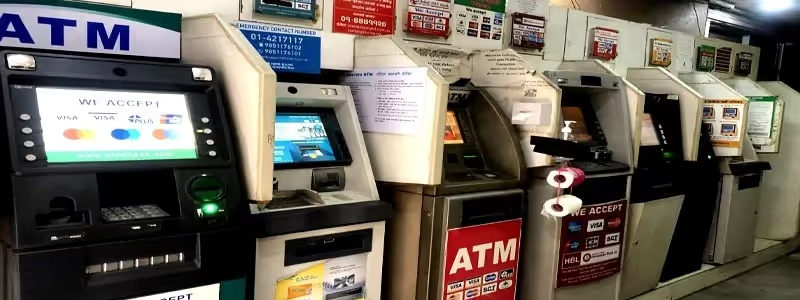
Money in Nepal 2026: ATMs, Cash, Cards, eSewa & Tipping Guide
Nepal ATM limits, fees, and which banks to use. How much cash to carry on a trek. Where to get the best exchange rate. Honest tipping norms for guides, porters, and drivers.