Planning
What a Nepal Trek Really Costs: An Honest Budget Breakdown (2026)
A transparent line-item breakdown of Nepal trekking costs — permits, guides, flights, food and the extras people forget — with honest advice on where to cut safely.

"How much does a Nepal trek cost?" is one of the most Googled Nepal travel questions, and almost every article gives a misleading number. The honest answer starts with "it depends" — and then we explain exactly what it depends on.
Quick summary
There is no single price for a Nepal trek. Group size, days, season, porter use, and whether you fly or take the bus all move the number significantly.
The fixed costs are fixed: permits, NMA royalties, Lukla flights — these have set rates you can look up.
The hidden extras add up fast: tips, hot showers, device charging, bottled water, snacks, and gear are the budget-busters most guides don't mention upfront.
Booking through EcoTourNepal means everything except tips is covered — you arrive knowing exactly what cash to carry.
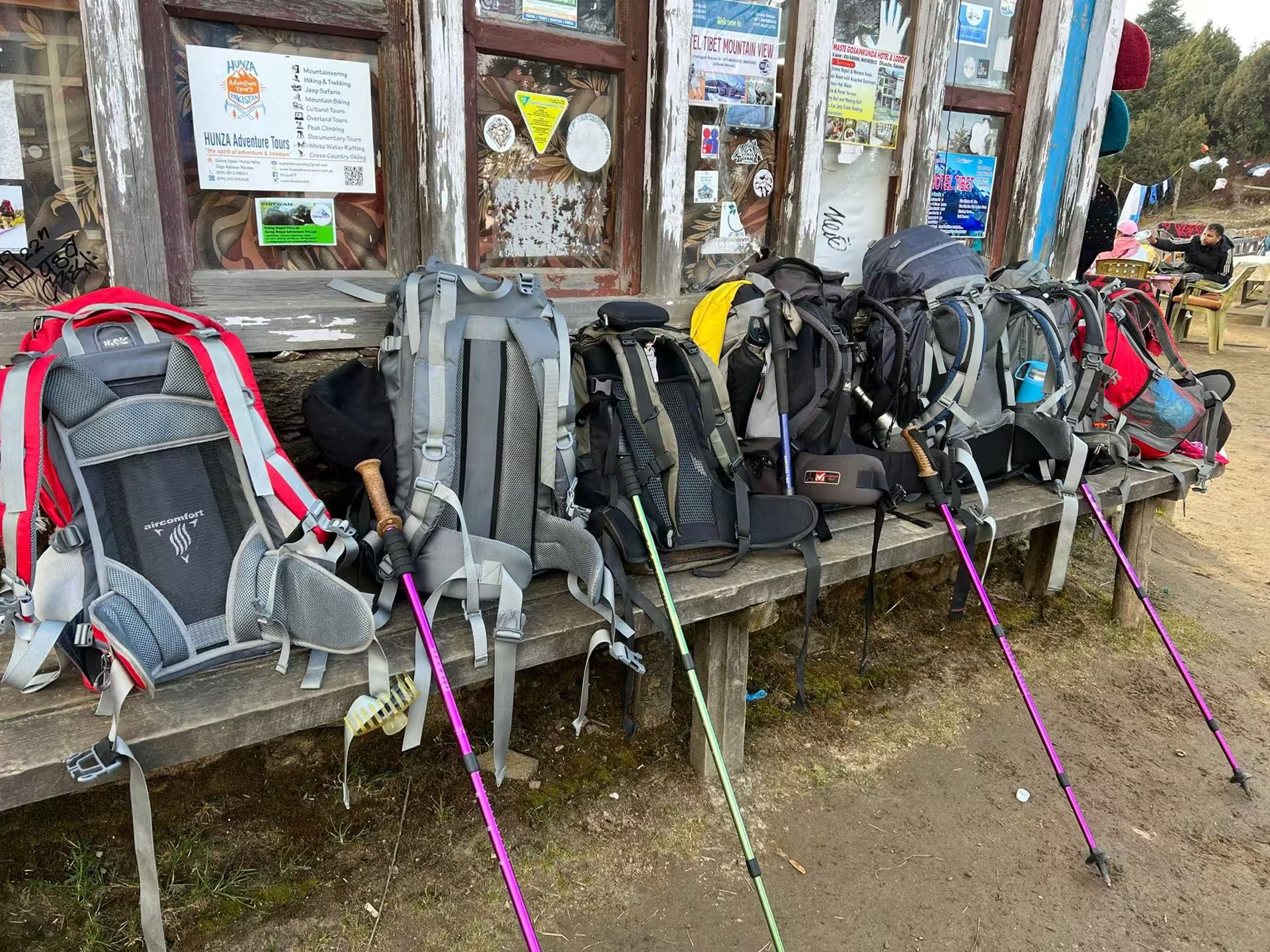
The two biggest legitimate savings: bus to the trailhead instead of flight; carry your own bag instead of hiring a porter.
See the Why Travel With Us page for what's included in every booking.
The fixed cost layers (what you'll always pay)
1. Conservation and park permits
Every trekking region has its own permit structure:
Everest / Khumbu region: Sagarmatha National Park entry NPR 3,000 + Khumbu Pasang Lhamu Rural Municipality fee NPR 3,000 (≈US$45 total).
Annapurna region: ACAP (Annapurna Conservation Area Permit) NPR 3,000 (≈US$22).
Langtang region: Langtang National Park entry (included in the trekking package).
Manaslu: Manaslu Conservation Area + Restricted Area Permit US$100/week in peak season.
For restricted areas (Manaslu, Upper Mustang, Nar-Phu), daily permit fees stack up quickly — Manaslu runs US$100/person/week in autumn.
2. TIMS card
Issued through your registered agency: NPR 2,000 for foreign nationals (approx US$15). Not required for Khumbu/Everest region — the local municipality permit replaces it there.
3. Guide and porter fees
Licensed guides are mandatory on all major routes since April 2023. Guide fees are set by negotiation with the agency and vary by experience; porters carry loads up to the government-regulated maximum. On a multi-week trek, guide and porter wages are a meaningful cost — and one worth paying properly. Under-paying is both unethical and bad for Nepal's trekking reputation.
4. Lukla flight (Everest treks only)
This is the single biggest cost difference between EBC and other treks. Return Lukla flights for foreigners typically run US$400+ round-trip — more in peak season. In March–May and October–November, CAAN reroutes Lukla flights through Manthali/Ramechhap Airport (a 4–5 hour pre-dawn drive from Kathmandu, then a 15-minute mountain flight). Factor in a private car for that drive too.
The extras everyone forgets to budget for
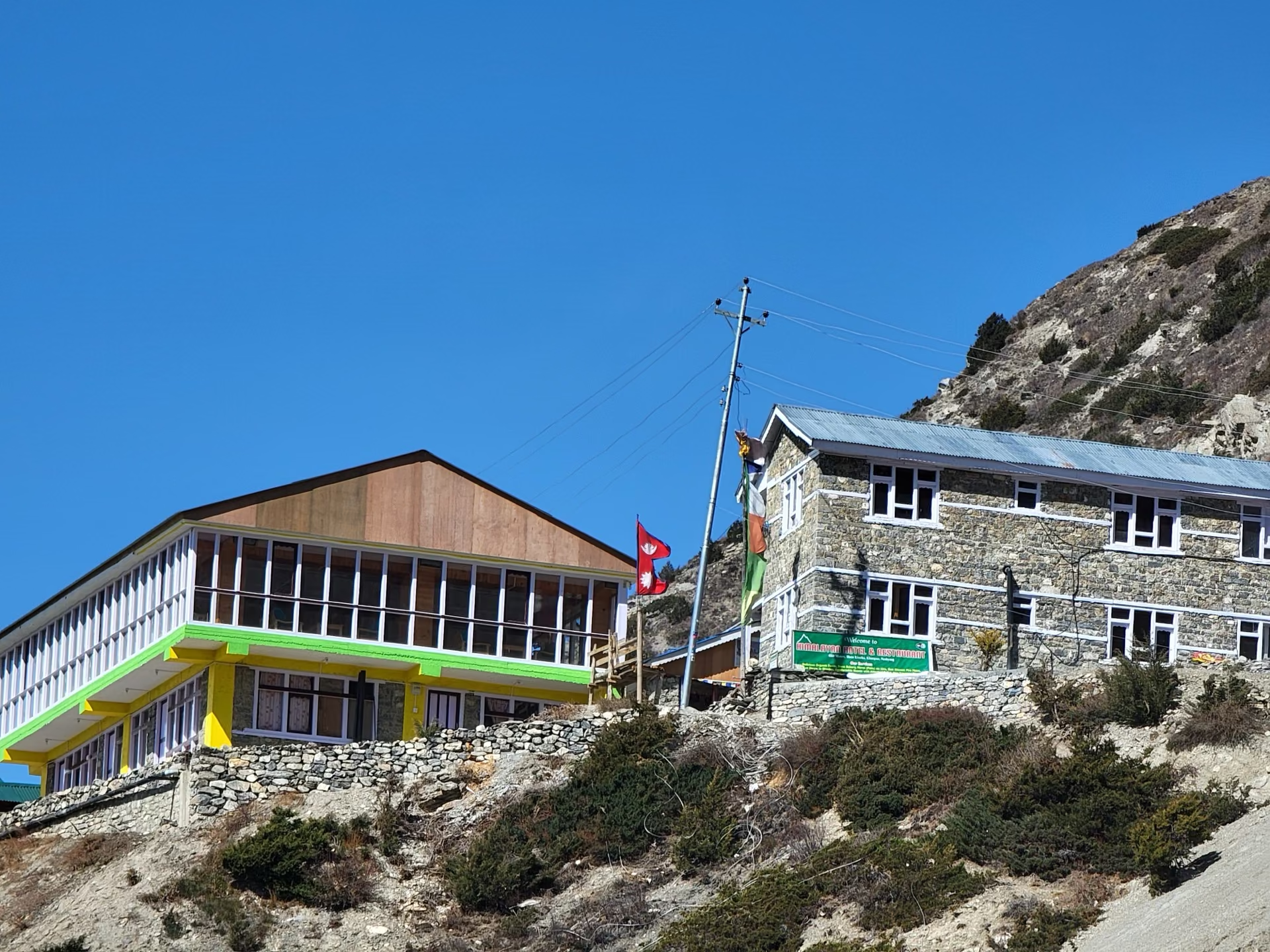
This is the section most trek-cost guides skip, and it's where travelers get surprised:
Teahouse extras (pay as you go)
Device charging: NPR 200–500 per charge, per device (prices rise with altitude)
Hot shower: NPR 200–500 (same altitude premium)
Wi-Fi cards at some teahouses: NPR 300–500
Bottled or boiled water: NPR 80–200 per litre (the higher you are, the more it costs)
Soft drinks, tea, snacks beyond the dal bhat routine: add NPR 500–1,000/day for a moderate appetite
Tips
Tipping is customary and expected. Widely-used ranges:
Trekking guide: US$10–25/day (paid as a lump sum on the final day)
Porter: US$8–15/day (also lump sum)
City driver or day guide: smaller token
Restaurants: around 10% (many tourist restaurants already add a 10% service charge)
Nepali staff don't expect tips from other Nepali customers — tipping is a tradition imported by international travelers, and guides have come to depend on it. Budget it as a fixed line item, not an afterthought.
Gear and kit
If you're buying or renting in Thamel, budget NPR 100–200/day for a down jacket or sleeping bag rental. If you're purchasing, Thamel's market is full of branded-replica and genuine gear at a range of quality levels.
Travel insurance
For any trek above 4,000 m, buy a policy that explicitly covers "trekking/mountaineering" and helicopter evacuation to the altitude of your planned route. Uninsured rescue runs US$3,500–10,000. This is not optional.
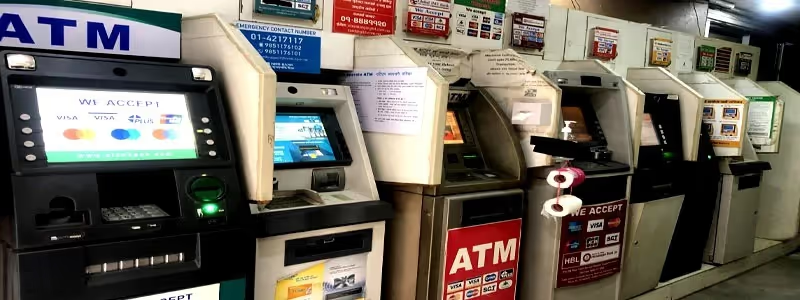
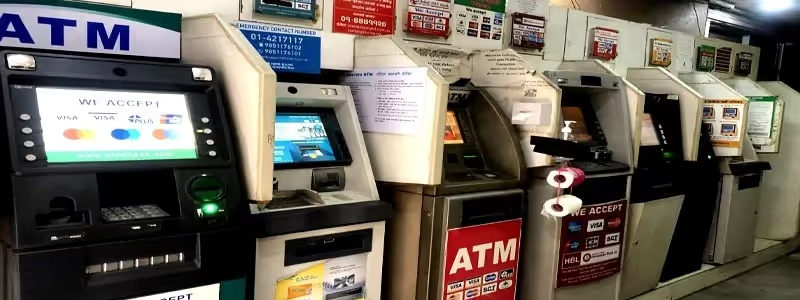
Cash planning rule: Above the trailhead, there are essentially no ATMs. Carry cash for the entire trek before you start. A working figure for spending money on top of a paid package is NPR 2,000–3,000/day — more if you're a heavy snacker or want hot showers every day.
Where budget travelers can safely cut
Bus to the trailhead instead of flight. For treks starting from Pokhara (Annapurna, Mardi Himal, Poon Hill) or Syabrubesi (Langtang), a tourist bus is comfortable and significantly cheaper than flying. The road journeys are scenic — some travelers prefer them.
Carry your own pack. Hiring a porter is the most common cost in a trekking package after guide fees. If you're fit and your pack is light, carrying your own bag saves meaningfully. The flip side: a porter's income directly feeds a family, and the cost difference to you is often smaller than you think — this is a cut worth thinking about carefully.
Travel in a group. Fixed costs (guide, vehicle, permit logistics) spread across more people. Joining an EcoTourNepal small group trip costs less per person than a fully private arrangement.
Where you should never cut
The guide. This is now legally required on major routes anyway, but even where it weren't, skipping a guide is a risk to your safety and deprives you of genuine local knowledge that no app replaces. Our guides know the local families by name, know which teahouses had supply issues this week, and can spot altitude warning signs you might dismiss.
Acclimatization days. Some agencies offer itineraries with fewer rest days to lower the cost. This is a false economy. AMS can end your trek and require expensive evacuation — and it can happen even to very fit people who push too fast.
Travel insurance. Already said above. Non-negotiable for high-altitude trekking.
What booking with EcoTourNepal includes
Our packages cover all permits, licensed guide, porter (where included), accommodation, and meals on trek. Before departure, we run a full briefing that covers: how much cash to carry, the tipping norms, what to order in teahouses at altitude, and what to do if you feel AMS symptoms.
The price will depend on your itinerary — there is no single number that works for every scenario, and anyone who gives you one is guessing. What we guarantee is complete transparency: every line item is in your quote before you confirm.
Get a free itinerary and quote — tell us which trek, how many days, and when, and we'll send a full cost breakdown within 24 hours.
FAQs
Frequently asked questions
How much does the Everest Base Camp trek cost in total?
There is no single number — it depends on group size, season, and whether you're on a budget or comfort tier. The mandatory components include Lukla flights (~US$400+ round-trip for foreigners), Sagarmatha NP + Khumbu local permits (~US$45), guide fees, teahouse accommodation and meals, and tips. EcoTourNepal provides a full line-item quote once you share your dates and group size.
How much cash should I carry for a Nepal trek?
There are essentially no ATMs above the trailhead, so carry all your spending money before you start. On a paid package, a good working figure is NPR 2,000–3,000 per day for extras — charging, hot showers, snacks, drinks — plus your guide and porter tip budget for the end of the trek.
What are the biggest unexpected costs on a Nepal trek?
Tips for guide and porter (often US$150–400 for a two-week trek), device charging and hot showers (which get more expensive with altitude), boiled or bottled water, and travel insurance. These are predictable if you know to look for them — our pre-trek briefing covers all of them.
How can I reduce the cost of a Nepal trek on a budget?
The two biggest savings are taking a bus to the trailhead instead of flying (relevant for Annapurna and Langtang treks), and carrying your own pack instead of hiring a porter. Travelling in a small group also reduces per-person costs for guide and logistics.
Does booking with EcoTourNepal include all permits and fees?
Yes. All permits, licensed guide, and core logistics are included in the package price. The only things to budget separately are tips (guide, porter) and personal extras (hot showers, charging, snacks, drinks).
Is travel insurance included in trek packages?
Travel insurance is not included — it must be purchased separately. For any trek above 4,000 m, buy a policy that explicitly covers high-altitude trekking and helicopter evacuation. Uninsured helicopter rescue can cost US$3,500–10,000.
Keep reading
 Mountains & Expeditions
New Peaks Opened in Nepal + 2026 Climbing-Permit Changes
NMA trekking-peak royalties revised for 2026, what 'newly opened' really means on the ground, and an honest look at un-developed routes where you still camp.
 Treks & Peaks
Travel Insurance & Helicopter Rescue for Nepal Trekking — What You Actually Need
What altitude coverage to buy, how helicopter rescue really works in Nepal, the old fraud era that's now cleaned up, and why your operator matters in an emergency.
 Planning
Money in Nepal 2026: ATMs, Cash, Cards, eSewa & Tipping Guide
Nepal ATM limits, fees, and which banks to use. How much cash to carry on a trek. Where to get the best exchange rate. Honest tipping norms for guides, porters, and drivers.