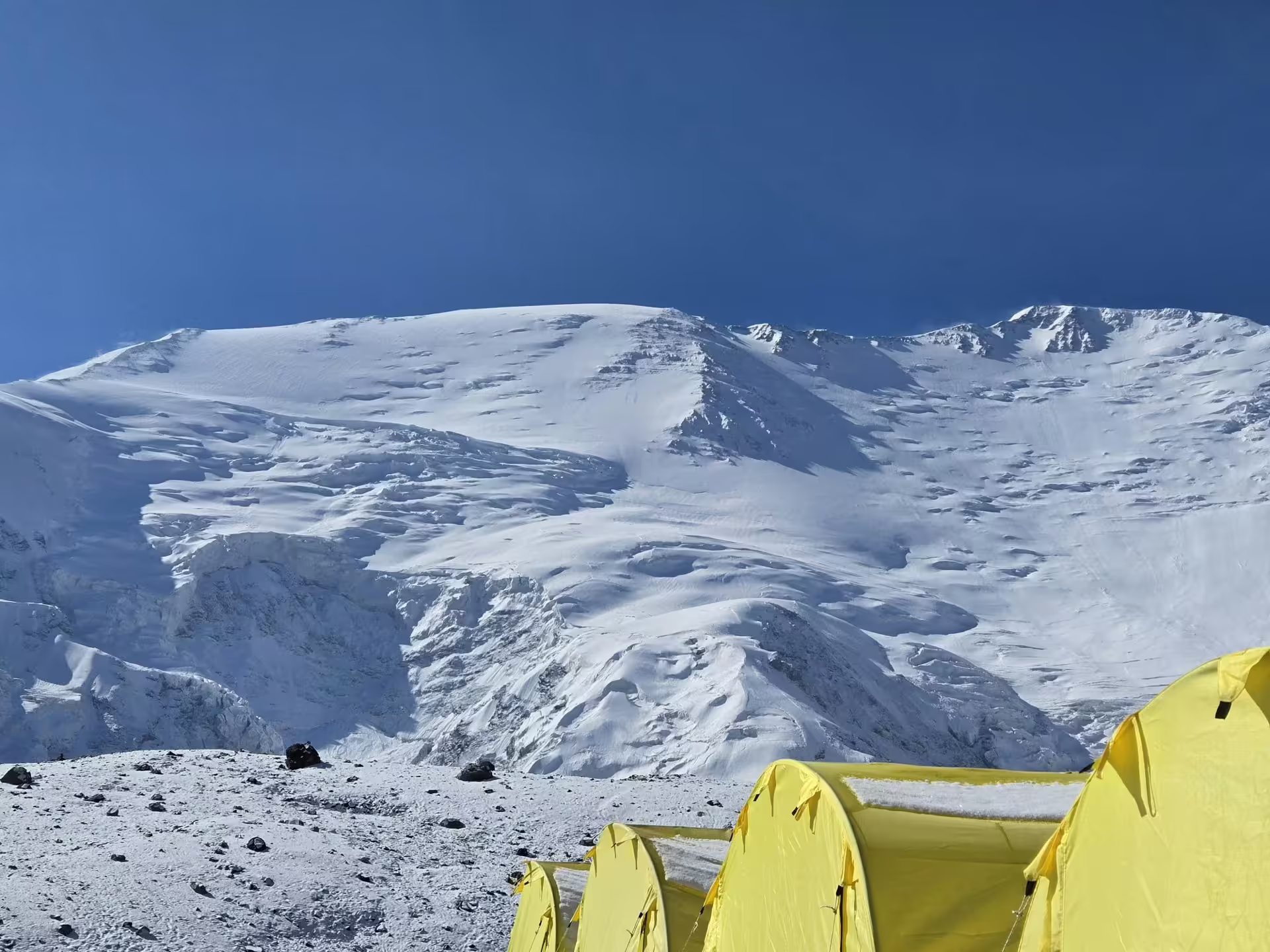
Mountains & Expeditions
New Peaks Opened in Nepal + 2026 Climbing-Permit Changes
NMA trekking-peak royalties revised for 2026, what 'newly opened' really means on the ground, and an honest look at un-developed routes where you still camp.

Nepal's mountain calendar keeps shifting. New peaks are being opened, royalty fees have been revised upward, and the infrastructure gap between an "open" peak and a genuinely accessible one is wider than most websites admit.
Quick summary
NMA spring royalty rose to US$350 per climber (up from $250), effective September 2025; autumn/winter/summer stays at $175.
Yala Peak, Mardi Himal, Tharpu Chuli, Pokhalde and Chhukung Ri are royalty-free — you pay only the area/conservation permit plus guide.
Newly opened peaks are frontier territory: tea houses may be five hours apart (vs two on established routes), and camping is often the only option on un-developed sections.
Permit costs are separate from guides, gear, logistics and conservation fees — budget all layers before committing.
All trekking-peak climbs require a licensed guide and a registered agency — no independent permits since April 2023.
For the mainstream first-summit experience, Mera Peak remains the most reliable stepping stone to 6,000 m.
The NMA trekking-peak royalty revision (effective Sept 2025)
The Nepal Mountaineering Association (NMA) manages roughly 27 "trekking peaks" — mostly under 6,500 m — where a royalty (permit fee) goes to the NMA, separate from national-park or conservation fees. The latest revision raised the spring-season rate:
Spring (Mar–May) — Royalty per climber: US$350
Autumn (Sep–Nov) — Royalty per climber: US$175
Winter (Dec–Feb) — Royalty per climber: US$175
Summer (Jun–Aug) — Royalty per climber: US$175
Peaks this applies to (royalty-paying): Mera Peak (6,476 m), Island Peak / Imja Tse (6,189 m), Lobuche East (6,119 m), Pisang Peak (6,091 m), and most others on the NMA list.
Royalty-free peaks: Yala Peak (5,520 m), Mardi Himal (5,587 m), Tent Peak / Tharpu Chuli (5,663 m), Pokhalde (5,806 m), and Chhukung Ri (5,546 m) carry no NMA royalty. You still need area permits (ACAP, Sagarmatha, etc.) and a licensed guide.
Tip: The royalty is just one line item. Add your licensed guide's fee, porter costs, Lukla flights (for Khumbu peaks), Sagarmatha/Khumbu local permits, and gear — the total for a Mera Peak summit package typically lands in the US$1,500–2,500 range depending on group size and season.
What "newly opened peaks" actually means on the ground
Nepal periodically announces new peaks as open to foreign climbers — it sounds exciting, and it is, but there is a gap between "open" and "ready." Our team is honest about this:
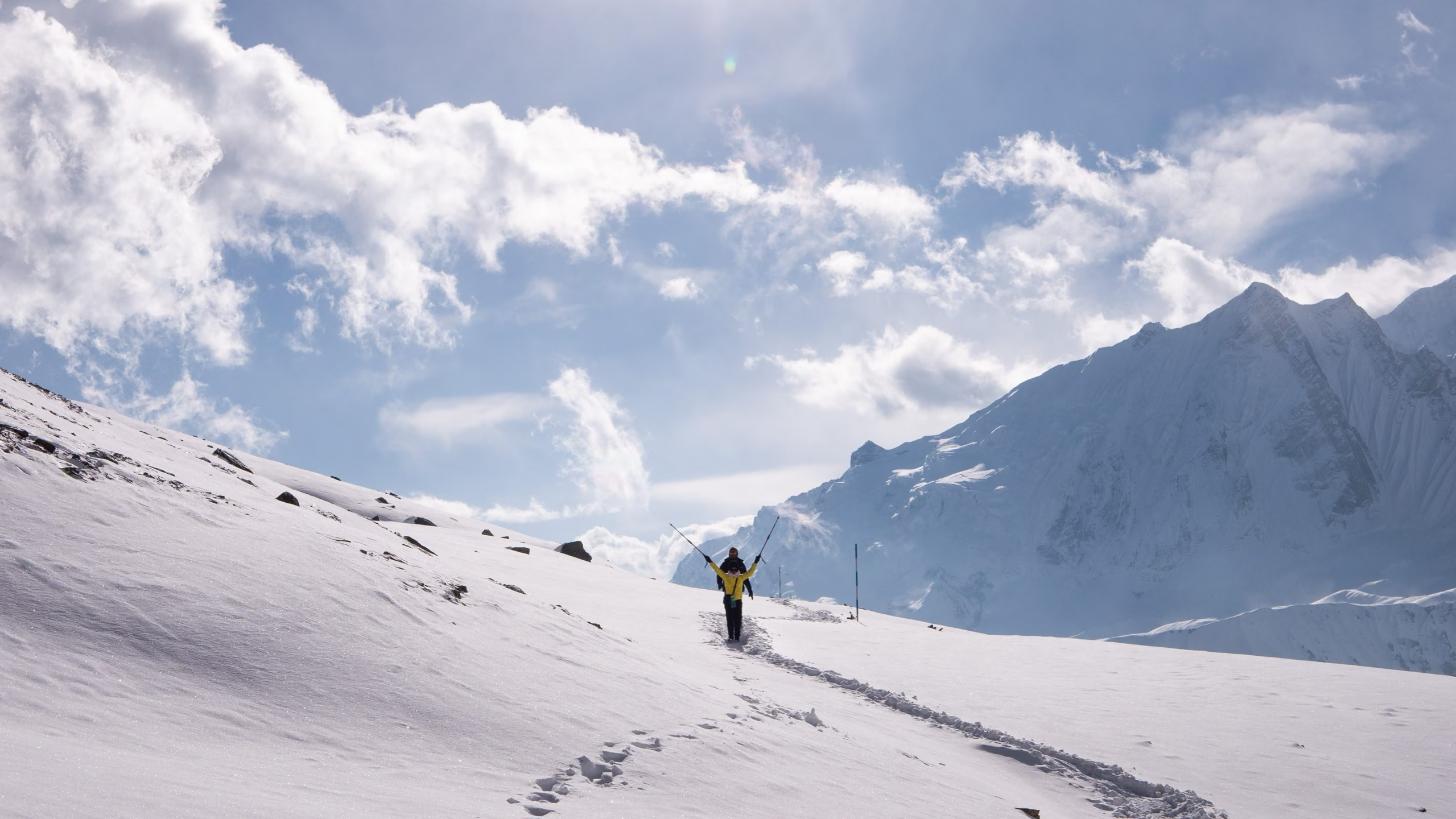
Newly opened routes are essentially frontier trekking. On established routes like the Khumbu or the Annapurna circuit, tea houses sit roughly every two hours, so you can walk, eat, and sleep in a rhythm you can plan around. On freshly opened or rarely trekked peaks, that comfort evaporates. Tea houses may be five hours apart — or non-existent above a certain elevation — which means you carry camping gear, tents, cooking equipment, and all supplies the way climbers did on pioneering expeditions.
This is not a bad thing if you're ready for it. Some travelers specifically want that experience: the silence, the unmarked snow, the feeling that you're seeing something almost no one else has seen. But if your expectation is a cozy teahouse at the end of each day, a newly opened route will surprise you in ways that aren't always pleasant.
The permit-and-guide rule you can't work around
Since April 2023, all trekking and climbing on Nepal's national-park and conservation routes requires a licensed guide and must be arranged through a registered agency. This applies to every NMA peak — there is no solo or independently purchased permit for foreign nationals.
Practically, this means:
Your NMA royalty, area/conservation permits, and guide fees are bundled into the package price.
You cannot show up at a checkpoint and buy a peak permit on the spot.
Registered agencies (like EcoTourNepal) handle the paperwork, which also means clients can focus on preparing physically rather than chasing permits across Kathmandu offices.
Choosing your first 6,000 m peak
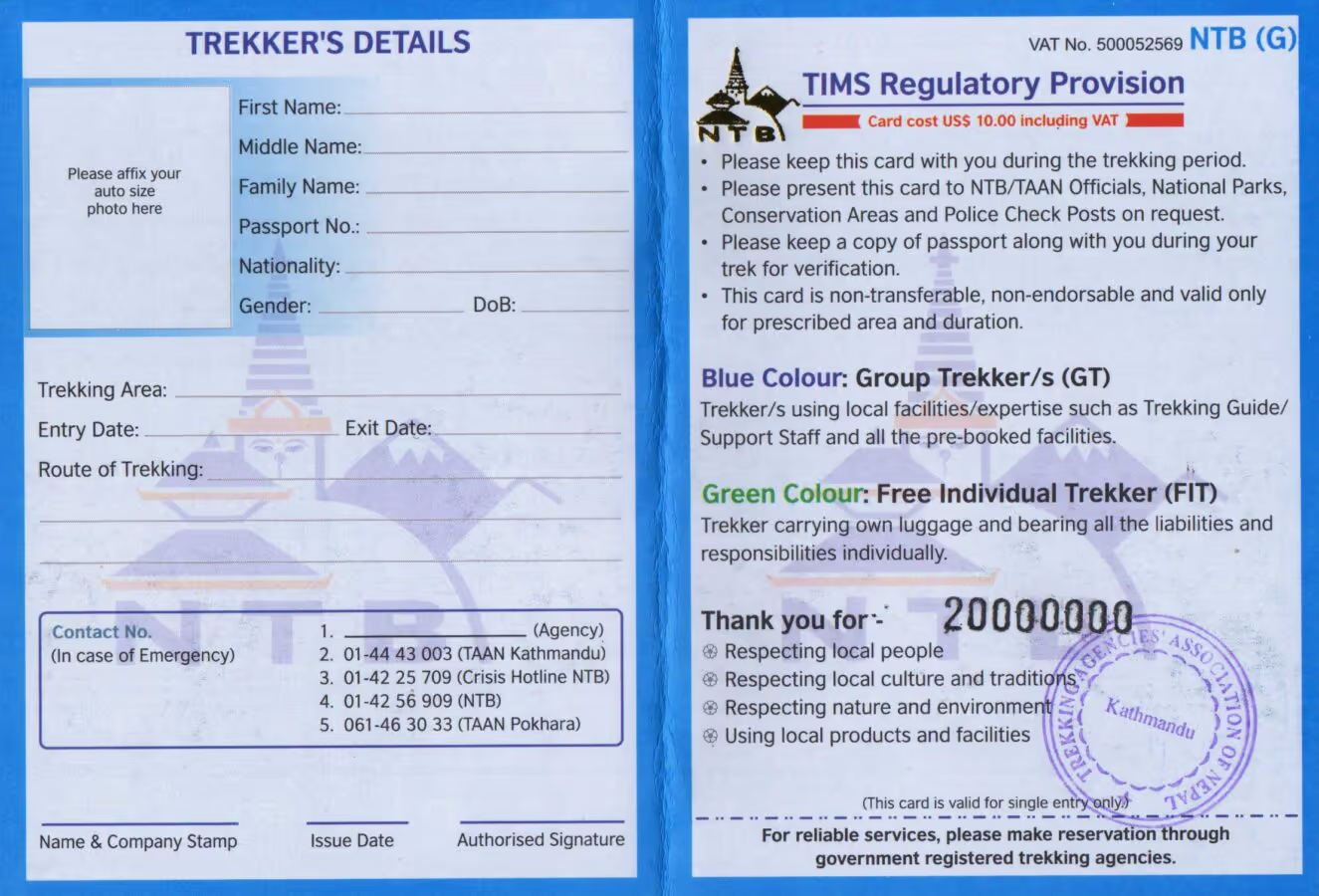
For a fit trekker who wants their first summit above 6,000 m, the field is fairly clear. Mera Peak (6,476 m) is Nepal's highest trekking peak and combines a genuine high-altitude approach with a non-technical summit day on a reliable snow slope. Island Peak (Imja Tse) at 6,189 m involves more fixed-line work and a crevassed glacier — a step up in technicality.
Yala Peak (royalty-free, in Langtang) is a fine acclimatization peak for the less experienced — manageable altitude, beautiful ridge views, short summit day. Mardi Himal in the Annapurna region is similarly accessible and scenic.
For the full Mountain Expeditions range, including what season suits each peak, see the expeditions category.
How EcoTourNepal handles peak climbs
Our team manages every permit layer — NMA royalty, Sagarmatha/Khumbu or ACAP conservation fees, TIMS where required — so clients arrive in Kathmandu with nothing to chase. Pre-departure briefings cover altitude protocol, gear requirements, and the acclimatization schedule. Guides are NMA-certified and know the routes in all conditions.
For newly opened or less-trekked peaks, we are transparent about infrastructure realities before you commit. If camping is required, we provide full camping logistics — we don't gloss over the difference between a teahouse trek and an expedition.
Plan a custom Nepal expedition — tell us your target peak, your fitness background, and your preferred season, and we'll send a detailed itinerary and quote.
FAQs
Frequently asked questions
What is the NMA climbing permit fee for Mera Peak in 2026?
For spring (March–May) the NMA royalty is US$350 per climber. For autumn, winter, and summer seasons it is US$175 per climber. This fee is separate from guide costs, conservation/park permits, and logistics.
Which Nepal trekking peaks are royalty-free in 2026?
Yala Peak, Mardi Himal, Tent Peak (Tharpu Chuli), Pokhalde, and Chhukung Ri currently carry no NMA royalty. You still pay area permits (ACAP or equivalent) and must hire a licensed guide through a registered agency.
Can I climb a trekking peak independently without an agency in Nepal?
No. Since April 2023, foreign nationals must arrange trekking and climbing through a registered Nepali agency and hire a licensed guide. There is no walk-in independent permit for any NMA peak.
What does 'newly opened peak' mean in practice for trekkers?
It means the government has authorized climbing, but the tourist infrastructure — tea houses, fixed camps, marked trails — may barely exist. Expect camping rather than teahouse stays, longer gaps between rest stops, and significantly more logistical complexity than on established routes.
When is the best season to climb Mera Peak or Island Peak?
Autumn (October–November) offers stable weather and clear skies and comes at the lower royalty rate of US$175. Spring (March–May) is also popular but the higher royalty (US$350) and heavier crowds make autumn the better value for most climbers.
Where can I confirm current NMA peak permit fees officially?
The Nepal Mountaineering Association (nma.com.np) publishes the official royalty schedule. Always verify before booking as fees can be revised. EcoTourNepal will confirm the current rate in your trip quote.
Keep reading
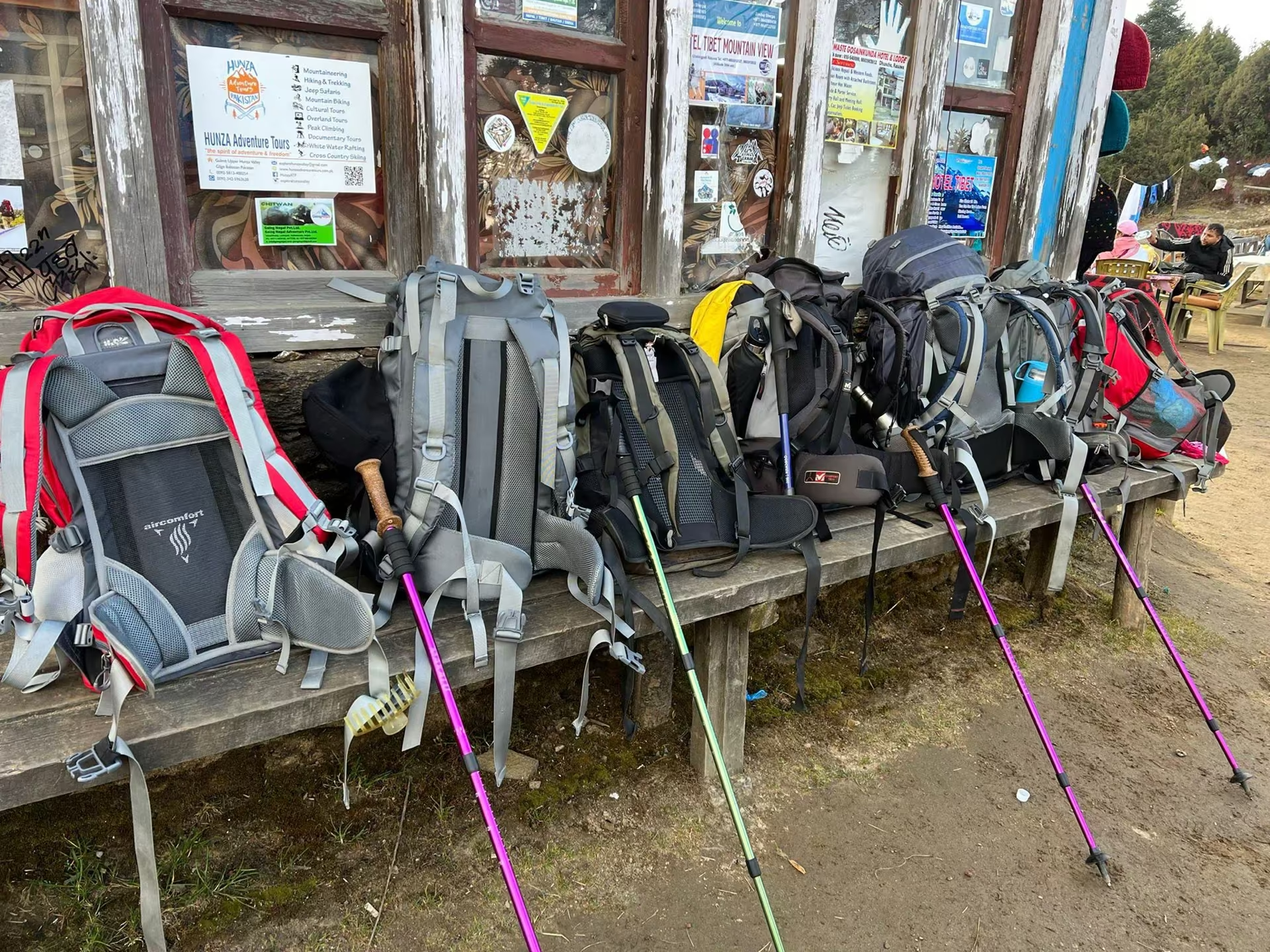 Planning
What a Nepal Trek Really Costs: An Honest Budget Breakdown (2026)
A transparent line-item breakdown of Nepal trekking costs — permits, guides, flights, food and the extras people forget — with honest advice on where to cut safely.
 Treks & Peaks
Travel Insurance & Helicopter Rescue for Nepal Trekking — What You Actually Need
What altitude coverage to buy, how helicopter rescue really works in Nepal, the old fraud era that's now cleaned up, and why your operator matters in an emergency.
 Planning
Money in Nepal 2026: ATMs, Cash, Cards, eSewa & Tipping Guide
Nepal ATM limits, fees, and which banks to use. How much cash to carry on a trek. Where to get the best exchange rate. Honest tipping norms for guides, porters, and drivers.