Destination Guides
Pokhara: The Complete Guide to Nepal's Lake, Adventure & Workcation City
Lakeside life, Sarangkot sunrise, paragliding over Phewa Lake, day hikes, Pokhara as a trek gateway, and why it works as a workcation base — everything you need to plan your visit.
 ByRohan KCTour & Trekking Guide
Published
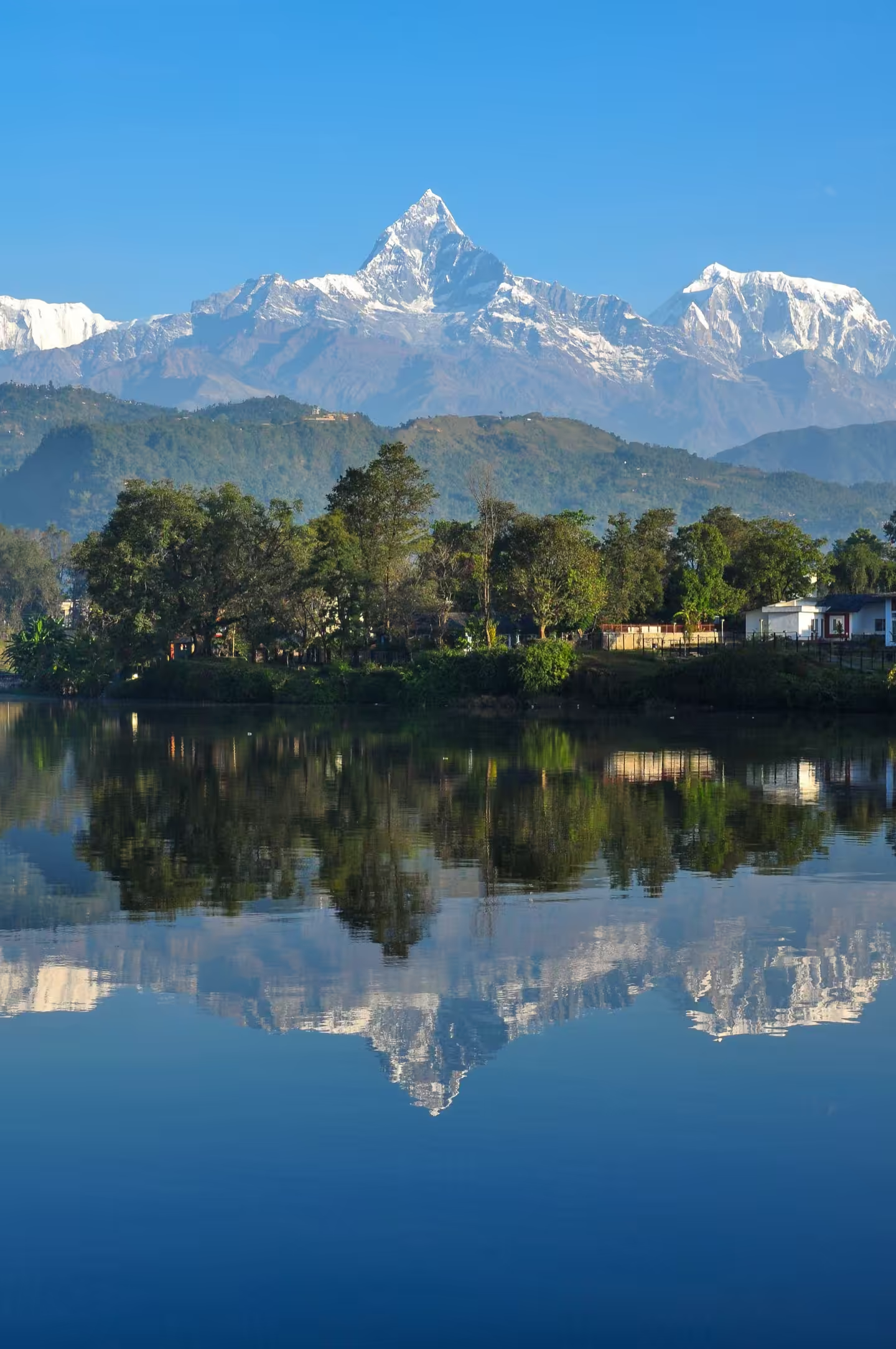
Pokhara earns its reputation every single morning. When the sky clears before dawn and the Annapurna massif — Machapuchare (Fish Tail), Annapurna South, Hiunchuli — reflects in Phewa Lake, it genuinely stops you. But Pokhara is more than a view: it's a paragliding capital, a world-class trekking gateway, a quietly excellent workcation base, and a city where the pace of life does something measurable to your nervous system. This is everything you need to know to use it well.
Quick summary
Lakeside is the traveler hub — concentrated with cafés, restaurants, hotels, and the boat dock for Phewa Lake; walkable and low-stress.
Sarangkot sunrise is worth doing properly: take a jeep up the evening before, stay the night, and watch Annapurna and Dhaulagiri light up at dawn from 1,592 m.
Paragliding here is among the best in Asia — 30-minute tandem flights with certified pilots over the lake and terraced hills; no experience required.
Day hikes include the World Peace Pagoda, Bat Cave, Begnas Lake, and easy trails above Lakeside.
Trek gateway for Annapurna Base Camp, Annapurna Circuit, Poon Hill, Mardi Himal — the Annapurna region starts less than an hour from Pokhara.
Workcation base for nomads who want quiet, outdoor access, and good café culture over Kathmandu's metro energy.
Lakeside — the heart of Pokhara for travelers
Phewa Lake's eastern shore — the Lakeside neighborhood (Baidam) — is where most travelers base themselves, and for good reason. It's compact, walkable, and has everything: hotels across every budget tier, restaurants serving everything from Nepali daal bhat to pizza and Japanese, outdoor gear shops, and the boat dock where you can row out to the Tal Barahi Temple on the small island in the lake.
The lake itself changes through the day. Dawn is glassy and clear, the mountains reflected with perfect symmetry in the best weather (October–November and March–April are the highest-probability months). Afternoons bring some chop; evenings, the restaurants fill and the lakeside promenade comes alive.
One note for longer stays: Lakeside is concentrated and can feel small after a week. The solution is to move between it and Kathmandu (many nomads and longer-term travelers do both), or to deliberately extend into the surrounding hills and day trips.
Sarangkot — why you should stay the night
Sarangkot is the sunrise viewpoint above Pokhara at 1,592 m, and almost every visitor makes the trip. The standard approach — drive up at 4:30 AM, stand with a crowd, drive back — works, but misses the point.
The better approach: take a jeep up the evening before and stay the night in Sarangkot. The village has several small guesthouses. You fall asleep with the valley lights below you, wake at 5 AM on your own schedule, walk to the viewpoint in five minutes, and watch the Annapurna massif emerge from darkness and turn orange, then pink, then bright white — without a single 4 AM alarm from Lakeside or a bus-load of visitors turning up at the exact same moment.
The mountain panorama from Sarangkot on a clear morning is: Dhaulagiri (8,167 m) to the west, Annapurna I (8,091 m), Annapurna South, Annapurna II, Annapurna III, and Machapuchare (6,993 m) directly facing you. On exceptional days you can see beyond to Manaslu. This is one of the finest accessible mountain panoramas in Nepal.
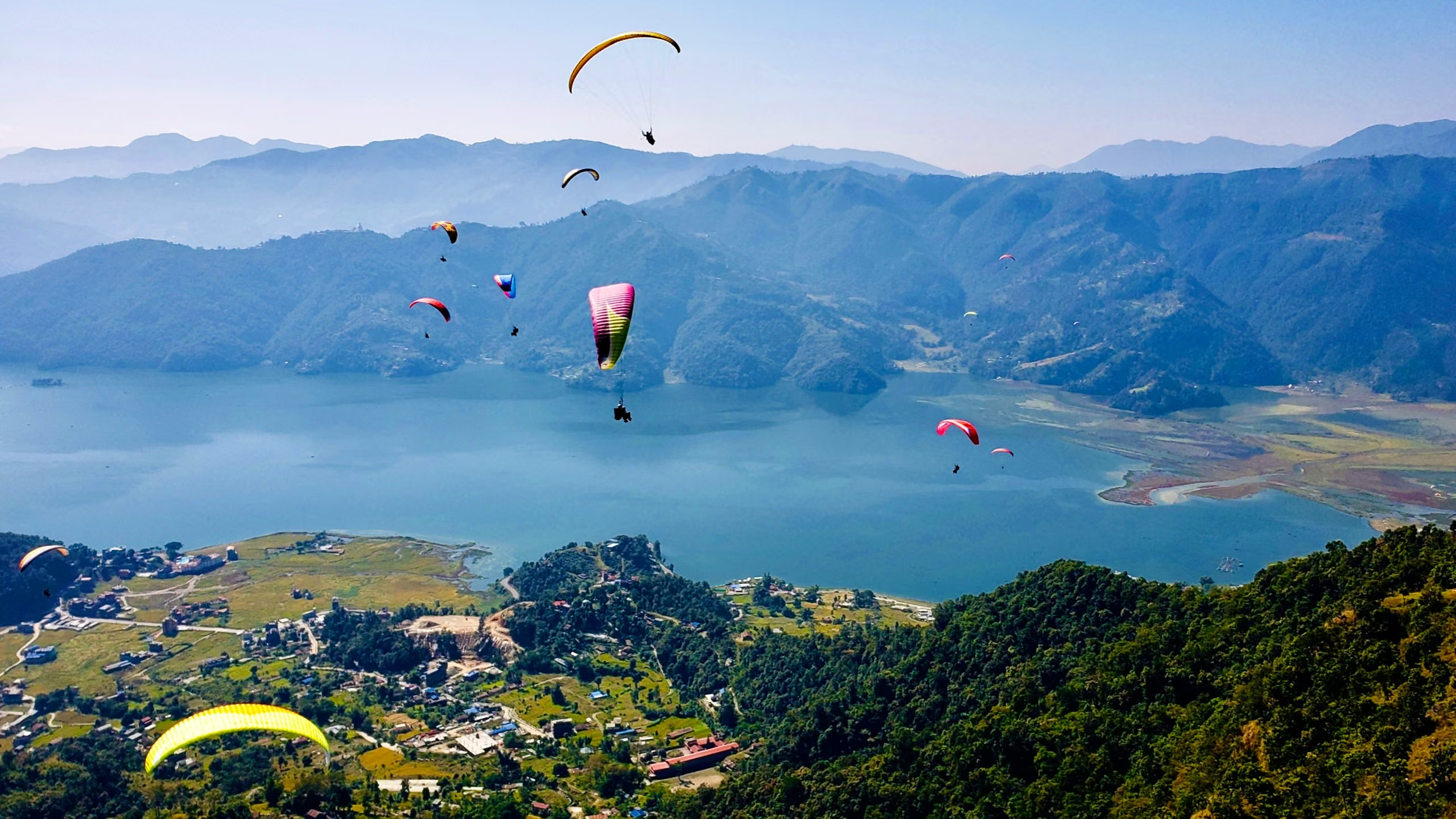
After sunrise, many people paraglide from Sarangkot back down to Pokhara — a 30-minute tandem flight that follows the ridge, swoops over Phewa Lake, and lands in a field near Lakeside. It's a near-perfect morning.
Paragliding
Pokhara is one of the premier paragliding destinations in Asia. The combination of consistent thermal conditions above the lake, the dramatic backdrop of the Annapurna range, and a mature local operator scene makes it reliable and genuinely excellent. A standard tandem flight runs 20–40 minutes and is operated with certified pilots (APPI/BHPA standard). No experience required — you run a few steps off the hill and you're airborne.
EcoTourNepal's paragliding package handles the booking, transport to the launch site, and the post-flight transfer. If you're doing Sarangkot sunrise the evening before, the logical sequence is: stay the night at Sarangkot → watch sunrise → paraglide to Lakeside → breakfast by the lake. One of the better mornings you'll spend anywhere.
Tip: Paragliding is weather-dependent and most flights run in the morning before afternoon winds develop. Don't leave it to your last day in Pokhara — if the day is cloudy or windy, you want a backup day.
Day hikes and activities
World Peace Pagoda (Shanti Stupa): A 45-minute hike from the south end of Lakeside through forest to a hilltop stupa with a 360° panorama of the lake and mountains. Go before 9 AM to avoid heat and midday haze. Alternatively, take a boat across the lake and hike up from the other side (about 30 minutes steeper).
Bat Cave (Chamero Gufa) and Mahendra Cave: Two cave systems northeast of Lakeside, reachable by bike or scooter rental. The Bat Cave is more dramatic — a narrow passage through stalactites that opens into a bat-inhabited chamber. About 30–40 minutes by bike from Lakeside.
Begnas Lake: 15 km east of Pokhara, a quieter and less-visited lake with a village feel. Good for a half-day escape from Lakeside's tourist concentration.
Gupteshwor Cave and Davis Falls: Adjacent natural attractions 2 km south of the airport. The falls are dramatic in monsoon season when the water volume is highest; the cave is active year-round.
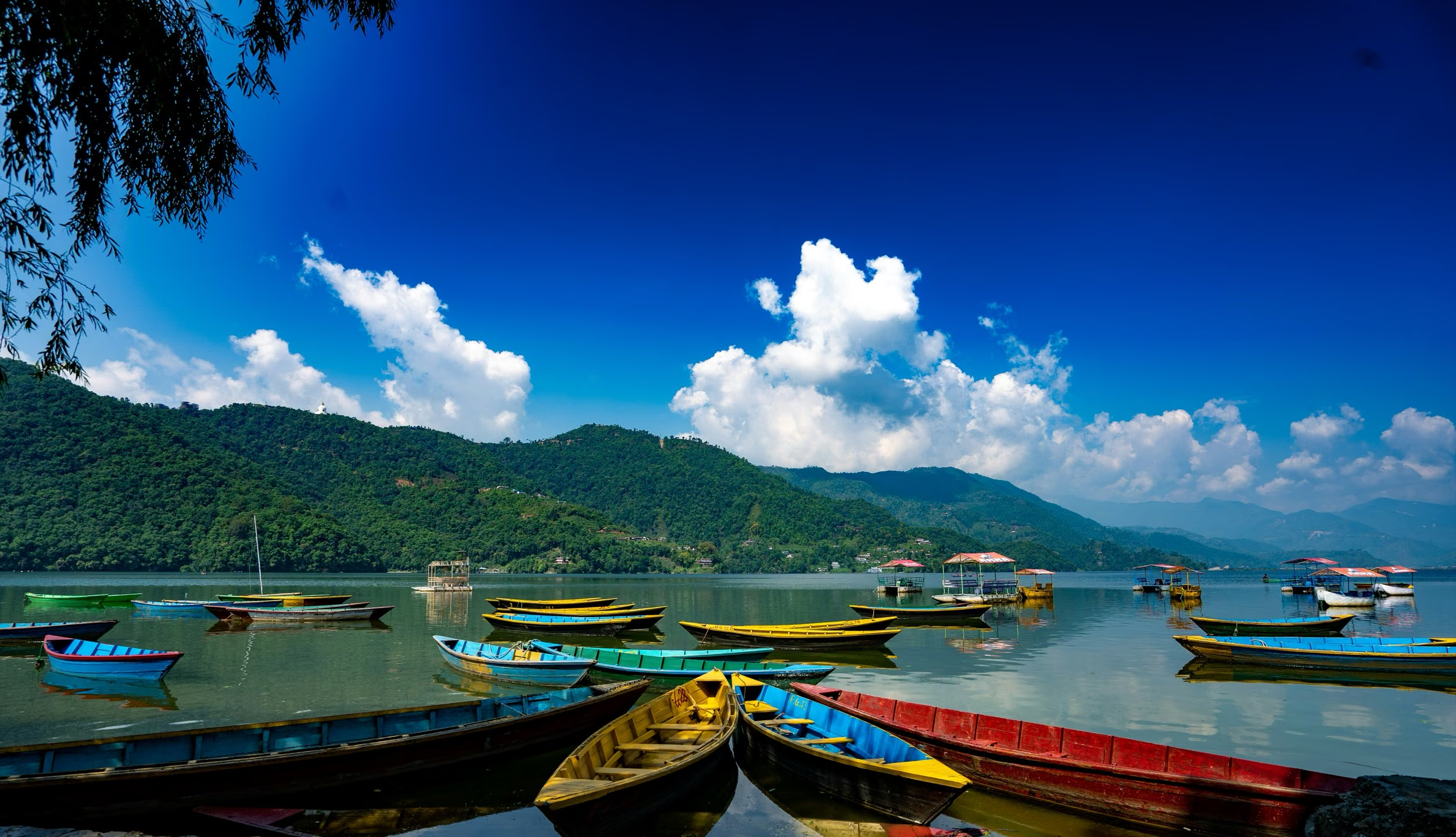
Rowing on Phewa Lake: Rent a wooden boat by the hour at the dock and row to the Tal Barahi Temple on the island. Takes 15–20 minutes each way, peaceful in the morning before wind picks up.
Pokhara as a trek gateway
Pokhara is the starting point for the entire Annapurna region — one of the world's most popular trekking destinations. From the city:
Annapurna Base Camp (ABC) — the trailhead is a 1–2 hour drive; full trek takes 7–12 days to reach the base camp at 4,130 m.
Poon Hill / Ghorepani — the classic 4–5 day beginner trek with big mountain views; starts from Nayapul, 1.5 hours from Pokhara.
Mardi Himal — an excellent, less-crowded alternative (5–7 days); excellent for first-timers.
Annapurna Circuit — the famous 15–21 day circumnavigation; partially motorable now but still one of Nepal's great treks.
EcoTourNepal operates all of these, including the full ABC trek. Permits (ACAP conservation fee: NPR 3,000 for foreigners) and TIMS are handled for you.
Pokhara as a workcation base
Pokhara makes sense as a nomad base for a specific kind of remote worker: someone who wants a quieter environment than Kathmandu, outdoor access from the front door, and a concentration of cafés and restaurants in a walkable area.
Internet on Lakeside is solid — fiber has reached the main café strip. Coworking is available at Pokhara Coworking near the lake. The pace is genuinely slower than Kathmandu, which is either a feature or a bug depending on who you are.
The trade-off: Pokhara's international airport is not yet at full capacity for international flights as of mid-2026 (Flydubai's Pokhara–Dubai service is scheduled to begin September 23, 2026, which will be the first regular international route). For anyone flying in and out of Nepal regularly, Kathmandu remains the more practical base. Many nomads alternate between the two, using Pokhara as a recharge and Kathmandu as the operational hub.
See the Work From Nepal section for full workcation logistics.
How EcoTourNepal helps in Pokhara
Whether you're in Pokhara for two days as a transit stop on the way to ABC, three days of adventure activities, or two weeks as a remote worker, EcoTourNepal handles the logistics. Transport from Kathmandu by private vehicle or domestic flight (when available), accommodation matched to your purpose (quick stay vs workcation base vs trek preparation), activity bookings, and on-the-ground support.
For the Pokhara tour, the itinerary is designed to see the city properly rather than just scratch the Lakeside surface. For trek departures from Pokhara, everything — permits, guide, vehicle to the trailhead — is in place before you arrive.
Plan your Pokhara itinerary with us — whether that's 2 days or 2 weeks, standalone or as part of a larger Nepal trip.
Pokhara connects naturally with Annapurna Base Camp, the paragliding experience, and the Work From Nepal programme.
Frequently asked questions
How do I get from Kathmandu to Pokhara?
By tourist bus takes 6–8 hours and costs around $10–13. Private car is 5–6 hours and more comfortable. A domestic flight is roughly 25 minutes (confirm fares at the time of booking — typically $50–100 one-way for foreigners, subject to change). EcoTourNepal arranges all three options.
What is the best time to visit Pokhara?
October–November (autumn) and March–May (spring) give the clearest mountain views and most reliable weather. Winter (December–February) is cool but still clear. Monsoon (June–September) brings cloud cover that obscures the mountains and heavy rain, though the lake itself is beautiful.
Is Sarangkot sunrise worth the early morning?
Yes — but do it properly. The best experience is to take a jeep up the evening before and stay the night in Sarangkot, so you wake up already at the viewpoint and watch the Annapurna range light up without a 4 AM drive or a crowd arriving by bus.
How safe is paragliding in Pokhara?
Pokhara has a mature paragliding scene with internationally certified pilots. EcoTourNepal works with operators certified to APPI or BHPA standards. As with any adventure activity, don't book with operators who can't show certification or who pressure you on weather days — morning flights in clear conditions are standard.
Can I combine Pokhara with a trek?
Pokhara is the main gateway for the entire Annapurna region. Annapurna Base Camp, Poon Hill, Mardi Himal, and the Annapurna Circuit all begin near Pokhara. A common itinerary is: arrive Pokhara → 1–2 days at Lakeside → multi-day trek → return to Pokhara → fly or drive to Kathmandu.
Is Pokhara airport open for international flights?
As of mid-2026, Pokhara International Airport is operational for domestic flights with limited international service. Flydubai's Pokhara–Dubai route is approved to begin September 23, 2026, which will be the first regular scheduled international service. For international arrivals and departures, Kathmandu (TIA) remains the main hub.
Keep reading
 Treks & Peaks
Travel Insurance & Helicopter Rescue for Nepal Trekking — What You Actually Need
What altitude coverage to buy, how helicopter rescue really works in Nepal, the old fraud era that's now cleaned up, and why your operator matters in an emergency.
 Planning
Money in Nepal 2026: ATMs, Cash, Cards, eSewa & Tipping Guide
Nepal ATM limits, fees, and which banks to use. How much cash to carry on a trek. Where to get the best exchange rate. Honest tipping norms for guides, porters, and drivers.
 Planning
Nepal Without Trekking: Best Trips for People Who Don't Want to Hike
Nepal is worth every day even if you never put on hiking boots. Culture, wildlife, Pokhara, Lumbini, scenic mountain flights, and food — a complete Nepal without a single trek.