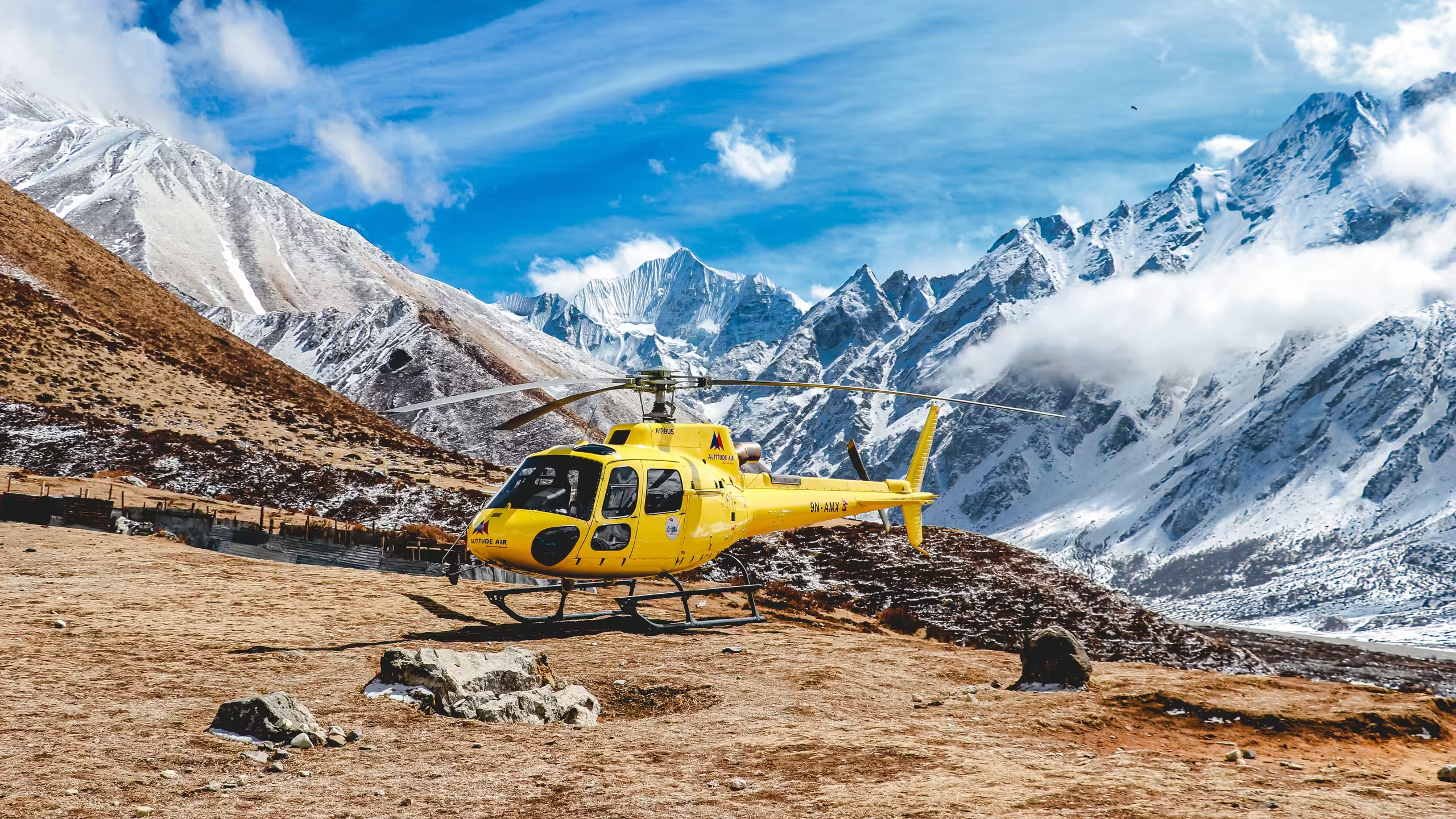
Treks & Peaks
Everest by Helicopter: Base Camp Tours, Landings & Return-by-Heli Options
Who should fly to Everest Base Camp vs trek, how heli tours work (day trips only — no overnight), what to expect in 30 minutes from Chitwan heat to below-zero base camp.
 ByRohan KCTour & Trekking Guide
Published
Most people who visit Everest Base Camp walk there. But for a meaningful portion of travelers — those with limited time, limited mobility, or simply a preference for arriving from the air — a helicopter tour to EBC is not a compromise. It is the right choice.
Quick summary
Heli tours to EBC are day trips only — no overnights. The altitude jump is too extreme without acclimatization for a safe overnight stay.
Who should fly: older travelers, those with time constraints, travelers combining EBC with a packed itinerary, and anyone for whom the flight experience is the goal.
Who should still trek: anyone with the fitness and time — the 12–14 day walk is an entirely different experience, not just a slower way to reach the same place.
The weather wildcard: helicopter tours are weather-dependent. Clear windows for Everest can be narrow, especially in monsoon and shoulder seasons.
The contrast moment is real: in 30 minutes you can go from the blazing heat of Chitwan or Pokhara to the below-zero environment of Everest Base Camp. Travelers call this one of the most disorienting and memorable experiences in Nepal.
Prices: currently TBD — contact us for a current quote based on group size and shared vs private options.
Who should choose the helicopter over the trek?
If you have the fitness, the time, and the patience for altitude acclimatization, the answer is usually: trek. The Everest Base Camp trek is 12–14 days of walking through one of the most spectacular landscapes on earth. You meet the Sherpa communities, sleep in the same teahouses Hillary used in 1953, and arrive at 5,364 m having earned every metre of altitude. That experience cannot be replicated from the air.
But the helicopter option exists for good reasons, and these are the travelers who choose it wisely:
Older travelers and those with physical limitations. An 82-year-old is among the oldest travelers we have guided in Nepal. For someone who wants to see Everest and is not in a position to do a 12-day trek, the helicopter is the answer — not a concession.
Travelers with a 3–5 day Nepal window. Many people visit Nepal as a stop on a longer Asia itinerary, or have visa and work constraints. If you have 4 days in Kathmandu and want the Everest experience, a helicopter day-trip is the only option.
Families with younger children. A heli tour puts the whole family at base camp for a morning — no altitude acclimatization required because you are not sleeping there.
Those who have already trekked. Return visitors who completed EBC on an earlier trip sometimes choose the heli option for a faster return, or to bring a partner who cannot trek but wants to see the place.
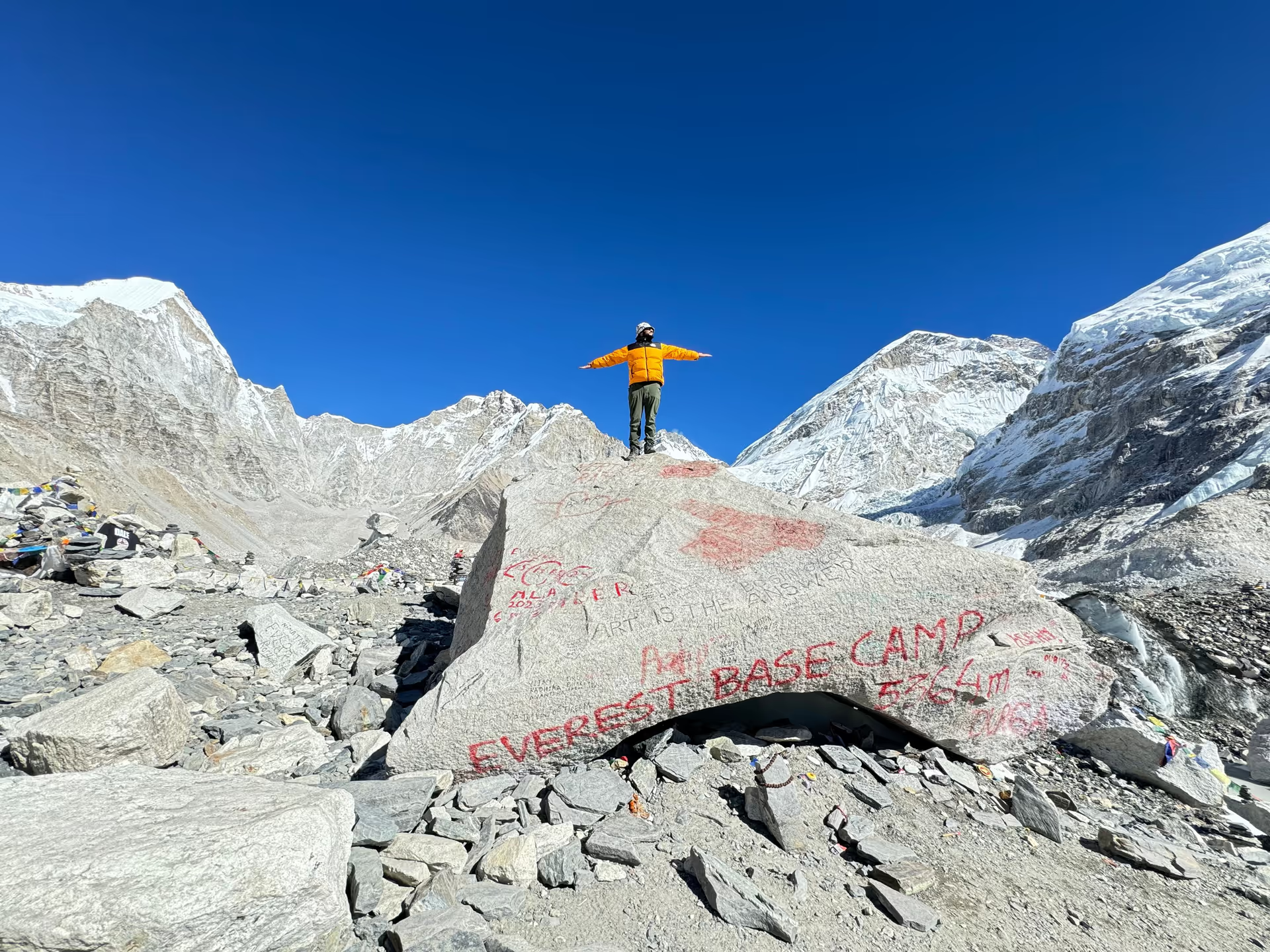
Day trips only — the critical rule
This is the most important thing to understand about Everest helicopter tours: you cannot overnight at base camp via helicopter.
Everest Base Camp sits at 5,364 m. Your helicopter departs from Kathmandu (1,400 m) or possibly Lukla (2,860 m). That is an altitude jump of 3,000–4,000 m in under an hour. Even perfectly healthy individuals will feel the effects — breathlessness, light-headedness, mild headache — during a short visit.
For a brief visit of one to two hours, this is manageable. For overnight, it is not. Without the progressive acclimatization that trekkers build over 12 days — sleeping at increasingly higher altitudes, taking rest days, doing the "climb high, sleep low" routine — your body is not prepared to spend the night near 5,400 m. The risk of acute mountain sickness, and its more dangerous variants HACE and HAPE, is real.
All reputable helicopter tour operators run day trips only. Be sceptical of any operator offering overnight at altitude via helicopter.
The heli tour options
There are several formats depending on what you want:
Fly-in, fly-out — the classic base camp tour
The standard format. You fly from Kathmandu (typically departing Tribhuvan International or a nearby helipad) toward the Khumbu Valley, often with a stop at Kalapatthar (5,545 m — the famous Everest viewpoint) or Everest Base Camp itself for photos and a brief walk. The whole experience is typically 4–6 hours including flight time and the on-ground visit.
Weather is the main variable. Helicopter windows to Everest can be narrow — the mountains create their own micro-weather and afternoon clouds are common. Morning departures are standard for this reason.
Trek up, fly back (return-by-heli option)
This is the option many experienced trekkers who have done EBC choose on a second visit, or who want to do the full trek experience but skip the descent. You walk the standard 12-day route to Base Camp and Kalapatthar — acclimatizing, sleeping in teahouses, meeting the communities along the way — and then take a helicopter back from a lower stop (often Namche Bazaar or Lukla) rather than walking the return.
This is a good choice for those who want the full trekking experience but have a fixed return flight and want to build in safety margin against Lukla weather delays.
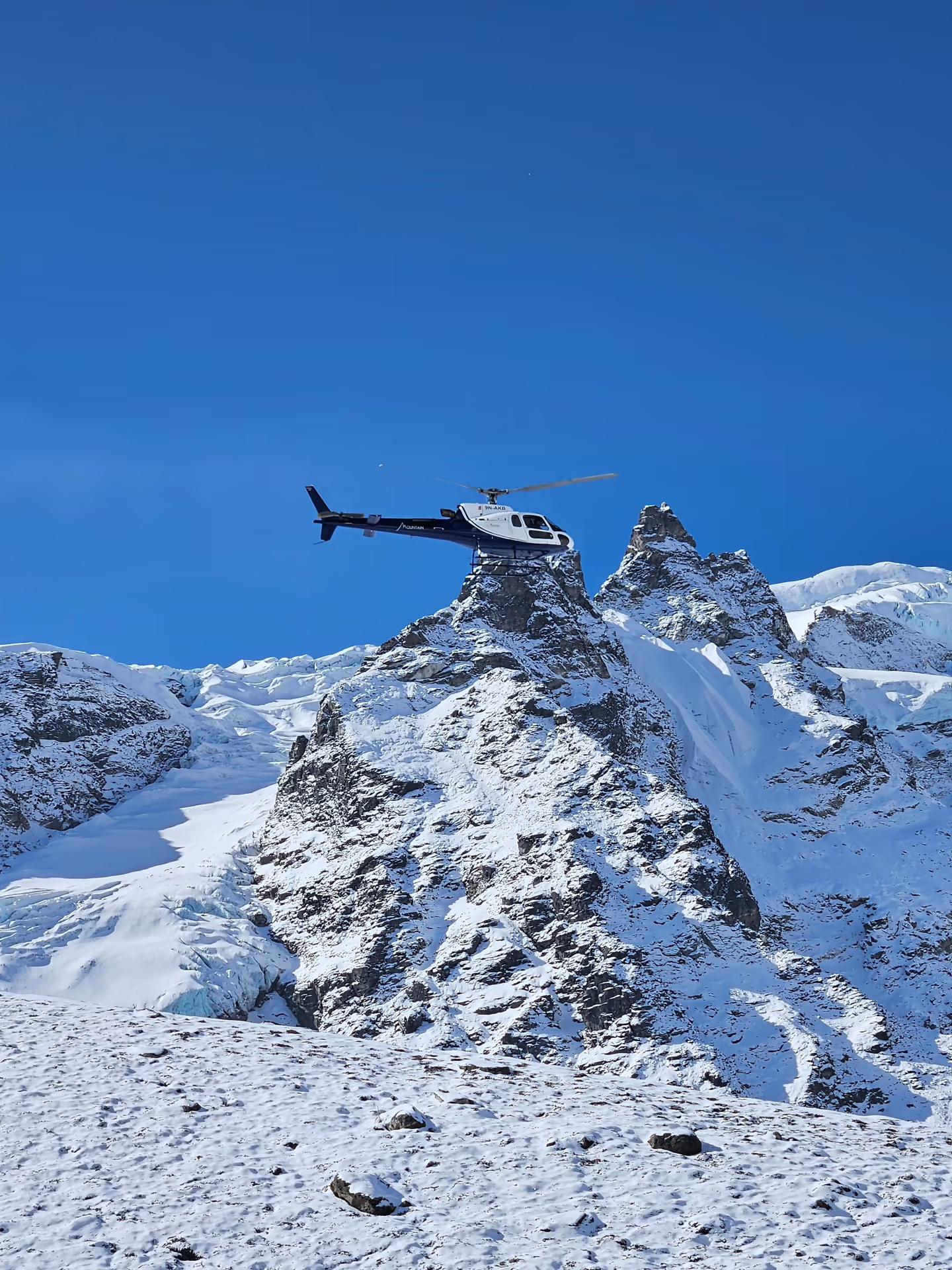
The Chitwan contrast — 30 minutes between two worlds
This is the thing travelers talk about afterward. Nepal's geography is extraordinary — within 200 km of each other you have the tropical Terai lowlands (Chitwan National Park, 200 m elevation, 35°C heat) and the high Himalayas (Everest Base Camp, 5,364 m, −10°C to −20°C).
A well-designed Nepal itinerary can put you in Chitwan watching rhinos in the morning, on a helicopter to Everest in the afternoon, and back in Kathmandu for dinner. The physical sensation — stepping out of a helicopter into below-zero mountain air after two days in the jungle — is something people still describe years later. It is a contrast that most parts of the world simply cannot offer.
For travelers combining a Chitwan National Park safari with an Everest helicopter tour, the logistics are very manageable with a day's buffer in Kathmandu.
Weather, weight limits, and what to bring
Weather is everything. Nepal helicopter tours are cancelled or delayed regularly due to cloud and visibility. Choose an operator who builds flexibility into the schedule — a same-day alternative morning if the afternoon closes in, or a second-day option. EcoTourNepal monitors local conditions before departure and stays in contact with pilots.
Weight limits on chartered helicopters are real. Most operators cap total passenger weight per flight, and your carry-on for the flight is minimal. Do not bring your main trek bag on a day-trip helicopter tour.
What to wear: bring a warm insulated layer — the temperature at base camp is dramatically colder than Kathmandu. Sunglasses and sunscreen for the mountain glare are essential.
Pricing — contact us for a current quote
Helicopter tour pricing varies significantly by group size (shared vs private charter), specific route, fuel surcharges, and season. We are actively finalising our 2026 pricing for Everest helicopter packages and will update this page when confirmed. Get in touch for a current quote — we will match the itinerary to your travel dates and group size.
How EcoTourNepal handles helicopter tours
We work with licensed, safety-audited helicopter operators for all our aerial tours. Bookings include confirmation of good flying windows, pre-flight weather consultation, warm gear guidance, and the airport/helipad transfers in Kathmandu.
For travelers combining a heli tour with other Nepal experiences — a Kathmandu heritage tour before, a Chitwan safari after — we build a single joined itinerary so you are not managing separate operators and logistics across a short trip.
Plan your Everest helicopter experience · Everest Base Camp Trek · Chitwan National Park Safari · All mountain treks
Frequently asked questions
Can you spend the night at Everest Base Camp on a helicopter tour?
No. Reputable operators run day trips only. The altitude jump from Kathmandu to 5,364 m without acclimatization makes overnight stays unsafe — serious altitude sickness risk. You visit for 1–2 hours and return the same day.
How long does an Everest helicopter tour take?
The standard base camp day trip takes 4–6 hours total including flight time and the on-ground visit. Flights typically depart early morning to get the best weather windows before afternoon clouds build.
Can I combine an Everest helicopter tour with Chitwan National Park?
Yes, and the contrast is remarkable — you can be in Chitwan's tropical heat watching rhinos one day and standing in below-zero conditions at Everest Base Camp the next. EcoTourNepal can build this as a joined itinerary with transfers handled.
What if the weather cancels my helicopter tour?
Weather cancellations are common around the Himalayas. Always book through an operator who offers a schedule buffer — a second-morning option if the first window closes. We monitor conditions before departure and stay in contact with the pilots.
Should I trek to EBC or fly?
If you have 12–14 days, the fitness, and the interest in the full journey, trek — it is an incomparably deeper experience. If you have limited time, mobility considerations, or specific constraints, the helicopter tour is the right choice, not a compromise.
How much does an Everest helicopter tour cost?
Pricing depends on group size (shared vs private charter), route, and season. We are finalising 2026 pricing. Contact us for a current quote based on your travel dates and group.
Keep reading
 Treks & Peaks
Travel Insurance & Helicopter Rescue for Nepal Trekking — What You Actually Need
What altitude coverage to buy, how helicopter rescue really works in Nepal, the old fraud era that's now cleaned up, and why your operator matters in an emergency.
 Planning
Money in Nepal 2026: ATMs, Cash, Cards, eSewa & Tipping Guide
Nepal ATM limits, fees, and which banks to use. How much cash to carry on a trek. Where to get the best exchange rate. Honest tipping norms for guides, porters, and drivers.
 Planning
Nepal Without Trekking: Best Trips for People Who Don't Want to Hike
Nepal is worth every day even if you never put on hiking boots. Culture, wildlife, Pokhara, Lumbini, scenic mountain flights, and food — a complete Nepal without a single trek.