
Destination Deep-Dives
Bhaktapur Travel Guide: Nepal's Living Medieval City (2026)
Day trip vs overnight, juju dhau yogurt, pottery squares, temple architecture, and the current NTB entry fee. Everything to know before visiting Bhaktapur in 2026.
 ByRohan KCTour & Trekking Guide
Published
Bhaktapur feels like Kathmandu's Valley must have looked five hundred years ago, before cars, concrete, and tourist infrastructure reshaped everything. Sixteen kilometers east of the capital, it is the best-preserved medieval city in Nepal — and one of the most photographed — yet it rewards slower travel more than a hurried two-hour bus-tour stop.
Quick summary
Where: 16 km east of Kathmandu, roughly 45 minutes by taxi or private car.
Day trip vs overnight: Day trips work, but an overnight stay transforms the experience — you get the city before and after the crowds.
Entry fee: Foreign visitors pay a fee collected by the Bhaktapur Municipality; verify the current amount at ntb.gov.np before you go.
Must-eat: Juju dhau — the "king of yogurt" — thick, slightly sweetened, served in an unglazed clay pot. You cannot leave without trying it.
Main squares: Durbar Square, Taumadhi Square (home to the 5-story Nyatapola Temple), and Pottery Square.
Best season: October–April. Monsoon visits are fine for culture but outdoor photography suffers.
Day Trip vs Overnight: The Honest Comparison
Most travelers visit Bhaktapur as a day trip from Kathmandu, and most of them leave feeling like they only half-saw it. The main temples and squares can be covered in three to four hours, which is enough for a tick-and-move itinerary. But the real quality of the place appears at the edges of the day.
Stay overnight and you will share the early morning streets with school children and priests doing the first round of the temples, not with tour groups. You will hear the temple bells at dusk. The alleys of the old city — quiet enough to photograph without strangers walking into frame — are a different place after the last day-trippers from Kathmandu head back. Several small heritage guesthouses sit inside the old city walls; staying in one means you are embedded in a living medieval neighborhood, not just passing through it.
The verdict: If you have the night to spare, stay. If not, a day trip is still worthwhile — just arrive early (before 9 am, before the tour buses) and leave the main squares to explore the pottery lanes and backstreets where daily life unfolds.
The Squares: What to Actually Look At
Bhaktapur Durbar Square
The most photogenic entry point. The 55-Window Palace (Pachpanna Jhyale Durbar) is the centerpiece — its facade of intricately carved windows is still considered one of the finest examples of Newari woodwork in the world. The Golden Gate (Sun Dhoka) at the palace entrance is equally extraordinary: a doorway covered in gilded copper repousse work depicting deities that took decades to complete.
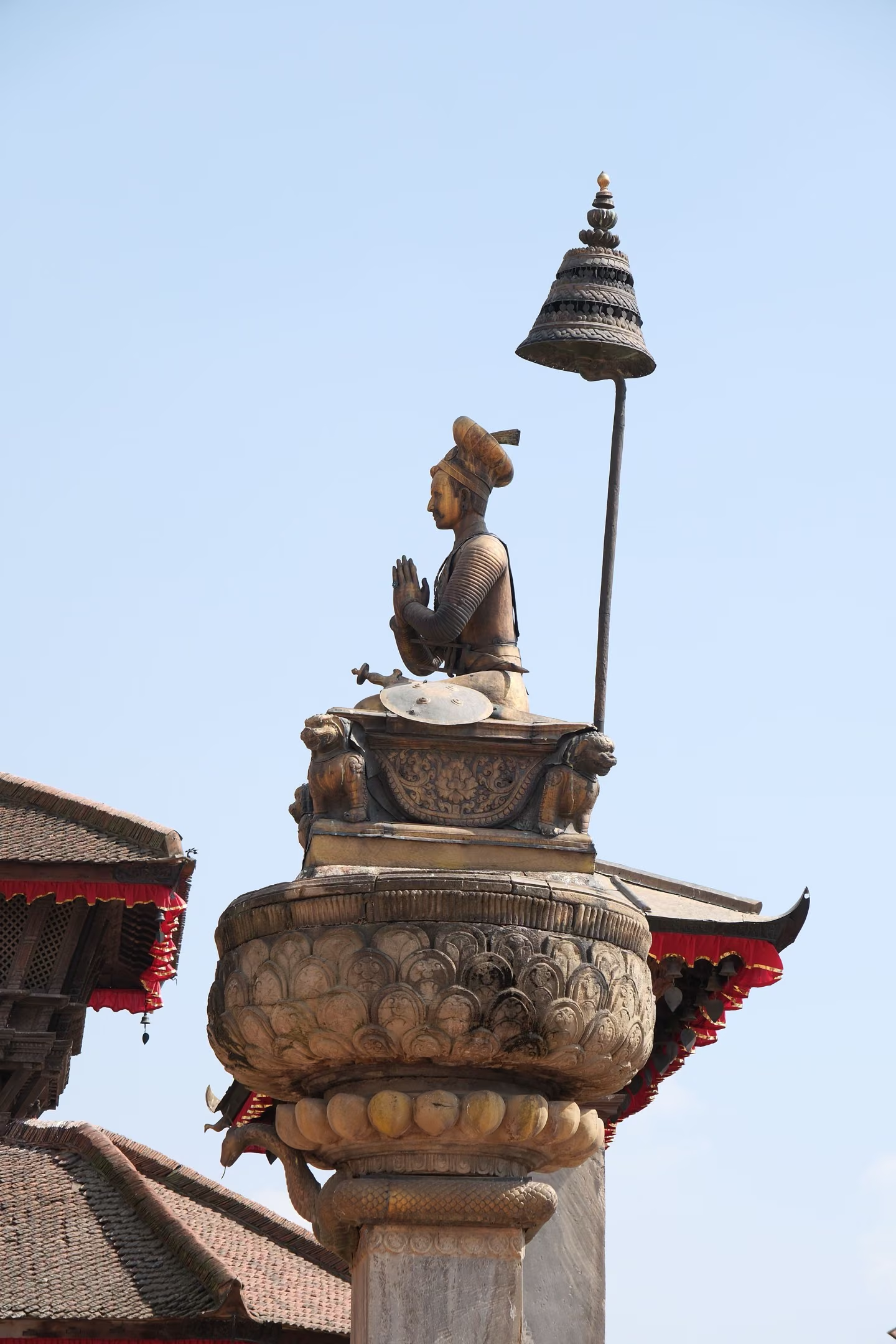
The statue of King Bhupatindra Malla, sitting atop a tall stone column in the square, gazes permanently at the palace — a political statement carved in stone.
Taumadhi Square
A short walk from Durbar Square, Taumadhi holds the Nyatapola Temple, Bhaktapur's most recognizable landmark. Five stories tall, built in 1702, it survived the 2015 earthquake better than almost everything around it — a testament to the engineering embedded in traditional Newari architecture. Its stepped plinth is guarded at each level by pairs of figures of diminishing power: warriors, elephants, lions, griffins, and finally two goddesses at the top.
Pottery Square (Talako)
Easily the most atmospheric quarter for a slow wander. Local potters still work here using foot-pedal wheels, shaping the same style of clay pots — including the distinctive black unglazed bowls used to serve juju dhau — that have been made in Bhaktapur for centuries. If you buy anything, the potters will wrap it carefully in newspaper. Prices are low and the craft is genuine.
Juju Dhau — The One Thing You Must Eat
Bhaktapur has a food identity, and its name is juju dhau: juju means "king" in Newari, dhau means yogurt. Made from buffalo milk, set in the clay pots that also serve as the serving vessel, the yogurt is thick, slightly sweet, and has a texture closer to a soft panna cotta than the runny yogurt sold in supermarkets. The clay is said to absorb excess moisture during the setting process, which is part of what gives it the distinctive consistency.
The classic place to eat it is in the lane near Taumadhi Square, where women set out rows of small clay pots on mats. Order a pot, eat it on the spot, and leave the clay container — it is the Bhaktapur equivalent of the disposable cup.
Do not skip juju dhau because you are already full. Order the small size. It is one of those specific local things that does not exist anywhere else, made the same way it has been made for at least three centuries.
The 2015 Earthquake and What Was Lost (and Rebuilt)
The April 2015 earthquake severely damaged Bhaktapur. The Vatsala Temple and several other structures in Durbar Square collapsed or were heavily damaged. Reconstruction has been ongoing since, with significant support from international heritage organizations. As of 2026, restoration work is still visible in parts of Durbar Square — some sections are scaffolded, some newly rebuilt. The city is not a pristine museum piece; it is a working community that survived a catastrophe and is slowly recovering. That context adds something to the visit that guidebooks often skip.
Entry Fee (2026)
Bhaktapur Municipality charges a separate entry fee for foreign visitors — distinct from the NTB heritage-site ticket and among the higher municipal charges in the valley. The fee structure has changed several times in recent years; verify the current amount at ntb.gov.np before your visit. Keep cash (USD or NPR) on hand; the collection booth at the main entrance does not always accept cards.
Note: if you are visiting as part of a Kathmandu heritage tour through EcoTourNepal, entry fees are included in the package.
How EcoTourNepal Helps
Bhaktapur is best understood with a guide who can explain the iconography, the caste structure of the medieval city, and why a particular temple faces the direction it does. The city's layout and the symbolism in its carvings are dense — most visitors appreciate having someone interpret it. The EcoTourNepal heritage culture tours include a local guide who specializes in Newari art and architecture, and the Bhaktapur visit is typically combined with Patan or Kathmandu's Durbar Square into a full valley day.
Plan a Kathmandu Valley heritage trip with EcoTourNepal — we handle transport, entry fees, and a guide who makes the carvings and history come alive.
Getting There
From Kathmandu: Private taxi or car (~45 min, NPR 1,000–1,500 one-way). Local micro-bus from Kathmandu Bus Park is cheaper but slower and less comfortable.
By bike: Bhaktapur is reachable by bicycle from Kathmandu via the Ring Road; allow 2 hours each way and be prepared for traffic on the outskirts.
Kombination visits: Pairs well with Dhulikhel (30 min further east) for a full-day valley loop.
Frequently asked questions
How much is the Bhaktapur entry fee for foreigners in 2026?
Bhaktapur Municipality sets its own entry fee, which has changed several times in recent years. Verify the current amount at ntb.gov.np before your visit. Bring cash (USD or NPR) as cards are not always accepted at the gate.
Is Bhaktapur worth visiting if I have already been to Kathmandu's Durbar Square?
Yes — Bhaktapur is significantly better preserved and less commercialized than Kathmandu's Durbar Square. The Nyatapola Temple, Pottery Square, and juju dhau are all unique to Bhaktapur and have no equivalent in central Kathmandu.
Where can I try juju dhau in Bhaktapur?
The most authentic spot is the lane of vendors near Taumadhi Square, where local women set out small clay pots of freshly made yogurt. Look for the rows of dark clay bowls — you eat on the spot and leave the pot.
How long does it take to see the main sights of Bhaktapur?
The three main squares (Durbar, Taumadhi, Pottery) can be covered in 3–4 hours at a comfortable pace. If you want to explore the residential lanes and eat properly, allow a full day. An overnight stay is recommended for photographers.
Is Bhaktapur affected by earthquake damage from 2015?
Yes, several structures in Durbar Square were damaged or destroyed in the 2015 earthquake and some are still under reconstruction. The Nyatapola Temple in Taumadhi Square survived largely intact and remains fully visitable.
Can I combine Bhaktapur with Patan in one day?
Technically yes, but it is rushed. Bhaktapur and Patan are in opposite directions from Kathmandu (east vs south). Most travelers prefer to visit each on a separate day to allow enough time and reduce transit fatigue.
Keep reading
 Destination Deep-Dives
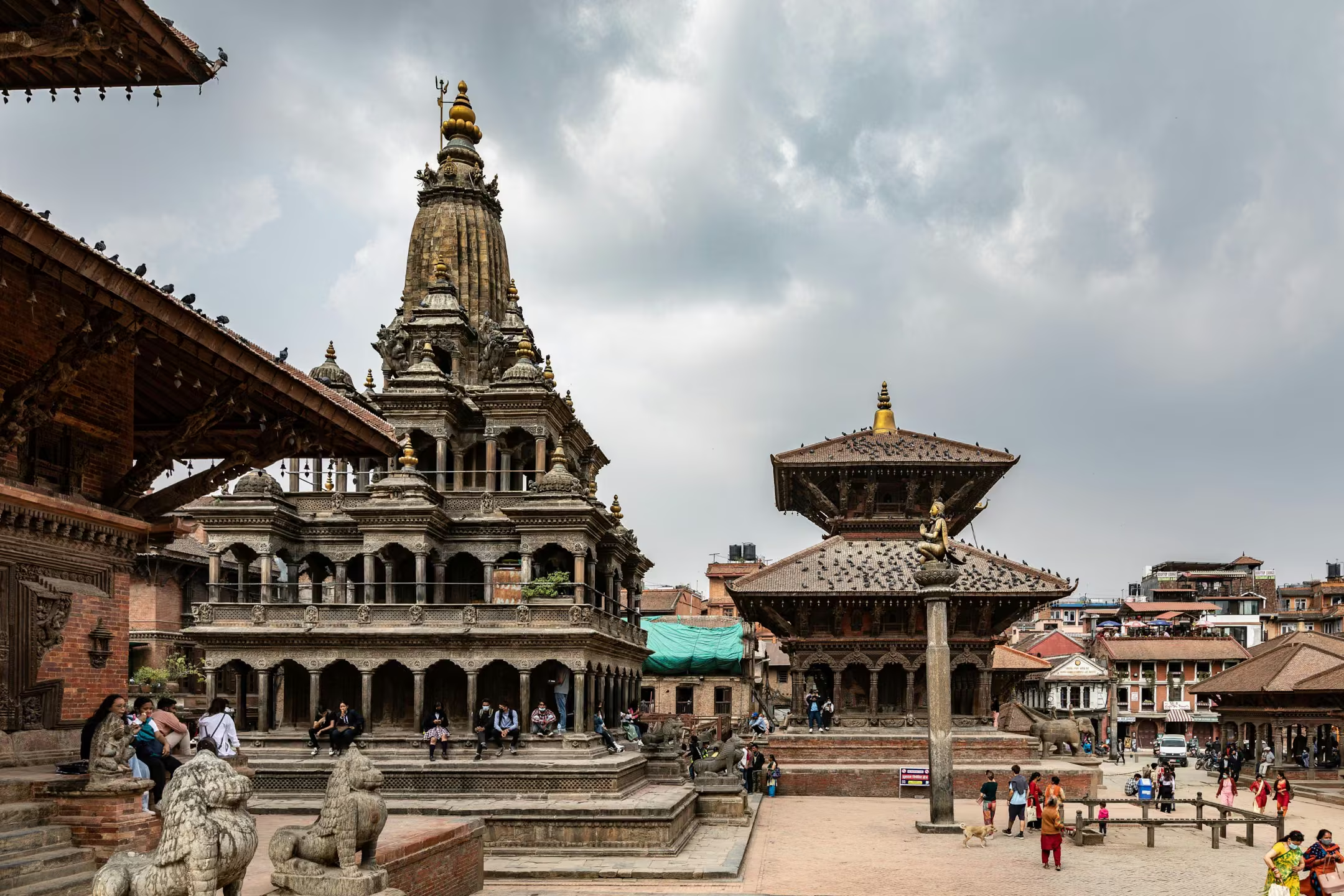
Patan (Lalitpur) Guide: Art, Courtyards, Cafes & Heritage
Why Patan beats Thamel for remote workers and culture travelers: calmer streets, independent cafes, world-class Newari art, and a creative expat scene just 20 minutes from central Kathmandu.
 Destination Deep-Dives
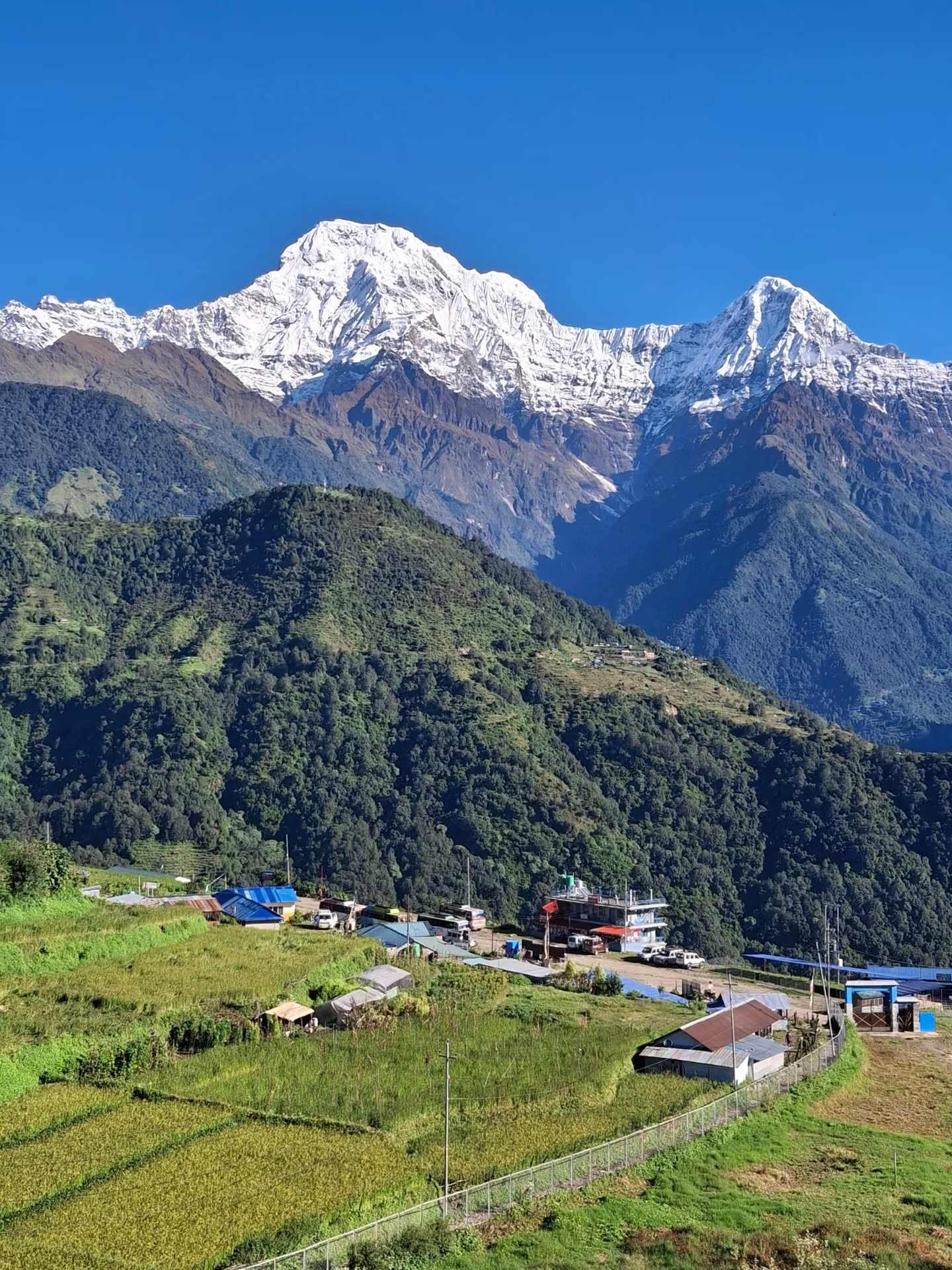
Bandipur Guide: The Best Small-Town Stop Between Kathmandu and Pokhara
Why Bandipur deserves one night of your Nepal itinerary: a pedestrian heritage hill town with mountain views, Newari architecture, and an atmosphere that every photographer and slow traveler notices immediately.
 Treks & Peaks
Travel Insurance & Helicopter Rescue for Nepal Trekking — What You Actually Need
What altitude coverage to buy, how helicopter rescue really works in Nepal, the old fraud era that's now cleaned up, and why your operator matters in an emergency.